The Power of Compassion in Hand Surgery
Compassionate communication is a patient‑centered approach that blends active listening, emotional validation, and clear, jargon‑free explanations. In hand surgery, this style reduces pre‑operative anxiety, lowers perceived pain, and speeds wound healing. Qualitative research by Wilson and Skuthan (Hand Ther., 2026) found that therapists value active listening and empathy, noting a 15% improvement in functional recovery when surgeons provide thorough counseling. Larger studies link higher surgeon empathy to lower complication rates, fewer malpractice claims, and up to a 15% reduction in postoperative pain scores. Dr. Rebecca S. Yu of Berkeley, CA, exemplifies this model. She spends ample time introducing herself and the care team, validates patients’ fears, and uses teach‑back methods to confirm understanding of postoperative protocols. Her clear, compassionate explanations of surgical steps and realistic timelines foster trust, leading to higher adherence to hand‑therapy regimens and faster return to daily activities. These practices translate into measurable improvements in patient‑reported outcome measures.
Foundations of Compassionate Communication
 Effective hand‑surgery care begins with compassionate communication. Active listening—maintaining eye contact, nodding, and summarising the patient’s concerns—helps therapists identify psychosocial barriers early and builds trust, a factor linked to lower anxiety and faster functional recovery (Wilson & Skuthan, 2026). Clear, jargon‑free explanations ensure patients understand the surgical plan, postoperative restrictions, and therapy milestones; studies show that plain‑language education reduces complications such as infection or stiffness. Emotional validation and empathy—recognising fear of loss of function, reassuring patients, and offering supportive language—lower cortisol levels and postoperative pain, improving adherence to hand‑therapy protocols.
What are the warning signs after hand surgery? Redness, swelling, increasing pain, persistent bleeding, hematoma, wound dehiscence, color changes in fingers, loss of feeling, tingling beyond 24 hours, tight dressings, uncontrolled pain, sudden stiffness or burning sensations, and signs of complex regional pain syndrome all warrant immediate contact with the surgeon.
What not to do after hand surgery? Avoid bumping or striking the hand, heavy lifting, wet bandages, self‑adjusting splints or casts, and any unprescribed exercises. Do not ignore infection signs, fever, worsening swelling, numbness, or escalating pain; report these promptly.
Pre‑operative Dialogue Sets Expectations
 Effective pre‑operative communication begins with shared decision‑making. Qualitative study by Wilson KK and Skuthan A emphasized that surgeons who actively listen, validate emotions, and explain the surgical plan in plain language reduce patient anxiety and set realistic expectations. Clear patient education about the procedure, postoperative pain, and therapy milestones empowers patients to engage in their own recovery and lowers perceived pain scores.
How long after hand surgery can I return to work? Most patients resume work between 6 and 14 weeks, depending on the procedure and job demands. Simple soft‑tissue surgeries (e.g., carpal‑tunnel release) may allow light office duties within two weeks and full duties by six weeks. More extensive bone or tendon repairs often require three to six months for full strength. A structured hand‑therapy program and swelling control accelerate return‑to‑work.
How long after hand surgery can I drive? Driving is generally safe once pain‑free, grip strength and range of motion have recovered, and no sedating medication is used. Patients often resume driving 24 hours after a simple local‑anesthesia case, but more complex repairs may need a week or longer. Follow Dr. Rebecca S. Yu’s specific guidance and test short, low‑traffic trips before full driving.
Optimizing Post‑operative Recovery
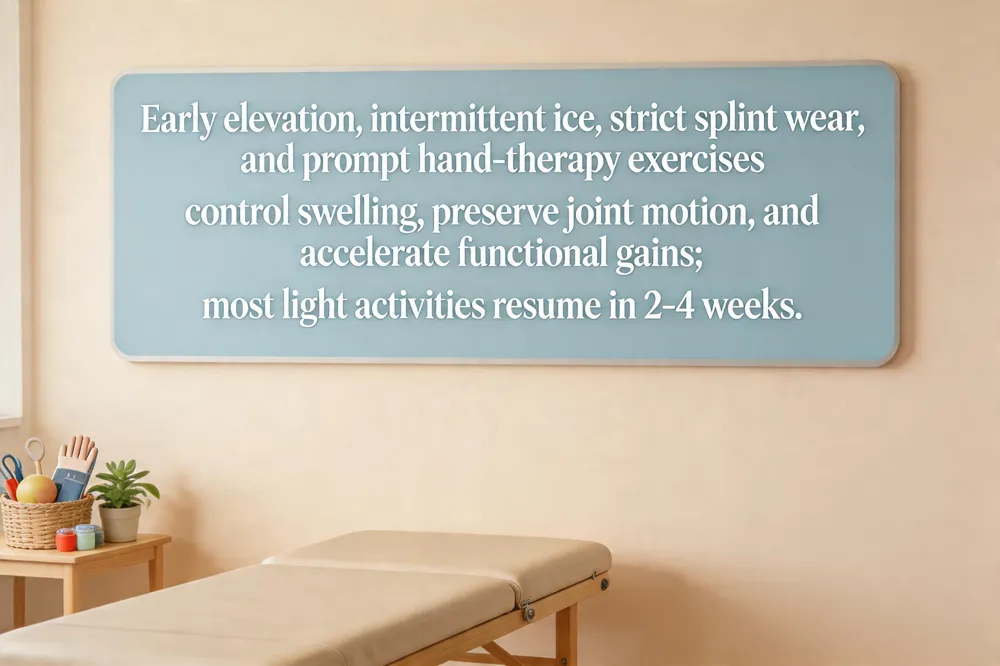 Early mobilization and therapy are cornerstones of a speedy hand‑surgery recovery. Within the first 3‑5 days, keep the hand and arm elevated above heart level, using the sling or Carter pillow your surgeon provides, and gently move the unaffected joints (shoulder, elbow, wrist, and any untouched fingers) as permitted. This promotes circulation, prevents stiffness, and prepares the hand for formal therapy.
Techniques to reduce swelling include intermittent ice packs (wrapped in a towel) applied for 15‑20 minutes several times a day, continued elevation, and the use of prescribed anti‑inflammatory medication. A clean, dry dressing protects the incision, while avoiding heat or direct pressure that could exacerbate edema.
Accelerating functional outcomes hinges on adhering to the surgeon’s splint‑wear schedule, initiating hand‑therapy exercises, heat, massage, and occupational‑therapy sessions as soon as clearance is given. Consistent practice of these exercises restores range of motion and grip strength more rapidly.
How can I recover faster from hand surgery? Raise the hand above heart level for the first 3‑5 days, take pain medication with a light snack, gently move unaffected joints, follow splint instructions, and begin therapist‑prescribed exercises promptly.
Hand still swollen 3 weeks after surgery – Persistent swelling can be normal; continue elevation, ice, gentle finger motion, and anti‑inflammatory meds, but watch for redness, warmth, or fever that may signal infection; schedule a follow‑up with Dr. Rebecca S. Yu.
How long does hand surgery take to recover? Light activities often resume in 2‑4 weeks, grip strength improves over 6‑12 weeks, and full dexterity may require 3 months; more complex procedures can need 3‑6 months or longer, emphasizing the importance of diligent therapy and compliance.
Practical Tools and Lifestyle Tips for Healing
 Effective postoperative care hinges on three practical areas: hand elevation while sleeping, essential recovery items, and realistic timelines for arthritis‑related procedures.
How to keep hand elevated while sleeping – Sleep on your back or on the side opposite the injured arm, using a firm pillow or a dedicated elevation wedge to prop the elbow and forearm so the hand stays above heart level. If you prefer side‑lying, bend the elbow, bring the hand toward your ear, and place a pillow behind the arm to prevent slipping. Adding a small pillow across the chest can further support the wrist and promote fluid drainage.
Helpful items after hand surgery – Keep a waterproof cast or arm cover for showering, an elevation pillow or wedge to reduce swelling, reusable gel ice packs for 20‑minute intervals, and soft‑grip stress balls or a grip‑strength trainer for early range‑of‑motion exercises once cleared. Stock straws, pre‑prepared meals, and easy‑to‑reach household items to limit gripping during the first weeks.
Arthritis hand surgery recovery time – Minimally invasive procedures (e.g., carpal‑tunnel release) often allow light hand use within 2‑4 weeks, with a protective splint for 6 weeks. More extensive surgeries (thumb basal joint replacement, wrist arthroplasty) require a non‑removable splint for ~10 days, then a removable splint for the remaining 6‑week period, with full heavy use delayed until after week 6. Therapy typically begins at week 6 and continues for several months; most patients achieve functional recovery in 3‑6 months, while optimal strength may take up to a year.
Expert Surgeons and Local Resources in the Bay Area
 What is the most complicated hand surgery?
The most complex hand procedures are microsurgical reconstructions such as toe‑to‑finger transplants or full hand, finger, and arm replantations. These operations repair bones, tendons, vessels, and multiple nerves, often combining nerve grafts, tendon transfers, and joint reconstruction. They can last three or more hours, require general anesthesia, and involve a lengthy six‑to‑12‑month rehabilitation period.
Orthopedic Berkeley
Berkeley offers comprehensive orthopedic services from sports medicine to specialized hand, wrist, elbow, and pediatric care. Leading providers include Dr. Rebecca S. Yu, a board‑certified orthopedic surgeon at the Berkeley Outpatient Center, and UCSF orthopedics. Appointments can be booked online or by calling 415‑353‑2808, with easy BART access.
Best orthopedic surgeons Bay Area
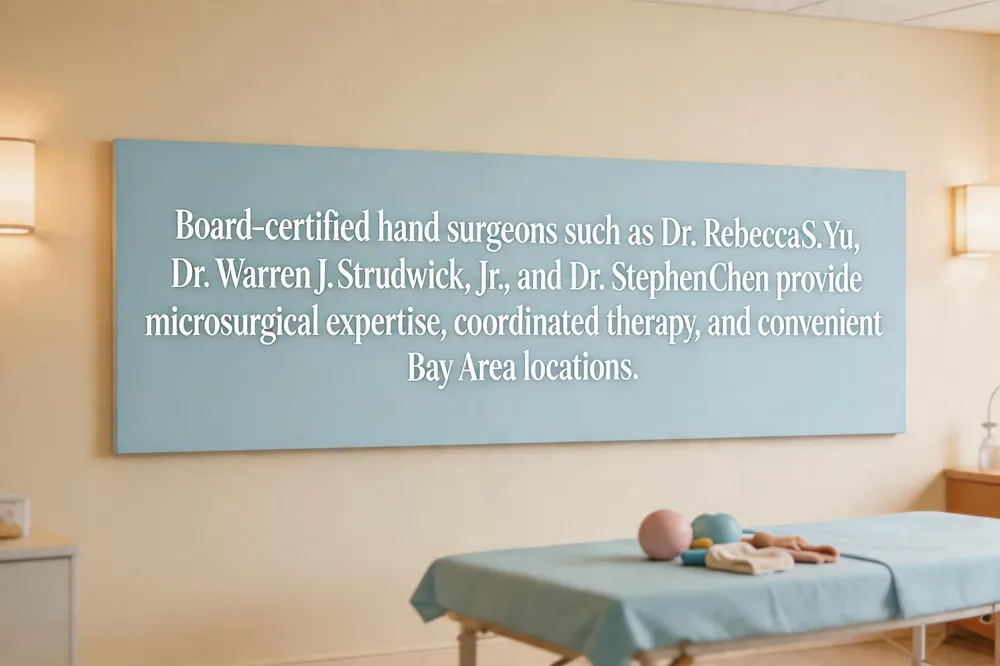
Dr. Rebecca S. Yu, MD, is highly rated for hand and upper‑extremity surgery. Other top Bay Area surgeons include Dr. Warren J. Strudwick, Jr. (Oakland sports medicine) and Dr. Stephen Chen (Walnut Creek). Patients should look for board certification, hand‑and‑wrist expertise, and strong reviews.
Hand surgeon Berkeley
Dr. Rebecca S. Yu treats trauma, carpal tunnel, elbow, wrist, and pediatric hand conditions with minimally invasive and reconstructive techniques, emphasizing compassionate, evidence‑based care and coordinated hand‑therapy services.
Best hand surgeon Bay Area
Dr. Rebecca S. Yu’s fellowship training in microsurgery, same‑day appointment options, on‑site imaging, and a multidisciplinary therapist team make her a leading hand surgeon throughout the Bay Area.
Hand surgeon Oakland
Oakland’s East Bay Hand & Upper Extremity practice, featuring Dr. Douglas Chin, Dr. Glen Lau, and Dr. Joshua C. Richard, offers microsurgical, arthroscopic, and minimally invasive hand procedures with comprehensive insurance coverage and online scheduling.
East Bay hand & upper extremity
This practice serves Oakland, Berkeley, and surrounding communities with state‑of‑the‑art hand surgery, on‑site X‑ray, casting, and hand therapy, streamlining care and reducing emergency visits.
Putting Compassion at the Center of Hand Care
Compassionate,—active listening, clear jargon‑free explanations, and emotional validation—has been repeatedly linked to lower pre‑operative anxiety, reduced postoperative pain, and higher adherence to hand‑therapy protocols, which together can accelerate functional recovery by up to 15 %. Studies such as Wilson and Skuthan’s 2026 qualitative research (PMCID: PMC12893925) demonstrate that surgeons who practice empathy experience fewer malpractice claims and higher patient trust, translating into better long‑term outcomes. Patients are encouraged to schedule a consultation with Dr. Rebecca S. Yu in Berkeley, where her board‑certified expertise is paired with a patient‑centered communication style that aligns with these evidence‑based findings. By engaging in shared decision‑making and asking questions, you help ensure a smoother recovery and optimal hand function.