Compassionate Care: The Heart of Hand Surgery
Compassionate care is the empathetic, respectful, and holistic approach that recognizes patients’ emotional and physical needs, responding with active listening, clear explanations, and genuine concern. In hand surgery, patient‑centered communication builds trust, reduces anxiety, and improves adherence to postoperative therapy, leading to better functional recovery. Dr. Rebecca S. Yu’s Berkeley practice exemplifies this model: board‑certified, she offers hand and wrist expertise, uses lay‑person language, shared decision‑making, and coordinated multidisciplinary support with therapists and pain specialists. Easy online scheduling, transparent billing, and personalized education materials ensure patients feel heard, informed, and supported throughout their treatment journey. This comprehensive, patient‑first philosophy aligns with national standards for compassionate orthopedic care.
Why Hand Surgery Is So Complicated
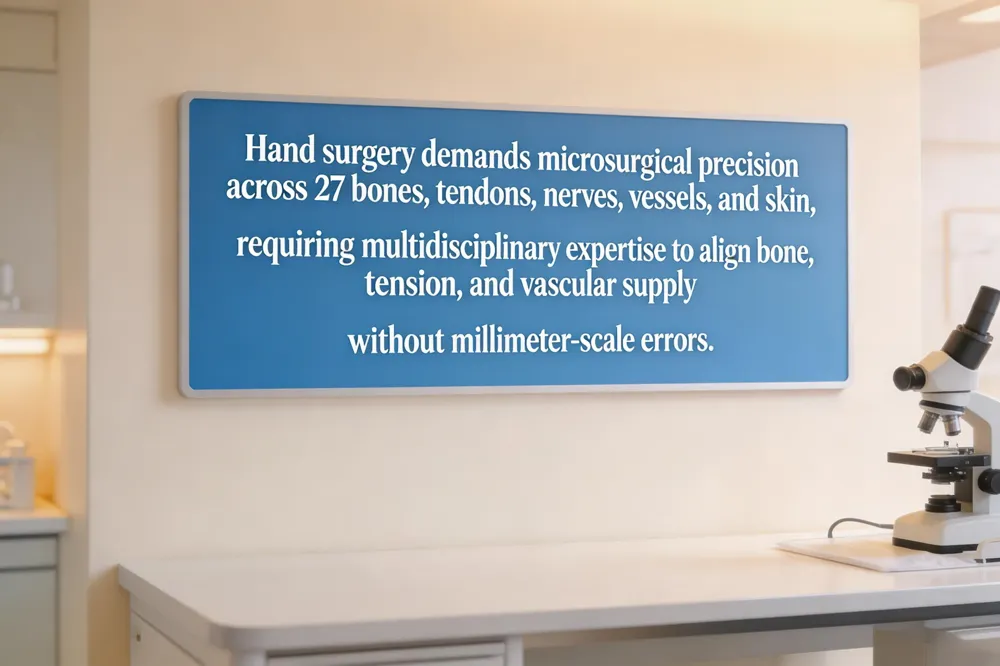 Hand surgery is complicated because the hand contains a dense, interwoven network of 27 bones, dozens of tendons, ligaments, nerves, blood vessels, muscles, and skin that must all work together for precise movements. Each structure is tiny and often located within a very confined space, requiring microsurgical techniques and high‑magnification optics to repair or reconstruct them accurately. The hand’s function depends on seamless coordination of multiple tissue types, so surgeons must address bone alignment, tendon tension, nerve signaling, and vascular supply all at once. This demands a multidisciplinary skill set that blends orthopedics, peripheral‑nerve surgery, microvascular reconstruction, and plastic‑reconstructive expertise. Even a millimeter of mis‑alignment can produce significant loss of dexterity or sensation, making meticulous planning, intra‑operative imaging, and postoperative rehabilitation essential. Moreover, patient‑centered communication—explaining anatomy, risks, and realistic recovery timelines—reduces anxiety and improves adherence to therapy, further influencing outcomes. In short, the hand’s anatomical complexity, the need for microsurgical precision, and the requirement for a collaborative, compassionate care model make hand surgery one of the most technically demanding fields in orthopaedics.
Managing Pain After Hand Surgery
 Pain after hand surgery follows a predictable pattern. Most patients experience mild to moderate soreness that peaks during the first 48‑72 hours, then gradually subsides over the next 2‑4 weeks. Swelling and stiffness may persist for several weeks, and occasional aching can linger for months, especially after extensive reconstructions or nerve repairs.
Pain‑control strategies combine medication and non‑pharmacologic measures. Surgeons typically prescribe short‑acting opioids or NSAIDs for the early postoperative period, followed by acetaminophen and topical agents as pain diminishes. Non‑drarmacologic tools—elevation, splinting, cryotherapy, gentle range‑of‑motion exercises, and therapist‑guided hand therapy—help reduce swelling and improve comfort.
Individual variation is common. Factors such as age, baseline health, the specific procedure, and personal pain tolerance influence the trajectory. Surgeons monitor progress through scheduled follow‑ups and patient‑reported outcome measures, adjusting medications or therapy as needed. Persistent or worsening pain beyond the expected window should be reported promptly.
Is hand surgery very painful? Hand surgery can cause discomfort, but intensity varies widely. Most patients report mild to moderate soreness that peaks early and then eases. More extensive procedures may produce higher‑grade pain, yet tailored regimens make it tolerable for the majority.
How long are you in pain after hand surgery? Pain typically peaks in the first few days and improves steadily over 2‑4 weeks. By 3‑4 months most patients have only occasional mild discomfort, and full resolution may take up to a year for complex cases. Consistent follow‑up ensures any persistent pain is addressed promptly.
Compassionate Communication & Shared Decision‑Making
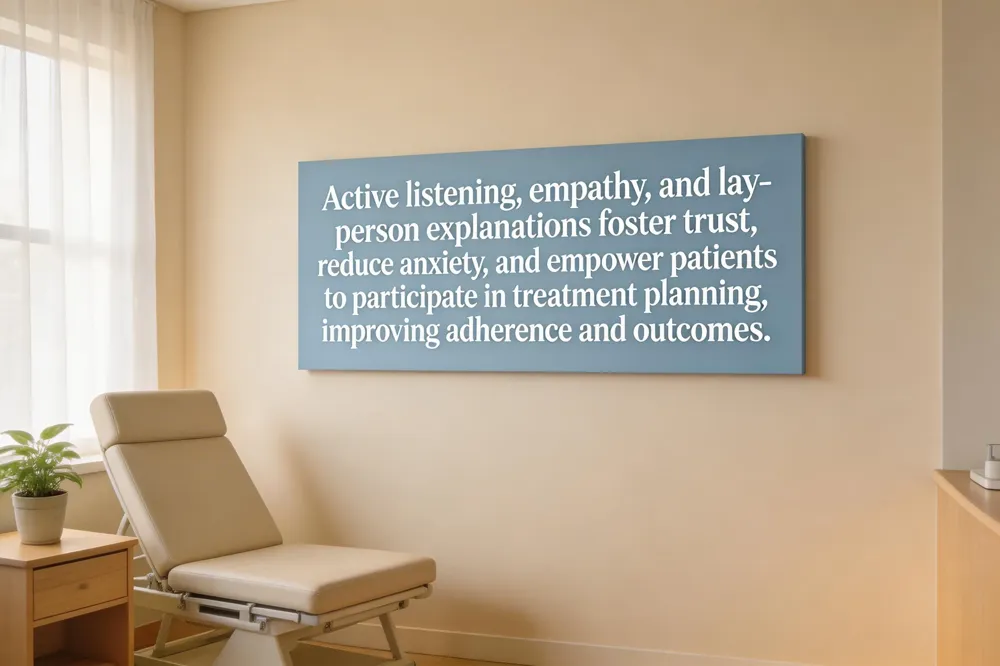 Effective orthopedic care begins with active listening and empathy. Studies of hand and upper‑extremity surgery show that clinicians who maintain eye contact, reflect patients’ emotions, and use lay‑person language reduce anxiety and foster trust (American Association of Colleges of Nursing; Unlocking the Secrets to Compassionate Patient Care). These behaviors translate into a shared decision‑making process in which surgeons explain diagnosis, treatment options, risks, and realistic recovery timelines, then invite patients to summarize the information to confirm understanding (Implementing Patient‑Centered Care in Orthopedics). By involving patients in goal‑setting and respecting their values, surgeons improve adherence and functional outcomes, as demonstrated in hand‑surgery cohorts that report lower postoperative anxiety and higher satisfaction. Patient feedback mechanisms—such as post‑visit surveys, electronic portals, and structured PROMs—provide actionable data that surgeons use to refine communication, identify workflow gaps, and sustain a patient‑first culture (Patient‑Centered Care in Orthopedic Education; Improving US orthopedic care via patient‑centric pathways).
Multidisciplinary Collaboration for Holistic Recovery
 Successful hand and upper‑extremity surgery hinges on a team that extends beyond the operating table. Hand therapists and occupational therapists work side‑by‑side with surgeons to translate operative goals into individualized exercise regimens, splinting strategies, and functional tasks that reflect each patient’s daily activities—whether it is typing, gardening, or playing a musical instrument. When mental‑health professionals are incorporated, patients receive screening for anxiety, depression, or pain‑related fear, and can benefit from counseling or brief mindfulness interventions that have been shown to lower postoperative anxiety and improve adherence to therapy. Digital health tools amplify this collaboration: secure patient portals deliver personalized rehabilitation timelines, instructional videos, and daily reminders, while mobile apps allow real‑time symptom tracking and two‑way messaging with the care team. Coordinated postoperative rehabilitation is therefore a seamless continuum—pre‑operative education, intra‑operative communication, and post‑operative follow‑up—ensuring that every facet of a patient’s physical, emotional, and social recovery is addressed in a unified, compassionate framework.
Patient Stories: Real‑World Impact of Compassionate Care
 Patient testimonials from the like Stephanie, Marjorie, and Hannah illustrate how compassionate, patient‑first orthopedic care transforms lives. Stephanie’s experience with hand surgery for carpal tunnel syndrome highlighted the surgeon’s calm demeanor, clear explanations, and supportive family involvement, leading to rapid pain relief and a return to gardening. Marjorie’s endoscopic carpal tunnel release, performed by Dr. Andrew Li, emphasized attentive listening and personalized education, which reduced anxiety and enabled her to resume rock‑climbing within weeks. Hannah’s ACL reconstruction with Dr. Cassandra Lee showed how shared decision‑making and empathetic counseling allowed her to align treatment goals with her active lifestyle, resulting in a smooth recovery and a return to yoga and horse riding. Across these stories, compassionate communication—active listening, empathy statements, and lay‑person language—proved essential for building trust, reducing postoperative anxiety, and improving functional outcomes. Easy online appointment‑booking and timely follow‑up through patient portals further reinforced the patient‑first approach, ensuring convenient access, continuous education, and swift address of concerns, all of which boost satisfaction and accelerate recovery.
Putting Compassion First in Every Hand Surgery
Compassionate care in hand and wrist surgery means listening actively, using plain language, and involving patients in shared decision‑making. Surgeons and their teams provide clear pre‑operative education, address emotional concerns, and coordinate multidisciplinary support from hand therapists, pain specialists, and social workers. Dr Rebecca S. Yu and her staff at the Sutter Health hand‑surgery center embody this approach: they spend time reviewing each patient’s daily activities, offer easy online scheduling, and maintain follow‑up via patient portals and phone calls. Their dedication to empathy, transparency, and personalized treatment plans creates confidence and smoother recoveries. Book a personalized consultation today to experience truly patient‑first care.