Welcome to Dr. Rebecca S. Yu’s Hand Surgery Practice
Dr. Rebecca S. Yu’s practice places patient‑centered care at the core of every encounter, offering personalized treatment plans that integrate early‑active‑motion rehabilitation, telemedicine follow‑up, and multimodal analgesia through Enhanced Recovery After Surgery (ERAS) protocols. Whether the patient presents with acute trauma—such as complex wrist fractures, tendon lacerations, or nerve injuries—or seeks elective relief for carpal tunnel syndrome, trigger finger, or thumb arthritis, Dr. Yu employs a full spectrum of surgical options. Innovative techniques include minimally invasive endoscopic carpal tunnel release, ultrasound‑guided percutaneous trigger‑finger release, 3‑D‑printed patient‑specific osteotomy guides for distal radius and scaphoid fractures, and biologic augmentation with platelet‑rich plasma to accelerate tendon healing. Emerging technologies such as robotic‑assisted navigation, augmented‑reality intra‑operative guidance, and smart sensor‑enabled external fixation further enhance precision and outcomes, ensuring that each patient receives cutting‑edge, evidence‑based care.
Foundations of Modern Hand Surgery: Minimally Invasive and Microsurgical Approaches
 Current hand and upper‑extremity surgery is dominated by minimally invasive and microsurgical techniques that maximize precision while minimizing tissue trauma. Arthroscopy of the wrist and elbow allows direct visualization of intra‑articular pathology through small portals, enabling targeted debridement, ligament repair, and cartilage restoration with reduced postoperative pain and faster functional return. The WALANT (wide‑awake local anesthesia no tourniquet) protocol further streamlines care by eliminating general anesthesia; patients remain awake, allowing intra‑operative active motion testing and immediate feedback on tendon tension or joint stability. Ultrasound‑guided percutaneous releases—such as trigger‑thumb or A1‑pulley decompression—provide radiation‑free, sub‑centimeter incisions that accurately target the offending structure, shortening recovery and decreasing scar formation. Microsurgical nerve and tendon repair relies on high‑magnification operating microscopes, ultra‑fine sutures, and biologic augmentation (PRP, stem‑cell‑laden scaffolds, BMP‑2) to enhance healing and functional outcomes.
Carpal‑tunnel release is the most common hand surgery in the United States, performed for median‑nerve compression with numbness and weakness. It is routinely executed in office‑based or outpatient settings using endoscopic or WALANT techniques, delivering rapid pain relief and swift return to activity. Surgeons such as Dr. Rebecca S. Yu regularly employ these forward‑thinking approaches to restore hand function across a spectrum of conditions.
Arthritis of the Hand: Surgical Options, Recovery, and Outcomes
 Arthrodesis vs. Arthroplasty
Arthrodesis (joint fusion) permanently joins the bones of a painful thumb, PIP, or DIP joint to eliminate motion and relieve pain, while arthroplasty replaces the damaged joint surface with a plastic, silicone, metal, or ceramic implant to preserve motion. Choice depends on age, activity level, and whether pain relief (fusion) or motion preservation (replacement) is the priority.
Arthrodesis vs. Arthroplasty
Arthrodesis (joint fusion) permanently joins the bones of a painful thumb, PIP, or DIP joint to eliminate motion and relieve pain, while arthroplasty replaces the damaged joint surface with a plastic, silicone, metal, or ceramic implant to preserve motion. Choice depends on age, activity level, and whether pain relief (fusion) or motion preservation (replacement) is the priority.
Post‑operative Rehabilitation Recovery after hand‑arthritis surgery varies with procedure complexity. Simple finger or thumb arthroplasty typically requires 4–6 weeks of protected motion, followed by therapist‑guided exercises to restore strength. More extensive reconstructions, such as multi‑joint arthroplasty or tendon‑transfer procedures, often need 3–6 months before full activities resume. Early gentle motion is encouraged once the surgeon‑approved splint is removed, and a structured therapy program is essential for optimal outcomes.
Success Rates Hand surgery for arthritis yields high success, with roughly 80‑90 % of patients achieving significant pain relief and functional improvement. Arthrodesis reliably eliminates painful motion, whereas arthroplasty preserves mobility and often leads to better hand use. Complication rates are higher for some finger procedures, so surgeons carefully balance risks and benefits.
Arthritis hand surgery recovery time Recovery depends on the procedure: simple arthroplasty 4–6 weeks, extensive reconstructions 3–6 months. Light daily tasks resume within weeks; heavy lifting and full grip strength develop over subsequent months.
Types of hand surgery for arthritis Options include arthrodesis, arthroplasty, synovectomy, and osteotomy, each tailored to joint involvement and disease severity.
How successful is hand surgery for arthritis? Approximately 80‑90 % of patients experience significant pain relief and functional gains when the appropriate procedure is selected.
Anatomy of the Upper Extremity and the Role of Orthopedic Hand Surgery
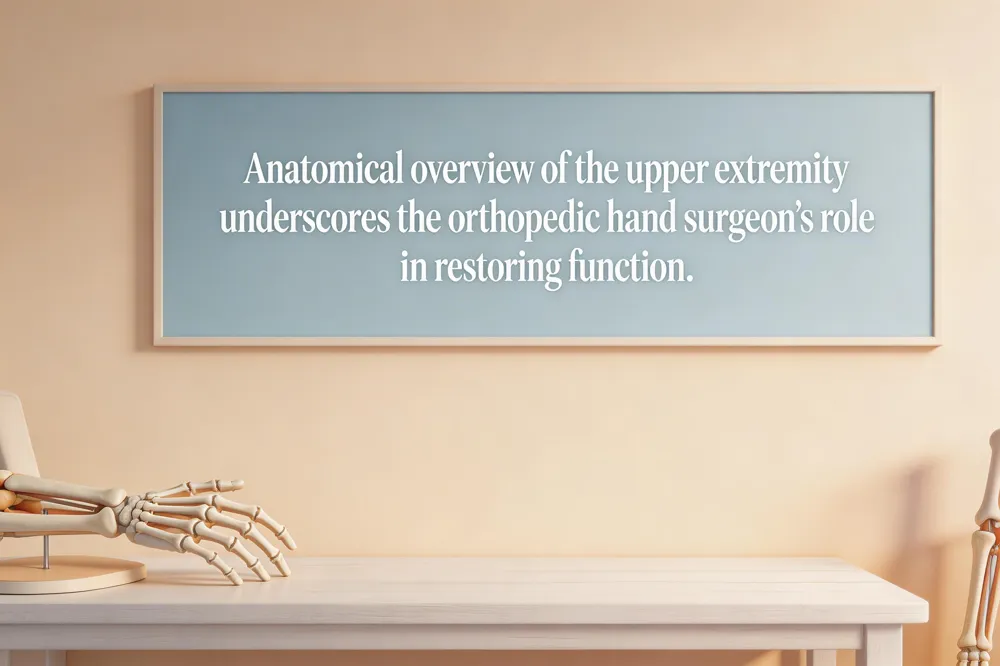 The upper extremity is anatomically divided into five regions. The shoulder girdle consists of the clavicle and scapula, anchoring the arm to the trunk and providing the socket for the glenohumeral joint. The brachium (upper arm) runs from the shoulder joint to the elbow, containing the humerus and the surrounding musculature that power elbow flexion and extension. The forearm extends from the elbow to the wrist and includes the radius and ulna, which enable pronation‑supination of the hand. The carpus (wrist) is a complex of eight small bones that transmit forces between the forearm and the hand, allowing a wide range of motion. Finally, the manus (hand) comprises five metacarpals and five digits, providing the dexterity required for fine motor tasks.
Orthopedic hand surgery is a subspecialty focused on diagnosing, treating, and rehabilitating musculoskeletal disorders of the hand, wrist, and forearm. It addresses acute injuries such as fractures, tendon and ligament tears, and nerve injuries, as well as chronic conditions like arthritis, carpal tunnel syndrome, and congenital deformities. Surgeons employ a spectrum of techniques—from traditional open procedures to minimally invasive methods like arthroscopy, ultrasound‑guided percutaneous releases, 3‑D‑printed patient‑specific guides, and WALANT anesthesia—to restore function, reduce pain, and expedite recovery. Integrated non‑surgical options (splinting, therapy, biologic injections) complement surgical care, aiming to preserve hand functionality and improve patients’ quality of life.
The Pinnacle of Technical Challenge: Hand‑and‑Arm Transplantation
 Vascularized composite allotransplantation (VCA) of the hand and forearm, as performed at centers such as Duke University, represents the most technically demanding hand surgery. The procedure requires a 12‑hour (or longer) microsurgical orchestration: precise bone fixation, anastomosis of arteries and veins, and meticulous re‑attachment of multiple tendons, nerves, and skin under high‑magnification microscopes. Surgeons must align the median, ulnar, and radial nerves to enable future regeneration, a task that demands sub‑millimeter accuracy. Post‑operatively, patients are placed on lifelong immunosuppressive regimens to prevent rejection, adding a complex pharmacologic layer to care. Rehabilitation is equally intensive, involving early active‑motion protocols, hand‑therapy, and sensor‑guided biofeedback to restore function. While tendon repairs and nerve transfers are challenging, the combination of microsurgical precision, immunologic management, and prolonged, multidisciplinary rehabilitation makes hand‑and‑arm transplantation the most difficult hand surgery performed today.
Innovations Driving the Future of Hand and Upper Extremity Surgery
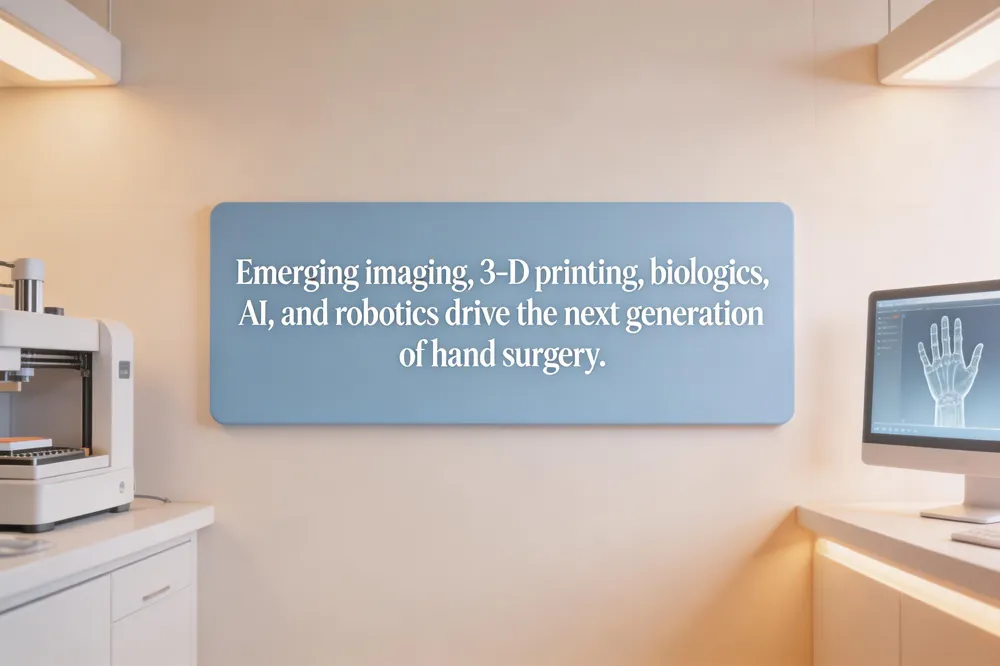 Recent advances in hand surgery are reshaping diagnosis and treatment. High‑resolution imaging, including musculoskeletal ultrasound and intra‑operative CT, now provides real‑time, sub‑millimeter visualization of nerves, tendons, and bone, enabling precise percutaneous releases and fracture fixation. Three‑dimensional printing of patient‑specific guides and implants has become routine for complex distal‑radius, scaphoid, and metacarpal reconstructions, improving alignment while reducing operative time. Biologic augmentation—platelet‑rich plasma, stem‑cell concentrates—accelerates tendon and ligament healing and is being integrated into repairs and reconstructions. Artificial intelligence algorithms assist in fracture detection and outcome prediction, while virtual‑reality planning and augmented‑reality navigation guide intra‑operative decision‑making. Robotic‑assisted platforms deliver tremor‑free drilling and screw placement, enhancing accuracy in wrist arthroplasty and elbow procedures.
What are the advances in hand surgery? Key areas of progress include high‑resolution imaging, minimally invasive surgery, wide‑awake local anesthesia (WALANT), and biologic therapies such as platelet‑rich plasma and stem cells.
Your Path to Restored Function Starts Here
At our Berkeley hand surgery practice, every patient receives a personalized treatment plan that begins with a detailed clinical assessment and high‑resolution imaging to map the exact anatomy of the injury or pathology. Using state‑of‑the‑art technology—such as 3‑D‑printed patient‑specific surgical guides, ultrasound‑guided percutaneous releases, and the WALANT technique—we tailor minimally invasive procedures to each individual’s anatomy and functional goals, reducing pain, scar tissue, and recovery time. Our integration of telemedicine platforms allows you to schedule a virtual consultation in minutes, upload imaging studies securely, and receive a preliminary care roadmap before stepping into the office. Once a surgery is planned, you can book a convenient in‑person appointment through our online portal or by calling our dedicated line, ensuring a smooth, hassle‑free experience from first contact to postoperative follow‑up.