Introduction to Hand and Upper Extremity Surgery
Hand and upper‑extremity surgery addresses injuries and chronic conditions of the wrist, hand, elbow, forearm and shoulder through procedures such as carpal‑tunnel release, tendon repair, fracture fixation and joint reconstruction. Patients begin with a comprehensive evaluation—history, imaging and sometimes nerve studies—followed by pre‑operative testing, medication adjustments (e.g., stopping blood thinners) and arrangement of postoperative support. On the day of surgery a board‑certified orthopedic surgeon, Dr. Rebecca S. Yu of the Center for Hand and Upper Extremity Surgery in Berkeley, CA, performs minimally invasive techniques when possible, then guides patients through a structured recovery that includes splinting, pain control, early motion, and hand‑therapy to restore function.
Pre‑operative Preparation: What to Do and What to Avoid
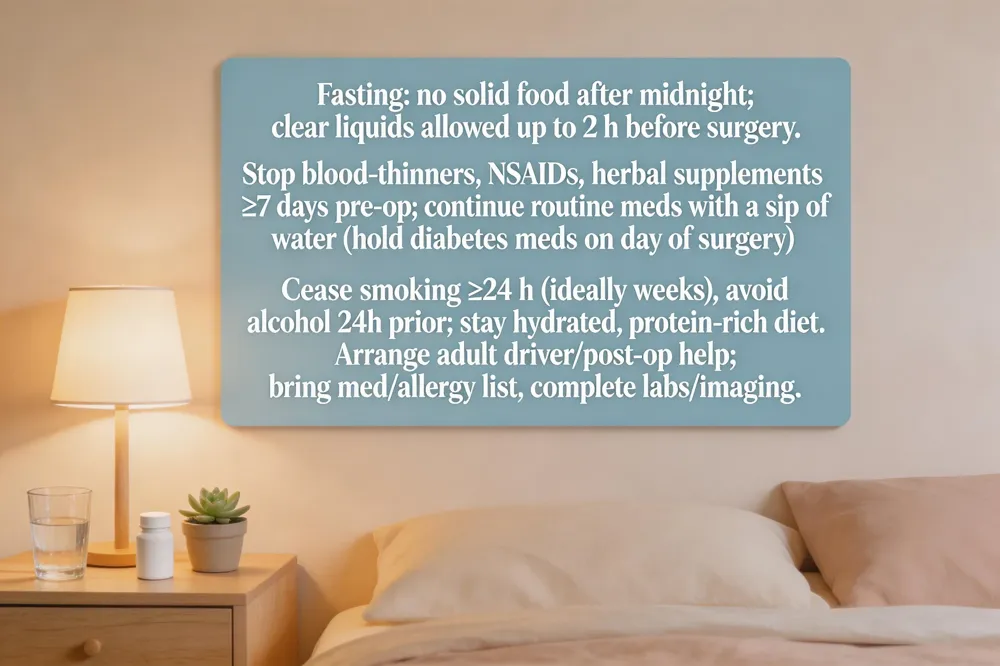 Before hand or upper‑extremity surgery, patients must follow a strict set of pre‑operative instructions to keep anesthesia safe and reduce complications.
Fasting guidelines – No solid foods after midnight the night before the procedure; clear liquids (water, tea, coffee without cream) may be taken up to two hours before surgery.
Medication restrictions – Stop blood‑thinners (e.g., aspirin, warfarin, clopidogrel), NSAIDs (ibuprofen, naproxen), and herbal supplements at least seven days before the operation unless the surgeon advises otherwise. Routine prescription meds can be taken with a sip of water, but diabetes medications are usually held on the day of surgery.
Lifestyle prep – Cease smoking at least 24 hours before surgery (and ideally a few weeks prior) to improve wound healing and lower infection risk. Optimize nutrition with a balanced, protein‑rich diet and stay well‑hydrated; avoid alcohol in the 24 hours preceding the case.
Logistics – Arrange a responsible adult to drive you home and remain with you for at least 24 hours, as anesthesia impairs driving ability. Ensure postoperative support at home for meals, dressing changes, and daily chores.
Pre‑operative work‑up – Complete all required labs, imaging (X‑ray, MRI, CT), and specialist appointments. Bring a complete medication list, and confirm allergies and medical history with the care team.
Answer to the question – What should you not do before hand surgery? Do not eat or drink after midnight, do not take aspirin, NSAIDs, or herbal supplements without clearance, avoid smoking, do not drive yourself home, and do not ignore any pre‑operative instructions from your surgeon or anesthesiologist.
Day of Surgery: Anesthesia, Procedure Duration, and Immediate Care
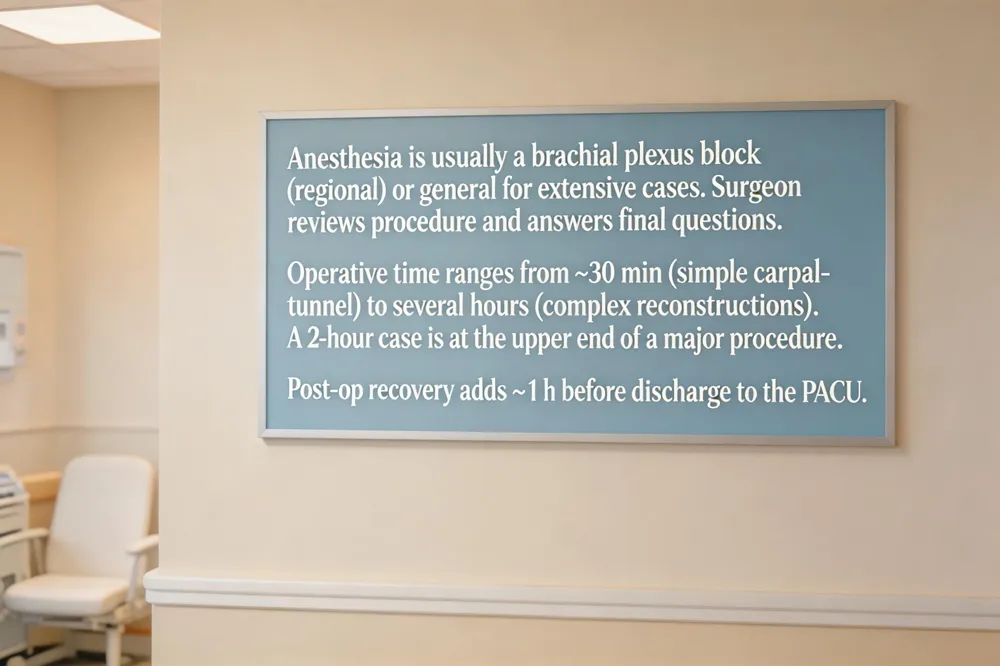 On the day of hand or upper‑extremity surgery the team first confirms the anesthesia plan. Most procedures are performed under regional anesthesia—commonly a brachial plexus block—which numbs the entire arm while the patient stays awake, or under general anesthesia when the case is more extensive. When appropriate, the surgeon employs minimally invasive techniques such as endoscopic releases or microscope‑assisted tendon repairs to limit tissue trauma and speed healing.
Before entering the operating room the surgical team reviews the specific procedure, answers any final patient questions, and explains postoperative expectations such as immobilization, pain control, and activity restrictions. Estimated operative times vary widely: simple carpal‑tunnel releases may take as little as 30 minutes, whereas complex wrist reconstructions, fracture fixations, or nerve repairs can extend to several hours.
Is a 2‑hour surgery a long surgery? A two‑hour operation falls at the upper end of what most surgeons classify as a major procedure. Minor surgeries usually last 30 minutes to an hour, while major surgeries typically range from 1½ hours up to about two hours. Because a two‑hour case is the longest of that range, it can feel “long” compared with shorter, less complex operations. However, in orthopedic hand and upper‑extremity surgery, two hours is not uncommon for more extensive reconstructions or joint work. After the operation, patients should also expect roughly an additional hour of recovery time before they can be discharged or move to a post‑anesthesia care unit.
Post‑operative Care: Wound Management, Pain, Swelling, and Warning Signs
 Keeping dressings clean and dry – After surgery the incision and any bandage must stay dry. When showering, place the dressing in a sealed plastic bag or use a waterproof cover; do not remove the dressing unless your surgeon tells you to. Keep the area free of soap and water to prevent infection.
Pain medication schedule and ice packs – Begin prescribed analgesics as soon as you return home, taking them on a regular schedule (usually every 4–6 hours) rather than waiting for pain to become severe. Ice can be applied to the outside of the dressing for 15‑20 minutes several times a day during the first 48‑72 hours; always wrap the ice in a thin towel to protect the skin.
**Elevation to reduce swelling – Elevate the hand above heart level as often as possible, especially during the first 3‑5 days. This promotes fluid drainage and lessens swelling. Combine elevation with gentle finger movements as instructed by your therapist.
Monitoring for infection or complications – Watch for warning signs such as increasing redness, warmth, swelling, drainage, fever, numbness, tingling that spreads, or extreme pain that does not improve with medication. If any of these occur, contact Dr. Yu’s office or go to the emergency department immediately. Ignoring these signs can lead to infection, hematoma, or complex regional pain syndrome, which require prompt treatment for a successful recovery.
Rehabilitation, Activity Restrictions, and Returning to Work and Driving
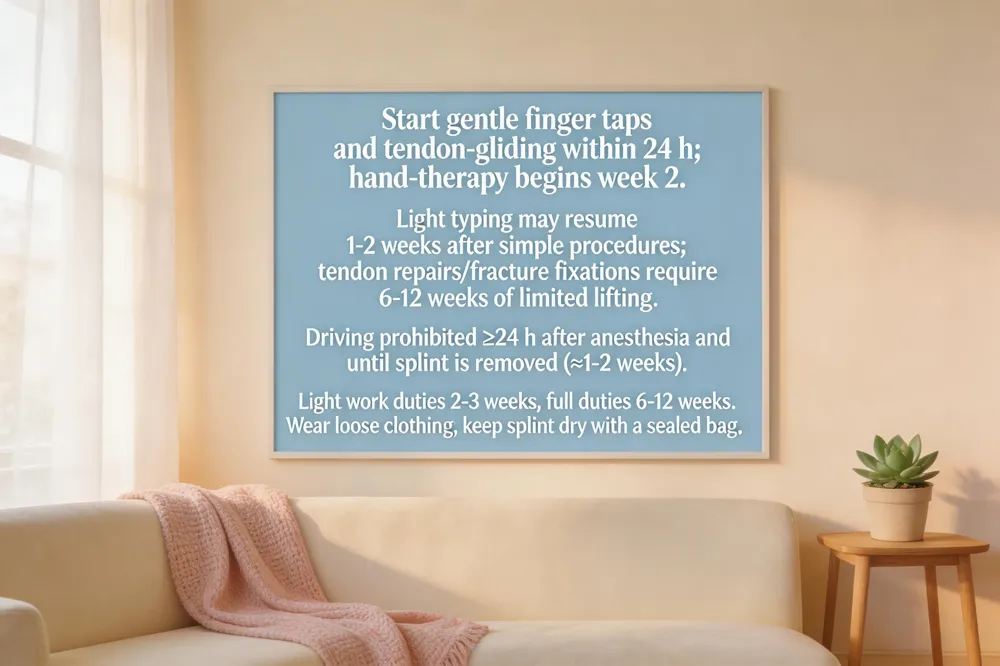 Early controlled motion is crucial; within the first 24 hours patients can begin gentle finger taps and tendon‑gliding exercises to promote circulation, and by week 2 a hand‑therapist will guide a structured program. Activity restrictions follow procedure complexity—simple carpal‑tunnel releases allow light typing after 1–2 weeks, while tendon repairs or fracture fixations require 6–12 weeks of limited lifting and repetitive motions.
Driving is prohibited for at least 24 hours after general or regional anesthesia; if a splint or bulky dressing is present, wait 1–2 weeks until you can comfortably grip the wheel and are pain‑free. Test strength and reaction time before resuming.
Work can resume on light duties (writing, computer use) by week 2–3 for minor surgeries; more demanding jobs need 6–12 weeks, with heavy lifting often delayed beyond 12 weeks.
Wear loose, breathable clothing that does not rub the splint or dressing; short‑sleeve or open‑front tops are ideal. Keep the prescribed splint clean and dry, using a sealed plastic bag for showers.
Fastest recovery strategies: keep the hand elevated above heart level, apply ice as directed, adhere to pain‑medication schedules, and attend all therapy sessions. Early finger motion, proper splint wear, and avoiding smoking or heavy alcohol further accelerate healing.
FAQs: Rest the hand for the first 7 days; gentle motion begins week 2. Driving returns after 24 hours (no narcotics) or when the splint is removed (≈1–2 weeks). Return to work depends on job demands—light tasks at 1–2 weeks, full duties by 6–12 weeks. Wear loose clothing, avoid tight sleeves. Finger movement after wrist surgery should include full flexion and extension of all digits and thumb opposition. The quickest recovery comes from elevation, ice, rest, and diligent therapy.
Specific Procedures and Recovery Timelines
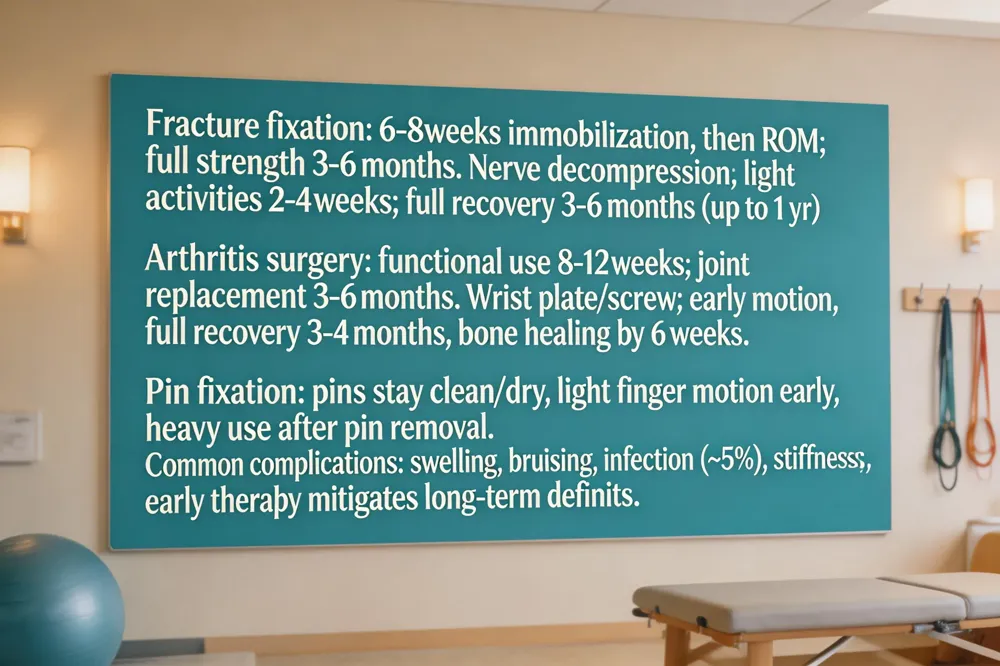 Recovery after hand and upper‑extremity surgery varies by procedure, patient health, and adherence to post‑operative instructions.
Broken hand fractures and fixation – Bone healing generally requires 6–8 weeks of immobilization in a splint or cast. After cast removal, gentle range‑of‑motion exercises begin; light duties may resume within a few weeks, but full strength and dexterity often need 3–6 months of targeted therapy. Complex or multi‑bone injuries extend the timeline, and factors such as diabetes, smoking, or poor nutrition can slow healing.
Nerve decompression and repair – Simple decompression (e.g., carpal tunnel release) allows return to light activities in 2–4 weeks, while extensive nerve repairs require axonal regrowth (~1 mm/month). Functional recovery typically spans 3–6 months and may continue up to a year, with early hand therapy essential to prevent stiffness.
Arthritis‑related hand surgery – Most patients regain functional use within 8–12 weeks; joint replacement or extensive synovectomy may need 3–6 months of guided therapy. Early elevation, swelling control, and diligent therapist‑prescribed exercises improve outcomes.
Wrist plate and screw fixation – Used for unstable distal radius fractures, a low‑profile volar plate permits early motion. Gentle ROM starts within a few weeks, and full functional recovery occurs by 3–4 months, although bone healing completes by six weeks.
Pin fixation and postoperative care – The hand is immobilized in a splint or cast protecting the pins for several weeks. Pin sites must stay clean and dry; pain and swelling are managed with prescribed analgesics, elevation, and ice. Light finger‑wiggle exercises begin early, but heavy use is restricted until pin removal and therapist‑guided rehab.
Potential complications – Swelling, bruising, and mild pain are common; infection occurs in ~5 % (treated with antibiotics). Stiffness, scar formation, delayed healing, and rare nerve or tendon injury can arise, but early motion and hand‑therapy reduce long‑term deficits.
Is hand surgery major? – Most procedures are outpatient, using local or wide‑awake anesthesia and lasting 20–30 minutes, classifying them as minor. Complex reconstructions may require general anesthesia and longer operative time, making them major.
Pain after wrist surgery – Moderate pain and swelling are typical for the first week; analgesics, ice, elevation, and a splint control discomfort. Pain usually subsides within two weeks, with lingering soreness during early therapy.
Pain duration after hand surgery – Noticeable pain peaks in the first 1–2 weeks, diminishes by week two, and may persist as mild ache for several weeks. Full pain resolution aligns with the 3–4‑month functional recovery timeline, though strength may continue improving for up to a year.
Key Takeaways and Next Steps
From the first pre‑operative visit—medical history, imaging, medication review—to the day of surgery, patients complete fasting, stop blood‑thinners, arrange a driver and prepare a first‑floor recovery space. After anesthesia, the hand is immobilized, pain is managed with prescribed analgesics, ice and elevation, and wound care instructions are given. Early gentle motion begins within 24 hours, followed by splint removal, suture check‑up at two weeks, and a structured hand‑therapy program that progresses through range‑of‑motion, strengthening and functional drills. Following every guideline from Dr. Rebecca S. Yu, attending scheduled follow‑ups, and committing to therapy are essential for a safe, swift return to full hand function.