Why Carpal Tunnel Matters
Carpal tunnel syndrome affects 3–6 % of U.S. adults, making it the most common median‑nerve entrapment neuropathy. Compression of the median nerve produces numbness, tingling, pain and hand weakness that interfere with typing, gripping, and everyday tasks, often reducing work productivity. First‑line management includes nighttime wrist splinting to keep the wrist neutral, over‑the‑counter NSAIDs for pain, corticosteroid injections for short‑term inflammation control, and hand‑therapy exercises that promote nerve glide and tendon flexibility. When symptoms persist despite these measures, or when muscle atrophy or functional loss develops, surgical decompression of the transverse carpal ligament becomes necessary to restore nerve function and prevent permanent disability.
Minimally Invasive Surgical Options
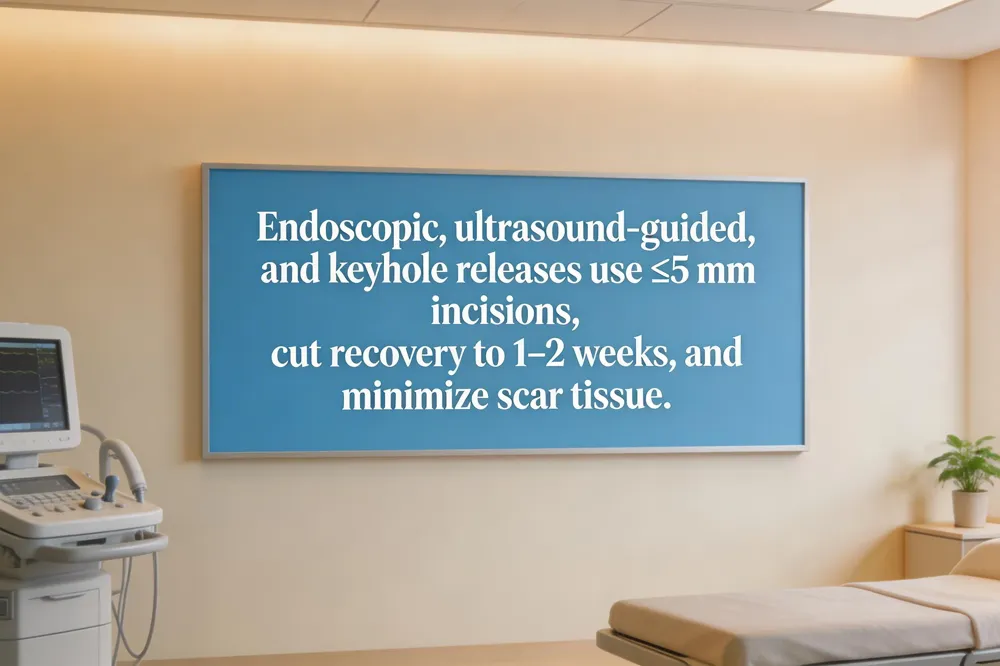 Mini‑open carpal tunnel release uses a 1.5–2 cm transverse incision distal to the wrist crease, offering comparable efficacy to the traditional 5–7 cm open approach while reducing pillar pain, scar formation and allowing a return to light duty within 2 weeks. Endoscopic release employs one or two ½‑inch portals with a camera and cutting instruments; patients often resume typing in 3–5 days and full work by 2 weeks, with less early palm pain. Ultrasound‑guided release (UGCTR) uses real‑time imaging to place a cutting thread or SX‑One MicroKnife® through a 4–5 mm skin puncture, transecting the transverse carpal ligament without sutures. Recovery is typically 1–2 days for light activities and full function by 1–2 weeks. Keyhole techniques, similar to UGCTR, create a needle‑size entry and provide the fastest symptom relief, often allowing return to work the next day. All methods are available in the San Francisco Bay Area, notably at Dr. Rebecca S. Yu’s Berkeley practice, which offers both endoscopic and ultrasound‑guided releases. Emerging image‑guided modalities continue to shrink incision size and speed healing.
Endoscopic carpal tunnel surgery: minimally invasive, ½‑inch incisions, endoscope visualizes ligament; less pain, quicker return to light work within 1–2 weeks.
Minimally invasive recovery time: light activities 3–5 days, full duties 2 weeks, grip strength 4–6 weeks.
Ultrasound guided release near me – outpatient, local anesthesia, rapid return.
New treatment: Ultrasound‑guided micro‑invasive release (Thread or SX‑One MicroKnife®) with needle‑size entry, no scar, fast recovery.
Micro‑invasive recovery: dressing removal 3–5 days, light work by week 1, full use 4–6 weeks.
Fastest recovery: follow post‑op protocol, elevation, splint, early gentle motion, choose endoscopic or ultrasound‑guided technique.
Post‑operative Recovery Roadmap
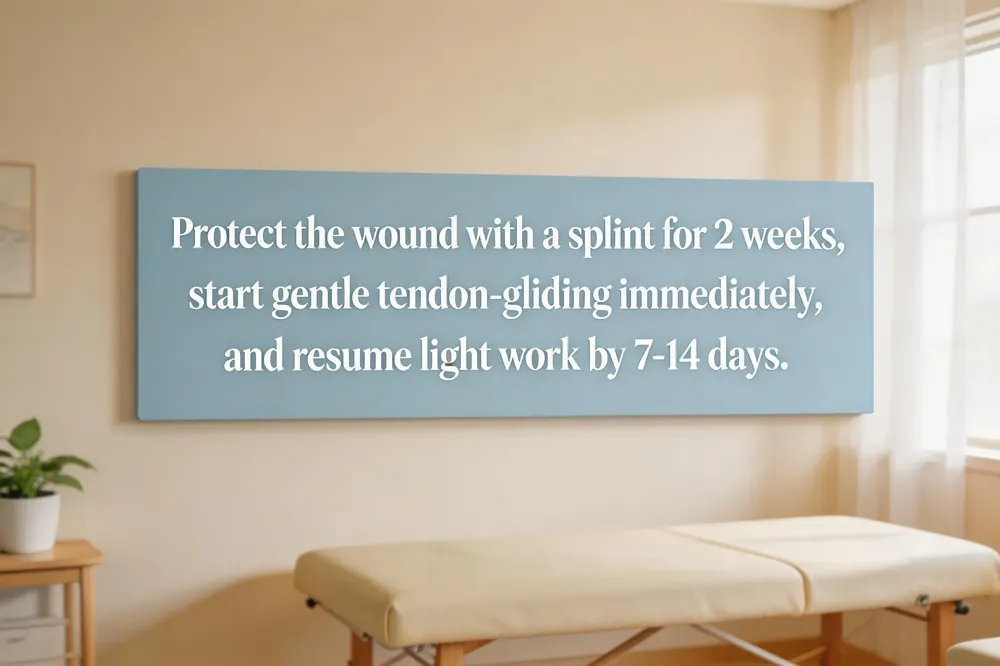 After carpal tunnel release, immediate wound care consists of keeping the small incision dry and protected with a waterproof dressing for the first 24‑48 hours, then changing to a clean lightage as instructed. A soft splint or bandage is worn for about two weeks to protect the median nerve and the healing transverse carpal ligament. Sutures or adhesive strips are typically removed at the 7‑day visit; the bandage comes off at the two‑week follow‑up. Pain is managed with over‑the‑counter NSAIDs such as ibuprofen or naproxen, and a short course of acetaminophen as needed; ice packs (15 min on, 15 min off) reduce swelling. Activity restrictions for the first two weeks include avoiding lifting more than 1–2 lb, typing, mouse use, or repetitive gripping. Light household tasks are allowed, but heavy labor, gardening, or power‑tool use is postponed until 4‑6 weeks. Gentle finger‑wiggling and tendon‑gliding exercises begin immediately; more structured therapeutic hand exercises start at the two‑week visit, progressing to strengthening after 4‑6 weeks. Most patients resume light office work and driving within 7‑14 days, return to full duty by 4‑6 weeks, and achieve full strength by 3‑6 months.
Conservative & Self‑Care Strategies
 Carpal tunnel exercises are low‑impact stretches that improve tendon and median‑nerve glide. Typical routines include wrist‑extension/flexion holds (15‑30 seconds), a prayer stretch, thumb‑stretch drills, and tendon‑glide sequences such as hook‑fist, full‑fist, and straight‑hand positions repeated 5‑10 times daily. Adding a brief warm‑up and post‑exercise icing helps control inflammation.
Night‑time pain is usually due to wrist flexion while sleeping. A neutral‑position night splint or brace keeps the wrist straight, reducing median‑nerve compression. Ice packs (10‑15 minutes before bed) or a cold massage can further lessen swelling; NSAIDs may be taken as directed for lingering soreness.
Non‑surgical alternatives include night splinting, ergonomic modifications (adjusted keyboards, wrist rests, frequent micro‑breaks), hand‑therapy exercises, yoga stretches, and over‑the‑counter NSAIDs. Corticosteroid injections provide short‑term relief when conservative measures fail. Lifestyle changes—weight control, smoking cessation, and management of diabetes or arthritis—lower overall nerve compression.
Patients report success with a combination of wrist bracing, regular nerve‑glide and tendon‑glide exercises, activity modification, and NSAIDs, often avoiding surgery altogether. If symptoms persist, a qualified hand surgeon can evaluate the need for injection or minimally invasive release.
Complications, Diagnosis & When to Seek Help
 Recognizing nerve‑damage symptoms after release: Post‑operative median‑nerve injury may manifest as persistent numbness or tingling in the thumb, index and middle fingers, sharp burning pain, allodynia, or loss of grip strength that does not improve within the usual healing window. Any worsening or new weakness warrants prompt evaluation.
Differential diagnosis of CTS‑like conditions: Two common disorders mistaken for carpal tunnel syndrome are rheumatoid arthritis, which causes inflammatory wrist pain and numbness, and tendonitis, where inflamed tendons produce swelling and sensory changes. Both require different management than true CTS.
Self‑testing maneuvers for CTS: At home, perform Phalen’s test (hands back‑to‑back, wrists flexed 30‑60 s), Tinel’s sign (light tap over the median nerve), the hand‑elevation test (raise arms above head), and the Durkan compression test (press thumb over the wrist). Reproduction of symptoms suggests CTS.
Understanding postoperative worsening: Early post‑surgery swelling, scar tissue, incomplete release, or pre‑existing nerve damage can cause temporary increased pain or tingling. Severe, spreading symptoms, redness, drainage, or fever may indicate infection or nerve irritation and need urgent review.
Educational videos and visual resources: Surgical videos typically show a small endoscopic or ultrasound‑guided incision, real‑time ligament transection, and the rapid, minimally invasive technique that reduces scar sensitivity and speeds recovery. Watching these helps patients set realistic expectations.
Patient Resources & Visual Follow‑up
 After surgery the palm is covered with a bandage, with a red stripe marking the 1.5‑2 cm incision. Sutures or staples are removed 7–10 days; by two weeks the bandage is replaced by an adhesive dressing and the skin looks pink, beginning to epithelialize, with a faint scar by 3–4 weeks. Post‑operative videos on sites and YouTube show endoscopic release, illustrating the small incision and recovery. Healing photos are in libraries (iStock, Shutterstock) and surgeon pamphlets. Schedule the 10‑14‑day follow‑up via the clinic’s online portal; the visit includes wound check, suture removal, splint assessment, and activity guidance. Call for any signs of infection or worsening symptoms.
Putting It All Together
Creating a personalized plan that blends conservative measures—night splinting, activity modification, corticosteroid injections, and hand therapy—with minimally invasive carpal tunnel release (mini‑open, endoscopic, or ultrasound‑guided) allows patients to avoid surgery when possible and receive rapid relief when needed. Follow‑up visits within 1–2 weeks after any procedure are essential to confirm complete ligament release, monitor wound healing, and reinforce hand‑exercises and safe return‑to‑work guidelines. Dr. Rebecca S. Yu’s Berkeley office (555 Main St., Suite 210, Berkeley, CA) can be reached at (510) 555‑1234 or online at www.dr-yuhand.com to schedule an evaluation, discuss insurance, and book the appropriate intervention, and ensure a smooth recovery with personalized care today.