Welcome to Dr. Rebecca S. Yu’s Guide
Tennis elbow, or lateral epicondylitis, is a tendinopathy of the extensor carpi radialis brevis caused by repetitive wrist extension and forearm supination. Most patients improve with non‑operative measures, but chronic cases may need minimally invasive options that reduce tissue trauma, shorten recovery, and lower complication risk compared with open surgery. This guide is organized into three sections: (1) a concise overview of the condition, (2) the rationale for choosing minimally invasive care, and (3) a roadmap of the article’s layout so readers can quickly find information on diagnosis, conservative therapies, injective biologics, percutaneous tenotomy, shock‑wave treatment, and surgical alternatives. Each part blends current evidence with practical recommendations for optimal outcomes.
Understanding Tennis Elbow and Conservative Care
 Tennis elbow, medically known as lateral epicondylitis, is a tendinopathy of the extensor carpi radialis brevis (ECRB) tendon. Micro‑tears and degeneration develop from repetitive wrist extension and forearm supination in activities such as racket sports, gardening, painting, or heavy‑tool use, concentrating load on the lateral epicondyle.
Typical symptoms include a dull ache or burning pain on the outer elbow that worsens with gripping, wrist extension, or forearm supination, often radiating down the forearm to the wrist. strength is usually reduced, and pain may increase after periods of rest.
First‑line home measures follow the RICE protocol: Rest the aggravating activity, Ice the elbow 15‑20 minutes 3‑4 times daily, Compress with a light bandage if swelling is present, and Elevate the arm when possible. Over‑the‑counter NSAIDs (e.g., ibuprofen or naproxen) help control inflammation, and a counter‑force brace redistributes tensile load away from the injured tendon during daily tasks.
Physical Therapy and Exercise Programs
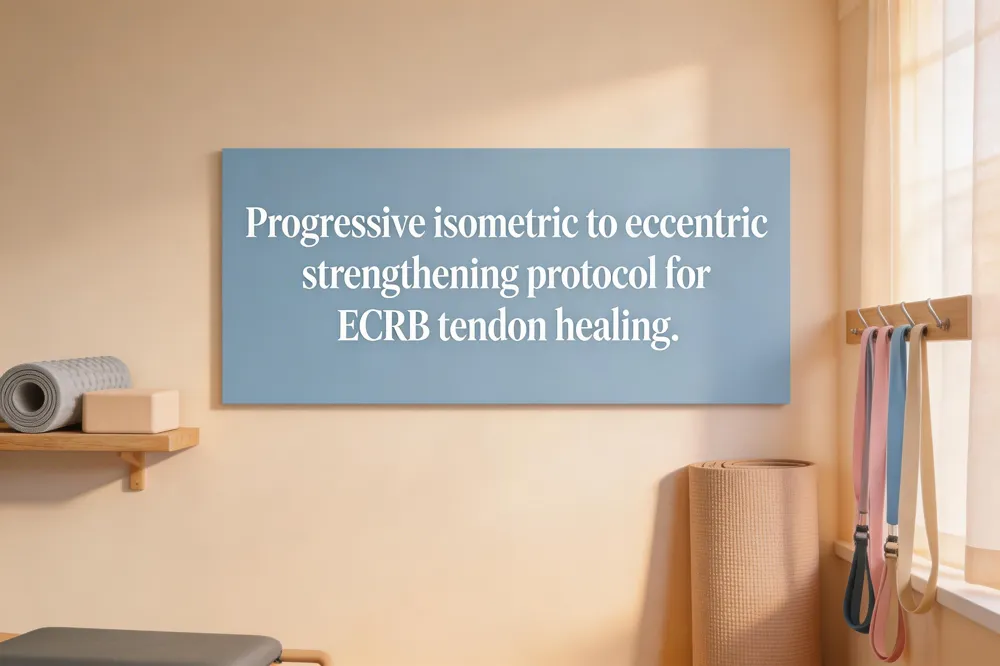 After pain subsides, progressive strengthening is introduced. Isometric holds (e.g., ball or sock squeezes held for six seconds, 8‑12 repetitions) precede isotonic work. Light wrist‑extension and flexion with a 1‑2 lb dumbbell are performed for 8‑12 reps once daily, followed by light biceps curls to support forearm mechanics. The program emphasizes a shift from isometric to eccentric loading, where the patient resists the wrist‑extension motion as the muscle lengthens, a method shown to remodel the ECRB tendon.
Exercise frequency starts with daily sessions, advancing to five days per week as tolerance improves. Progression is guided by pain‑free performance and therapist assessment, typically over 6‑12 weeks, culminating in restored grip strength and return to sport or occupational tasks.
Bracing, Medications, and Adjunctive Options
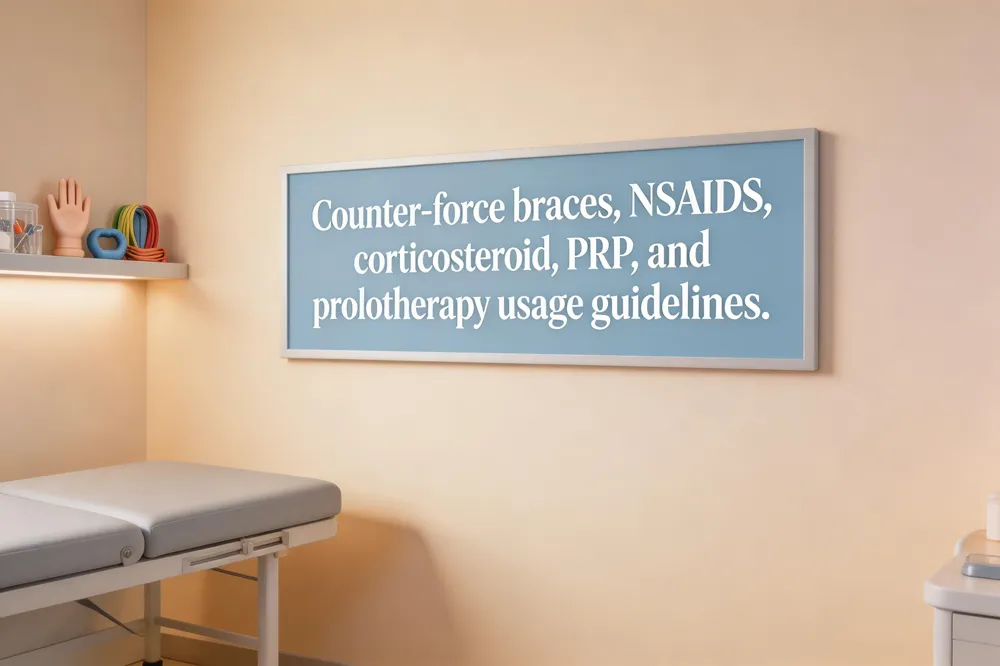 Counter‑force braces and compression sleeves are first‑line mechanical adjuncts. A counter‑force strap is wrapped a few finger‑breadths below the painful epicondyle, applying gentle pressure that redistributes load away from the inflamed extensor carpi radialis brevis (ECRB) tendon. This reduces pain during gripping, sports, or daily activities while preserving full range of motion. Selection depends on symptom severity and activity level.
NSAIDs, topical and oral, provide short‑term pain control. First‑line therapy is an oral NSAID such as ibuprofen (200‑400 mg every 6‑8 hours) or naproxen (250‑500 mg twice daily). Topical NSAIDs (e.g., diclofenac gel) are useful when oral agents are contraindicated. Short‑term corticosteroid injections may be used for severe pain after 6‑12 weeks of failed NSAID therapy.
Injection therapies include corticosteroid, platelet‑rich plasma (PRP), and prolotherapy. Corticosteroid shots give rapid relief but may weaken tendon tissue if repeated. PRP delivers autologous growth factors that can promote tendon healing, while prolotherapy uses irritant solutions to stimulate a reparative response.
When to consider adjuncts: If pain persists beyond three weeks despite rest, ice, NSAIDs, and a structured physical‑therapy program, adding a brace or a single corticosteroid injection is reasonable. For refractory symptoms after 6–12 weeks, PRP or prolotherapy may accelerate recovery. Surgery is reserved for chronic cases that fail 6–12 months of comprehensive non‑operative care.
Minimally Invasive Procedures and Fast Relief Strategies
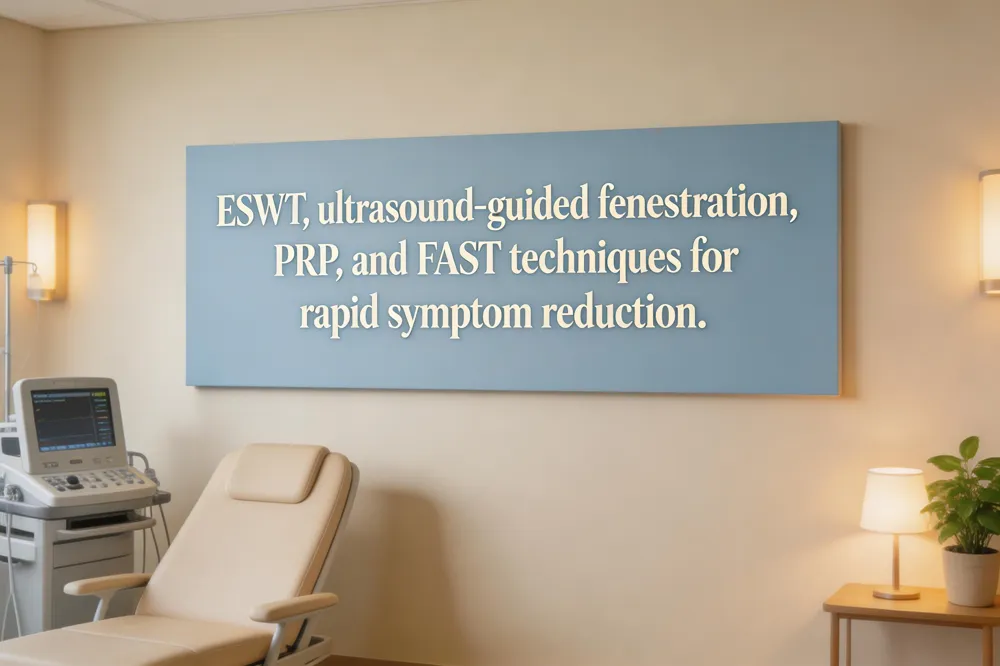 Extracorporeal shockwave therapy (ESWT) delivers focused acoustic pulses to the lateral epicondyle, promoting neovascularization and tissue regeneration. Clinical series report significant pain reduction and functional improvement within 30‑60 days after a one‑week course of 2,000‑pulse sessions, making ESWT a strong option for patients with 6 months of symptoms unresponsive to rest, physical therapy, NSAIDs, or corticosteroid injections.
Ultrasound‑guided needle fenestration and percutaneous tenotomy (often called dry needling or barbotage) mechanically perforates the degenerated extensor carpi radialis brevis tendon, stimulating a localized healing response. Studies show pain scores drop 30‑50 % and grip strength improves within 4‑8 weeks, especially when combined with an eccentric‑strengthening program.
Platelet‑rich plasma (PRP) injections concentrate autologous growth factors and are administered under ultrasound guidance. Randomized trials demonstrate modest but statistically significant pain relief and functional gains at 6‑12 months compared with placebo, with many patients reporting noticeable improvement by 8‑12 weeks.
FAST (Focused Aspiration of Scar Tissue) procedure uses a small ultrasonic aspirator to emulsify and remove fibrotic tendon tissue percutaneously. Performed under local anesthesia in 20‑25 minutes, FAST yields rapid symptom relief, allowing patients to resume light activities within 2‑3 weeks.
Rapid‑relief algorithm: immediate activity cessation, ice 15 minutes 3‑4 times daily, NSAID for pain control, counter‑force brace, and supervised eccentric strengthening. If pain persists after 7‑10 days, consider a corticosteroid or PRP injection, followed by continued physical therapy to consolidate tendon remodeling.
When Surgery Becomes Necessary: Options and Outcomes
 When conservative care fails after 6–12 months, surgery is considered for refractory lateral epicondylitis. Open release removes the diseased extensor origin through a 4–5 cm incision and often includes debridement and tendon reattachment; arthroscopic release uses two small portals, visualizing and debriding the ECRB tendon with less soft‑tissue trauma. Minimal‑incision (≈3 cm) and percutaneous techniques—such as ultrasound‑guided needle fenestration, radio‑frequency coblation, or the Tenex FAST procedure—ablate scar tissue through a <5 mm skin puncture under local anesthesia, offering faster recovery and lower infection risk. Success rates for surgical intervention range from 80‑90 % overall, with open series reporting >90 % symptom improvement, while minimally invasive methods achieve 80‑97 % success and earlier return to work. Pros include definitive removal of pathological tissue and quicker pain relief; cons involve anesthesia risks, possible nerve injury, postoperative stiffness, and a rehabilitation period that may last 3‑12 weeks before full activity. Ideal candidates are adults 40‑60 years with confirmed ECRB degeneration, persistent pain despite structured physical therapy, and no major psychiatric comorbidities that could affect pain perception. Recovery typically begins with a brief splint, followed by progressive range‑of‑motion and strengthening; most return to daily tasks within 2‑6 weeks and to full work by 3‑12 weeks.
Long‑Term Management, Prevention, and Natural Adjuncts
 Natural anti‑inflammatory adjuncts may aid pain control while the tendon remodels. Oral curcumin (turmeric), ginger, and cat’s claw have modest anti‑inflammatory effects, and topical cold packs or gentle self‑massage can alleviate acute swelling. These measures complement basic RICE (rest, ice, compression, elevation) and NSAIDs but do not accelerate the underlying healing process.
Healing timelines reflect tendon biology: micro‑tears typically require 6‑12 months for full remodeling. Pain may subside within a few weeks of rest, ice, and bracing, but complete functional recovery rarely occurs in two weeks. Persistent symptoms beyond 6‑8 weeks merit reassessment for adjunctive therapies.
Up to 90 % of cases resolve spontaneously or with conservative care within 12‑18 months; early intervention improves outcomes. To avoid recurrence, maintain the eccentric program, monitor activity load, and address ergonomic risk factors before symptoms re‑emerge.
Your Path to a Pain‑Free Elbow Starts Here
Recent advances give patients several minimally invasive alternatives before open surgery. Options include ultrasound‑guided corticosteroid injections for rapid relief, platelet‑rich plasma to promote tendon healing, percutaneous needle fenestration or Tenex FAST to remove scar tissue, extracorporeal shockwave therapy, radio‑frequency ablation of the radial nerve, and arthroscopic debridement performed through tiny portals. Choosing the right approach depends on symptom duration, activity demands, imaging findings, and even anxiety or depression, underscoring a personalized treatment plan. To begin, call the clinic at (555) 123‑4567, use the online appointment system, or request a telehealth visit with Dr. Rebecca S. Yu, board‑certified orthopedic surgeon in Berkeley, California.