Introduction
Minimally invasive wrist surgery employs small incisions, arthroscopes, and percutaneous instruments to treat arthritis, fractures, carpal tunnel and other conditions. By preserving soft tissue, these techniques reduce postoperative pain, scarring, and infection risk, allowing patients to begin gentle motion within days and return to most daily activities in 2–4 weeks—far faster than traditional open procedures that may require 6–8 weeks of immobilization. Success depends heavily on the surgeon’s expertise; board‑certified hand specialists such as Dr. Rebecca S. Yu or Dr. Todd Rimington use advanced imaging, precise instrumentation, and shared decision‑making to tailor the procedure to each patient’s anatomy and goals. Personalized care, including thorough pre‑operative counseling and structured physical‑therapy protocols, sets realistic expectations and maximizes functional recovery.
Patient Voices: Rapid Pain Relief After Wrist Replacement
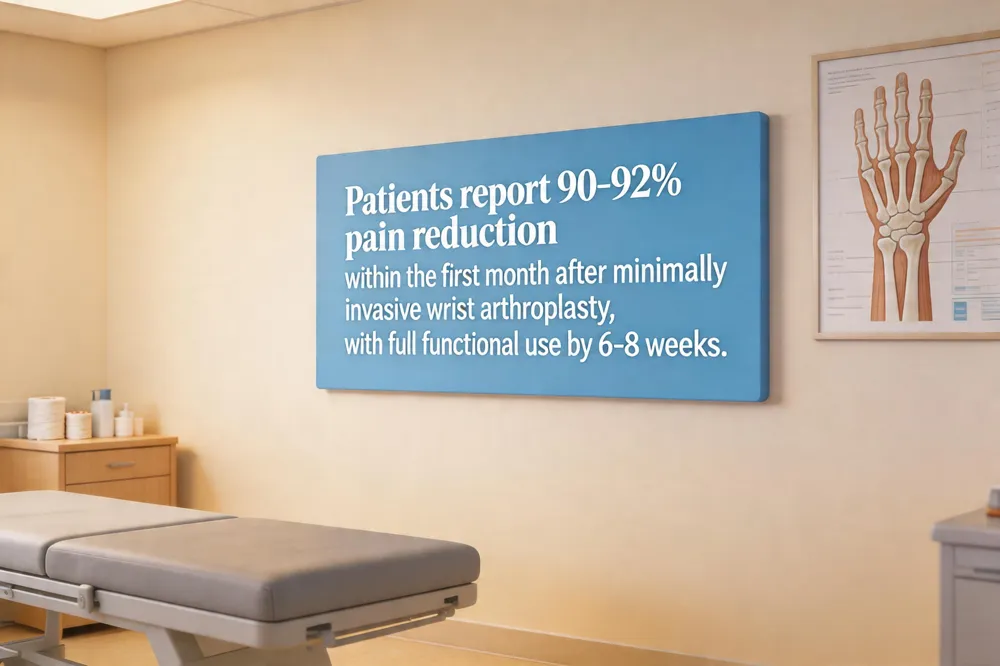 Donna W., a 58‑year‑old with 20 years of rheumatoid arthritis, endured chronic left‑wrist pain that disrupted sleep and daily tasks. After exhausting medication, injections, and diet changes, she elected a minimally invasive wrist arthroplasty with Dr. Todd Rimington at Illinois Bone & Joint Institute. Within five to six weeks and three weekly therapy sessions, Donna reported 90 % pain relief and could dress herself and hold her husband’s hand without discomfort, illustrating the functional motion preserved by joint replacement versus fusion.
Patient testimonials across multiple practices consistently show that 90‑92 % of individuals experience significant pain reduction—often describing themselves as "pain‑free"—within the first month after minimally invasive wrist procedures. The typical recovery timeline for such arthroplasty involves a short immobilization period (up to six weeks), early mobilization, and a return to light‑duty activities by week 2‑3, with full functional use achieved by 6‑8 weeks.
Hand surgeon Berkeley: Dr. Rebecca S. Yu, MD, is a board‑certified orthopedic hand surgeon in Berkeley, CA, specializing in hand and upper extremity surgery.
Best hand surgeon Bay Area: Dr. Rebecca S. Yu, MD is widely regarded as the Bay Area’s top hand surgeon. Based in Berkeley, she treats a broad range of conditions using evidence‑based, minimally invasive methods and provides convenient online appointment scheduling, resulting in exceptional patient satisfaction.
Why Minimally Invasive Techniques Are Considered Minor Surgery
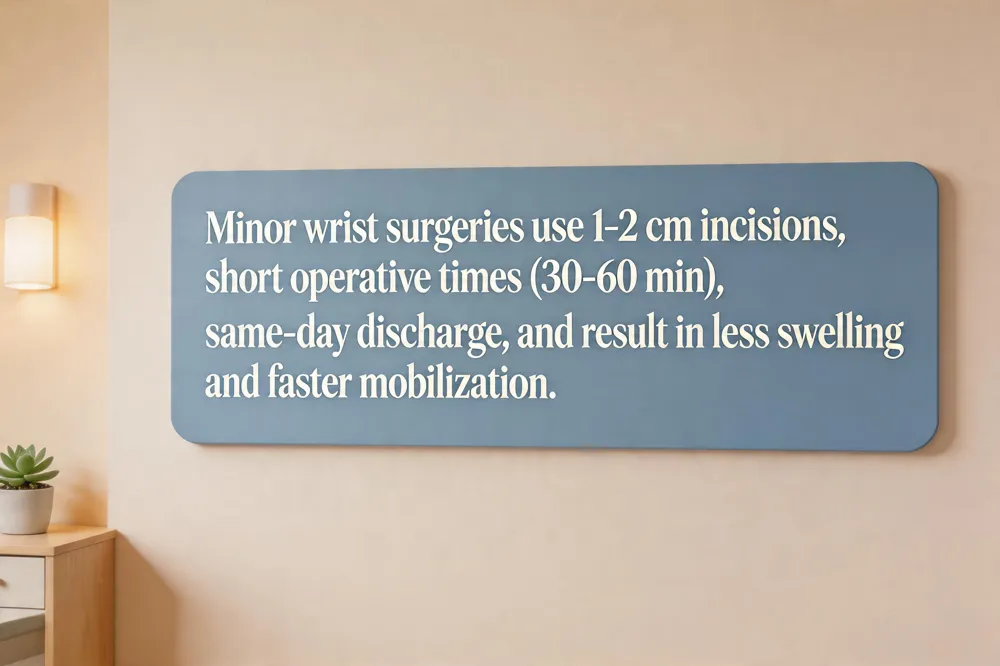 Minor wrist surgery is defined by limited tissue disruption, short operative time, and the ability to discharge the patient the same day. In contrast, major wrist surgery involves extensive bone or joint work, longer anesthesia, and often an overnight hospital stay. Common procedures classified as minor include Endoscopic carpal tunnel release, percutaneous De Quervain’s tenosynovitis debridement, and small‑incision arthroscopic debridement of ganglion cysts. These techniques use incisions of 1–2 cm, preserving surrounding soft tissue and reducing postoperative pain. Because the incision is smaller, swelling and scar formation are minimized, allowing early mobilization and a faster return to daily activities.
Is wrist surgery major or minor surgery? Wrist surgery can be either major or minor depending on the specific procedure. Simple interventions such as carpal‑tunnel release are typically outpatient minor surgeries, while wrist arthroplasty or fusion are major.
How long does a wrist procedure take? Operative time varies: minor endoscopic releases usually last 30–60 minutes, whereas complex replacements may require 2–3 hours. Minimally invasive approaches often cut these times by 20‑30 % through better visualization and smaller incisions.
Post‑Surgery Guidelines: What to Avoid After Wrist Replacement
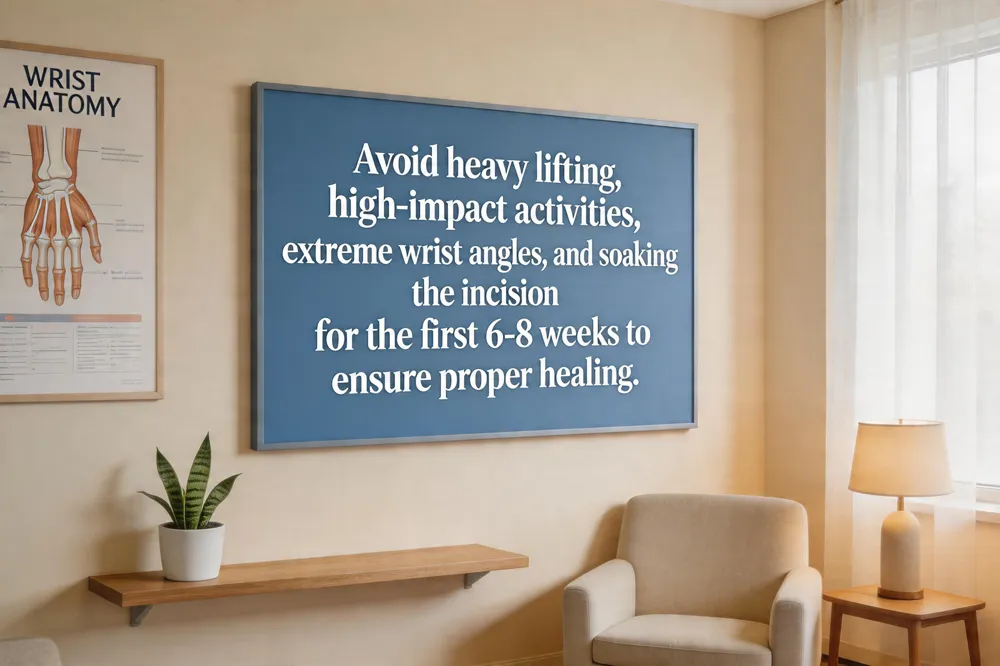 During the first 6–8 weeks after wrist replacement you should keep the joint protected. Avoid lifting more than a few pounds, high‑impact activities (throwing, push‑ups, power‑tool use) and repetitive wrist twisting. Extreme flexion or extension is also discouraged until therapy restores controlled motion.
Wound‑care is critical: keep the incision clean and dry, change dressings as instructed, and do not submerge the surgical site in water or soak a cast. Observe for signs of infection—redness, swelling, drainage, or fever—and contact your surgeon promptly if they appear.
Driving, heavy household chores, and sports such as tennis or golf should be postponed until you have completed the prescribed rehabilitation program and received clearance from your orthopedic surgeon, often after the 6‑8‑week mark.
What can I not do after wrist replacement?
Avoid heavy lifting, high‑impact motions, prolonged immersion of the wound, extreme wrist angles, and premature return to driving or demanding activities.
When is it too late to fix a carpal tunnel ?
It is rarely “too late,” but earlier surgery yields better outcomes before muscle wasting or irreversible nerve damage occurs.
Regional Expertise: Hand Surgery Options in the Bay Area

Hand surgeon Oakland
Dr. Rebecca S. Yu, MD is a board‑certified orthopedic hand surgeon specializing in hand and upper‑extremity surgery in Berkeley, CA, a short drive from Oakland. Her practice treats a full range of hand and wrist conditions—including carpal‑tunnel syndrome, tendon injuries, fractures, arthritis, and pediatric hand disorders—using minimally invasive and microsurgical techniques. Oakland patients can schedule a convenient in‑person consultation or use the online appointment‑booking form on her website. She works closely with local hospitals and imaging centers to provide coordinated trauma and post‑operative care. For those seeking additional options in Oakland, reputable hand‑surgery groups such as East Bay Hand & Upper Extremity and Dr. Joshua C. Richard also offer comprehensive services.
Best orthopedic surgeons Bay Area
Dr. Rebecca S. Yu, MD, is a board‑certified orthopedic surgeon in Berkeley, CA, renowned for her expertise in hand and upper‑extremity surgery and consistently high patient ratings. In the broader Bay Area, other top orthopedic specialists include Dr. Warren J. Strudwick, Jr., a highly experienced sports‑medicine surgeon in Oakland, and Dr. Stephen Chen and Dr. Michael Burns, both praised for their skill in sports‑medicine and joint care. These physicians are recognized for their precise surgical techniques, personalized treatment plans, and strong patient communication. Together, they represent the leading options for orthopedic care throughout the Bay Area.
Comprehensive Orthopedic Care in Berkeley

Orthopedic Berkeley
Dr. Rebecca S. Yu is a board‑certified orthopedic surgeon based in Berkeley, CA, specializing in hand and upper‑extremity surgery. Her practice offers a full spectrum of orthopedic services that go far beyond wrist procedures, including trauma care, elbow reconstruction, pediatric hand conditions, and complex reconstructive surgeries. Integrated with the Berkeley Outpatient Center and Sutter Health, Dr. Yu’s team provides seamless referrals to multidisciplinary specialists, advanced imaging, and postoperative rehabilitation resources within the same health network.
The clinic emphasizes minimally invasive techniques—arthroscopy, percutaneous fixation, and endoscopic releases—that reduce tissue trauma, shorten operative time, and accelerate recovery. Patients benefit from state‑of‑the‑art equipment such as flexible arthroscopes and the WALANT anesthesia approach, which often allows same‑day discharge and early mobilization.
Convenient online appointment‑booking lets patients schedule consultations within 48 hours, receive pre‑operative education, and access tele‑health follow‑ups. This streamlined process, combined with personalized treatment plans and a compassionate care team, ensures that Berkeley residents receive expert orthopedic care quickly and efficiently.
Conclusion
Minimally invasive wrist surgery consistently delivers rapid pain relief and functional restoration, often returning patients to daily activities within two to four weeks—far faster than traditional open approaches. Donna W.’s experience, along with hundreds of testimonials from Dr. Rebecca S. Yu’s practice, illustrates how smaller incisions, precise arthroscopic visualization, and early mobilization translate into less postoperative discomfort and quicker recovery. Dr. Yu’s board‑certified expertise, fellowship training in hand and upper extremity surgery, and commitment to patient‑centered decision‑making ensure each individual receives a personalized plan that balances pain control, motion preservation, and long‑term joint health. If you are ready to explore a minimally invasive solution for your wrist condition, schedule a consultation today through our convenient online booking form.