Why Hand Strength Matters for Kids
Strong hand muscles are the foundation for everyday tasks. When a child can grip a pencil, button a shirt, or open a snack wrapper without fatigue, daily routines run smoothly and confidence grows. In school, adequate grip and pinch strength support handwriting endurance, cutting with scissors, and using manipulatives, directly influencing academic performance and classroom participation. Over time, well‑developed hand and forearm muscles protect joints, improve posture, and reduce the risk of later problems such as carpal tunnel, tendonitis, or growth‑plate injuries. Consistent, play‑based strengthening—using play‑dough, clothespins, or light resistance bands—builds the intrinsic and extrinsic muscles needed for both short‑term function and long‑term musculoskeletal health. They also strengthen shoulder and core, providing a solid base for hand control during play.
Understanding Hand Size and Weakness
 Children’s hand size is mostly a matter of genetics and overall body habitus, so “small” hands often simply reflect normal variation. Hand weakness, however, usually points to a functional issue rather than size alone.
Genetics vs. muscle development – While bone length is inherited, intrinsic and extrinsic hand muscles develop through use, activity, and progressive loading. A child's hand will grow stronger when they engage in weight‑bearing play (crawling, animal walks), squeezing tasks (play‑dough, clothespins), and functional chores (opening containers, carrying groceries).
Common causes of reduced grip – Weak grip can stem from low muscle tone, delayed motor milestones, nerve compression (e.g., early carpal‑tunnel), overuse injuries, or underlying conditions such as congenital hand differences, cerebral palsy, or arthritis. Even mild sensory integration challenges can limit effective muscle recruitment.
When to seek professional evaluation – Persistent fatigue during writing, difficulty buttoning or opening jars, or a rapid loss of strength warrants a pediatric hand‑therapy or orthopedic consult. Therapists will assess grip and pinch with a hand dynamometer, test sensation, and may recommend imaging or nerve studies.
Why are my hands so small and weak? Hand size is largely determined by genetics and overall body habitus, so what looks like "small" hands are often a normal an variation. Weakness, however, usually signals an underlying issue. Possible causes include nerve compression such as carpal‑tunnel or cubital‑tunnel syndrome, cervical radiculopathy, early arthritis of the small joints, peripheral neuropathy from diabetes or vitamin deficiencies, and overuse injuries. Even ganglion cysts that press on nerves or sudden neurological events like a stroke can produce a rapid loss of strength. Because the spectrum ranges from benign to urgent, a thorough clinical exam is essential. The exam typically involves manual muscle testing, sensation screens, and may be followed by imaging, nerve‑conduction studies, or a hand dynamometer measurement. Persistent or worsening weakness should prompt an appointment with a hand‑specialized orthopedic surgeon for a definitive diagnosis and individualized treatment plan.
Pediatric Hand Therapy: A Play‑Based Approach
 Hand therapy for kids—often called pediatric hand therapy—is a specialty of occupational therapy that uses fun, non‑invasive activities to boost grip, pinch, wrist stability and fine‑motor coordination. The primary occupational‑therapy goals are to increase intrinsic and extrinsic hand muscle strength, improve range of motion, develop thumb‑index opposition for a pincer grasp, and support proximal (shoulder‑girdle) stability so the hand can function efficiently in daily tasks such as buttoning, writing, and using utensils.
Typical activities and tools are play‑based and readily available: molding and pinching Play‑dough or therapy putty, squeezing stress balls or rubber‑banded sponges, clothespin or tongs pick‑up games, Lego/Duplo building, Squigz suction cups, bead threading, and weight‑bearing moves like animal crawls, wall push‑ups, or scooter‑board pushes. Simple household chores—wiping tables, carrying laundry baskets, opening spray bottles—double as functional strengthening.
Integration into daily routines is essential. Parents can embed short 5‑10‑minute sessions 2‑3 times per day during snack prep, bath time, or bedtime story. A “hand‑strength red‑flag” checklist helps families spot fatigue or difficulty gripping, prompting early therapist contact. Consistent, play‑rich practice builds endurance, supports school‑related fine‑motor skills, and keeps children motivated while their hands grow stronger.
Hand Exercises for Children on the Autism Spectrum
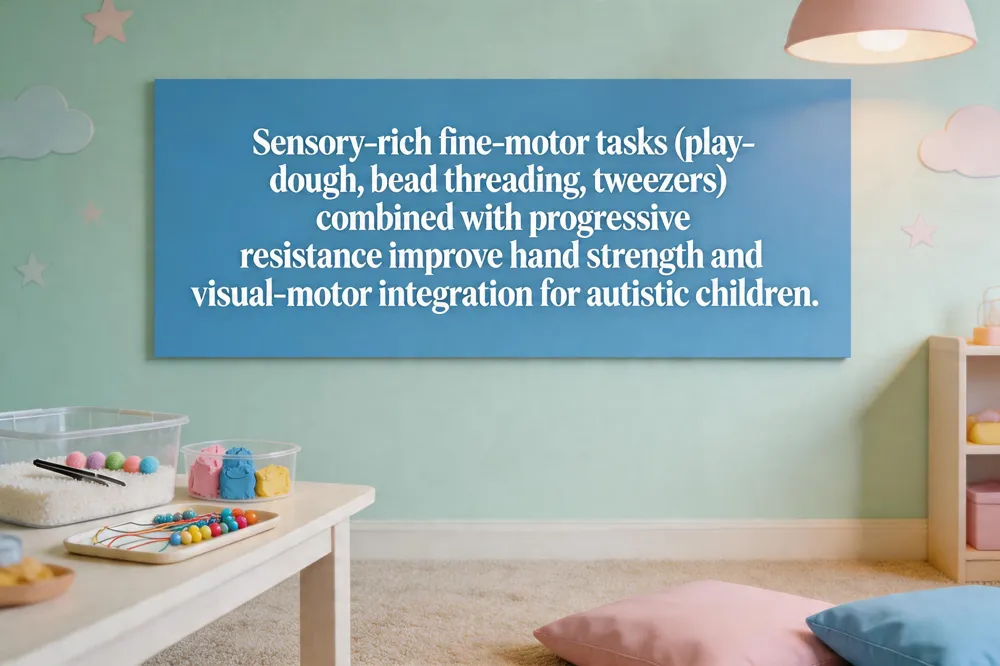 For children on the autism spectrum, hand‑strengthening activities should blend sensory input with purposeful fine‑motor practice. Sensory‑rich fine‑motor tasks such as kneading, rolling, and squeezing play‑dough or modeling clay give tactile feedback while engaging finger flexors and extensors. Sorting games—threading beads, moving paper clips, or assembling LEGO bricks—develop pincer grasp, coordination, and hand‑eye integration. Using tweezers, tongs, or clothespins to pick up small objects builds pinch strength and thumb‑index opposition. Hand‑eye coordination games like tapping a drum, pressing piano keys, or affixing cloth‑peg “hair” to a cardboard head require precise timing and visual‑motor integration.
Gradual progression of resistance is key. Start with soft putty, a foam ball, or a silicone sponge; once the child can complete 10‑15 repetitions without fatigue, move to firmer putty, a stress ball, or a light rubber band for finger abduction. Increase repetitions or hold times in 2‑3 minute bouts, 2‑3 times daily, ensuring the child remains pain‑free.
Maintaining attention and motivation relies on short, frequent sessions (5‑10 minutes) embedded in play. Vary the child’s position—sitting, on a stability ball, or on hands‑and‑knees—to reset focus. Incorporate visual cues, timers, or token charts, and end each session with a preferred activity to reinforce compliance. Consistency, sensory variety, and progressive challenge together support functional hand strength and overall motor development.
Hand Dominance and Functional Strength Development
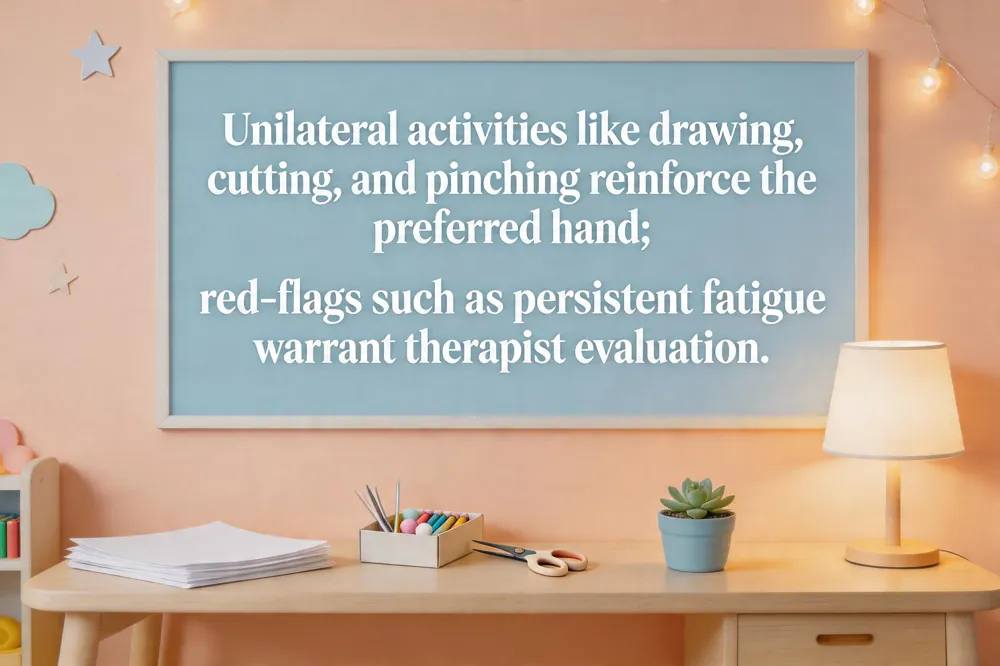 Typical age milestones: Hand preference usually appears in the toddler years, around age 2‑4, when children begin to favor one hand for simple tasks such as reaching for a toy. During this window they may still switch hands, but by ages 4‑6 a more consistent preference emerges. By the start of school (age 5‑6) most children have a clear dominant hand for writing, cutting, and eating. If a child continues to alternate hands frequently after age 6, it may signal a developmental delay or neurological issue, and a pediatric therapist or physician should be consulted.
When to be concerned: Red flags include persistent difficulty gripping writing utensils, early fatigue during weight‑bearing activities, trouble buttoning or zipping, and the need for help opening containers. These signs suggest limited hand strength or delayed dominance and warrant evaluation by an occupational therapist or pediatric hand specialist.
Activities that reinforce dominance: Unilateral tasks that require grip and precision help solidify the preferred hand. Examples include drawing or coloring with the chosen hand, threading beads, using child‑size scissors, and pinching clothespins. Play‑based strengthening—kneading play‑dough, squeezing stress balls, pulling apart LEGO/Duplo bricks, and using tongs or tweezers—builds intrinsic and extrinsic hand muscles. Functional chores such as opening jars, wiping tables, or carrying a light grocery bag provide everyday resistance. Short, frequent sessions (5‑10 minutes, 2‑4 times per day) are more effective than occasional long workouts, ensuring steady progress while keeping the child motivated.
Building Arm and Hand Strength in School‑Age Children
 Body‑weight exercises are the foundation for a 7‑year‑old’s arm development. Activities such as wall push‑ups, crab walks, wheel‑barrow walks, and animal crawls engage the shoulder girdle, chest, and grip without heavy loads. Playground staples—monkey bars, tug‑of‑war, and pulling a stroller or shopping cart—add pulling and pushing challenges while keeping the child motivated. Short forearm‑supported planks, vertical drawing on easels, or climbing over cushions provide varied positions that reinforce proximal stability and wrist alignment. Aim for 2‑3 sessions per week, starting with a few repetitions and increasing as form stays good.
Progressive resistance for small hands builds intrinsic and extrinsic muscles essential for fine‑motor tasks. Begin with therapy putty, soft stress balls, or rubber‑band finger spreads for 2‑3 minutes, 3‑4 times daily. As the child masters these, move to firmer putty, a slightly heavier ball, or a tighter band, always maintaining a playful context—clothespin pinches, tongs pick‑up games, or LEGO building. Consistency (5‑10 minutes per session) drives strength gains even in naturally small hands, supporting writing, buttoning, and sports.
Safety and supervision are non‑negotiable. Warm‑up with wrist circles and arm swings, monitor for pain, and stop any activity that causes discomfort. An adult should model proper technique, provide encouragement, and ensure the environment is free of choking hazards. Regular check‑ins with a pediatric hand therapist keep progression appropriate for the child’s developmental stage and prevent overuse injuries.
Putting It All Together for Stronger Little Hands
Building stronger little hands works best when the routine feels like play and is done every day. Frequent sessions—five to ten minutes, two to three—keep muscles engaged without causing fatigue, and adding a timer, a song, or a reward chart turns the work into a game. Parents should start with simple tools such as play‑dough, clothespins, or squeeze balls, then gradually introduce therapy putty, rubber‑band spreads, or wrist curls as the child’s endurance improves. Consulting a pediatric occupational therapist or hand specialist ensures that exercises match the child’s developmental stage, address any underlying conditions, and progress safely with technique. Enjoyable practice builds grip, pinch, and wrist stability, which translates into better writing, dressing, and sports performance for years to come.