Why a Structured Rehab Plan Matters
Wrist fractures heal in three overlapping phases: inflammation (0‑7 days), repair (1‑6 weeks) and remodeling (6+ weeks). Immobilization protects the bone but can cause joint stiffness, muscle atrophy and limited motion if not followed by therapy. Early, guided motion—beginning as soon as the surgeon permits—keeps tendons gliding, improves blood flow and reduces edema, accelerating the repair phase without jeopardizing stability. Key factors that speed recovery include proper nutrition (adequate calcium, vitamin D, protein, magnesium), smoking cessation, adequate hydration, and controlled pain management. Occupational or hand therapy provides structured range‑of‑motion drills, progressive strengthening and scar management, ensuring that each phase transitions smoothly. Regular follow‑up visits let clinicians adjust exercises based on healing progress, preventing complications and maintaining motivation. Adhering to a personalized, evidence‑based plan therefore shortens downtime and maximizes long‑term wrist function.
Understanding Healing Timelines and Stages
 A distal radius (wrist) fracture normally requires 6–12 weeks for solid bone union; the first three weeks are still within the reparative phase, when a soft callus is forming and early, motion of the shoulder, elbow, and fingers is encouraged while the cast or splint protects the wrist.
Wrist fracture healing stages – Healing occurs in three overlapping phases: (1) Inflammatory (0–7 days), characterized by hematoma, swelling, and pain; (2) Reparative (1–6 weeks), when fibro‑cartilage callus mineralizes into a hard callus visible on X‑ray; (3) Remodeling (≈ 6 weeks–1 year), when woven bone is replaced by organized lamellar bone, restoring strength and shape. Physical therapy is introduced in the reparative phase to maintain range of motion and prevent stiffness, while gradual loading in the remodeling phase rebuilds functional capacity.
Can a wrist fracture heal in 3 weeks? – Most fractures are not fully healed at three weeks. At this point the fracture may be stable enough for gentle motion, but full strength, weight‑bearing, and return to demanding activities typically require at least two months. Healing can be slower in smokers, diabetics, or those using certain anti‑inflammatory drugs. Persistent pain, swelling, or limited motion beyond six weeks warrants prompt follow‑up with the orthopedic surgeon.
Early Post‑Op Mobility and Exercise Protocols
 Gentle wrist and finger motion should begin 5‑7 days after surgery while the wrist is still protected by a splint. Perform wrist flexion/extension, radial‑ulnar deviation and forearm pronation‑supination 8‑12 repetitions, three times daily, using the opposite hand for support. Add tendon‑gliding, single‑finger bends and thumb‑to‑finger circles (10 reps each) six times a day to keep the hand supple. Once the splint or cast is removed (usually 4‑6 weeks), repeat the same ROM drills and introduce light resistance (1–2 lb) with therapy putty or a light hammer, 5‑10 repetitions twice daily. Progress to weighted wrist extensions, ulnar‑radial deviation and supination‑pronation with a light dumbbell after 8 weeks, increasing load only if pain‑free motion improves. For radius‑ulna injuries, start forearm rotation with a rolled towel (10‑15 reps, 2‑3 sets), then add the wrist flex‑extension and deviation exercises, hand‑flip drills, and grip strengthening with a soft ball or resistance band. Elbow flexion‑extension and light cardio can be incorporated as tolerated, advancing to functional tasks and light resistance (up to 5 lb) by 12 weeks. All activities should be performed under the guidance of a hand therapist to ensure proper technique and safe progression.
Occupational Therapy: A Cornerstone of Wrist Recovery
 Occupational therapy (OT) is a pivotal element of wrist‑fracture rehabilitation, especially after splint or cast removal. The therapist begins with a comprehensive assessment that records pain, edema, range‑of‑motion, grip strength, and patient‑reported outcome measures such as the QuickDASH and the Patient‑Rated Wrist Hand Evaluation (PRWHE). Findings guide a personalized program that often includes a custom volar orthosis to protect the healing bone while allowing finger motion. Edema control is achieved through elevation, compression wraps, and gentle massage, reducing swelling and facilitating tissue glide. Task‑specific training focuses on functional activities—writing, buttoning, cooking—to restore independence in daily living. Progressive strengthening and coordination exercises are introduced once pain and swelling are controlled, following evidence‑based timelines (early motion 1‑2 weeks, strengthening after 4‑6 weeks). This structured OT approach accelerates functional recovery, minimizes stiffness, and improves QuickDASH/Patient‑Rated Wrist Hand Evaluation (PRWHE) scores, ultimately returning patients to work and leisure safely.
Accelerating Healing: Nutrition, Lifestyle, and Pain Management
 Proper nutrition is a cornerstone of wrist‑surgery recovery. Aim for 1.2–1.5 g protein per kilogram daily, and include dairy, leafy greens, nuts, and legumes to supply calcium, vitamin D, and magnesium—nutrients that boost osteoblast activity and collagen formation. Smoking and excess alcohol impair blood flow and calcium metabolism, delaying bone union; cessation before and after surgery is critical. Swelling control relies on elevation above heart level and intermittent icing (15‑20 min, 3–4×/day) during the first two weeks. Combine this with prescribed NSAIDs or short‑term opioids only as needed, and avoid heavy analgesic use that may mask pain and hinder early motion.
How to speed up healing after wrist surgery? Elevate and ice the wrist, keep the splint clean, follow a protein‑rich, hydrated diet, quit nicotine, and begin surgeon‑approved range‑of‑motion exercises within two weeks. Progress to structured therapy as directed, attend follow‑up visits, and use pain meds judiciously.
What is the hardest bone to heal in the wrist? The scaphoid, because its blood supply enters distally, leaving the proximal pole poorly perfused, which makes fractures prone to non‑union and often requires surgical fixation.
Recovery Timeline After Plate‑Screw Fixation
 A distal radius fracture repaired with a titanium plate and screws is first protected with a splint or cast for the initial 1‑2 weeks; only light finger movements are permitted to keep circulation moving while preventing stiffness. At the 2‑week follow‑up the splint is removed and gentle passive wrist motions (flexion, extension, radial/ulnar deviation) begin under therapist guidance.
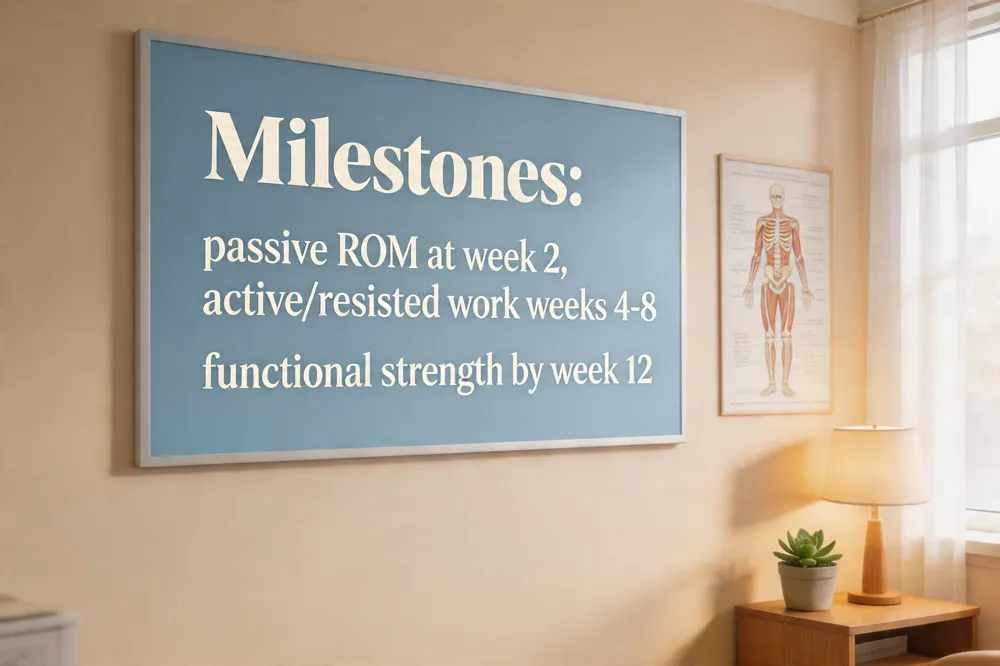
Milestones
- Week 2: Pain is controlled, swelling is reduced with elevation/ice, and passive ROM exercises start.
- Weeks 4‑8: Transition to active ROM, light resisted exercises (therapy putty, light wrist curls) and functional tasks; weight‑bearing remains limited.
- Week 12: Most patients achieve functional wrist ROM, can perform daily activities without pain, and begin progressive strengthening.
Criteria for heavy activity: Radiographic confirmation of bone union, pain ≤ 2/10, grip strength ≥ 80 % of the uninjured side, and therapist clearance. Heavy manual labor, high‑impact sports, or vigorous weight‑bearing are typically cleared after 6 months, provided healing is complete and strength is adequate.
Key take‑aways: Early controlled motion, swelling management, and a structured occupational‑therapy program are essential for a smooth recovery and to avoid long‑term stiffness. Follow‑up appointments allow adjustments to the rehab plan based on healing progress.
Long‑Term Outcomes and Potential Complications
 Long‑term problems after wrist surgery include persistent pain from hardware irritation, scar tissue, or metal plates that can irritate tendons and joint surfaces. Stiffness is common when adhesions form, and prolonged loss of motion may progress to post‑traumatic arthritis of the radiocarpal or distal radioulnar joint. Nerve‑related issues such as chronic numbness, tingling, or recurring carpal tunnel syndrome can arise from intra‑operative traction or scar entrapment, and Complex Regional Pain Syndrome (CRPS) may develop with swelling, color changes, and severe pain. Surgery is indicated when fracture fragments cannot be maintained in acceptable alignment with casting—typically displacement >2 mm, angulation >10°, or intra‑articular step‑off >2 mm—or when the fracture is unstable, comminuted, open, or associated with neurovascular injury. High‑demand patients (athletes, musicians) may also be offered operative fixation to restore optimal wrist biomechanics.
Returning to Work and Regaining Strength
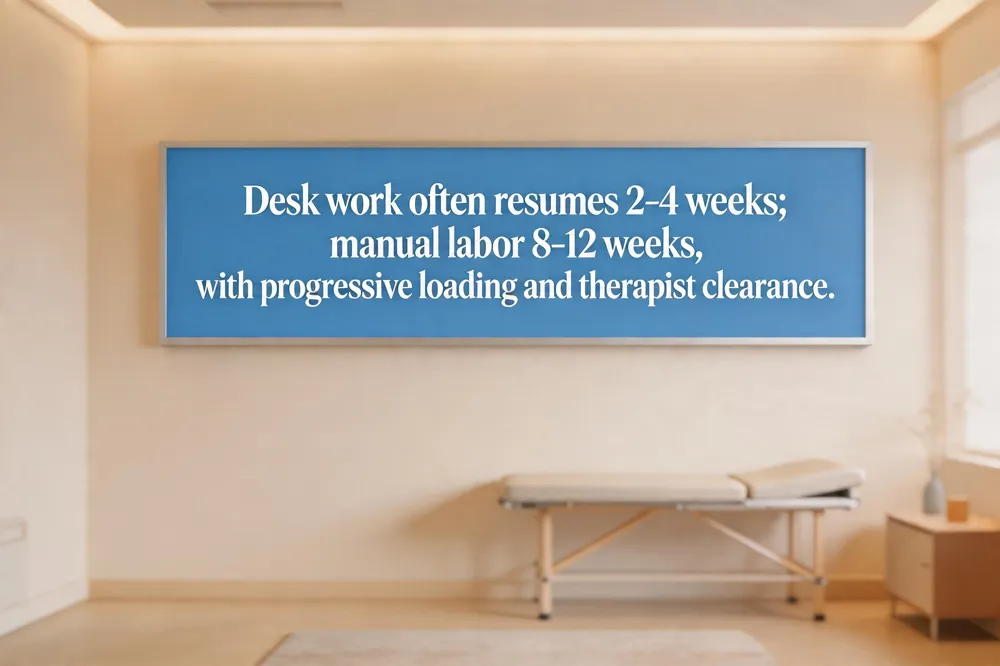 Work‑specific timelines depend on job demands and healing stage. Desk‑type duties usually resume 2‑4 weeks after cast removal when pain is minimal and grip is functional; manual‑labor jobs often require 8‑12 weeks or longer because bone union (6‑10 weeks) and strength must be re‑established.
Progressive strengthening begins with gentle ROM and stretches (wrist flexor/extensor, radial/ulnar deviation, 15‑30 seconds, 2‑4× daily). Once cleared, add low‑load exercises: intrinsic hand flexion, wrist curls with a 1‑2 lb dumbbell, band‑resisted radial/ulnar deviation, and grip work with putty or a stress ball (8‑12 reps, 2‑3 sets, 3‑4 × week). Increase resistance ~10 % weekly, monitoring pain and swelling.
Heavy‑lifting and sport resumption are delayed until the bone has remodeled (typically 8‑12 weeks) and the patient can tolerate functional loads without pain. Begin with light, controlled activities (e.g., wall push‑ups, hammer supination‑pronation) and progress to higher‑impact sports only after clearance from the surgeon and therapist.
Q: How long can I expect to be off work after wrist surgery?
A: Desk jobs: 2‑4 weeks; manual labor: 8‑12 weeks or more, based on ROM, strength, and surgeon clearance.
Q: How to regain strength after a wrist fracture?
A: Start with ROM and stretches, then low‑load curls, band deviations, and grip work, 8‑12 reps, 2‑3 sets, 3‑4 × week, advancing resistance gradually while keeping pain <3/10.
Key Take‑aways for a Faster, Safer Recovery
- Follow a phased rehab plan – After immobilization, begin gentle range‑of‑motion (flexion, extension, radial/ulnar deviation, hand flips) 0‑12 seconds per hold, progressing to supervised strengthening (therapy putty, light weights) around weeks 4‑6. Early controlled motion reduces stiffness and promotes tendon gliding, while later phases focus on grip and forearm strength (2. Prioritize nutrition, hydration, and smoking cessation – Adequate calcium, vitamin D, magnesium, protein and vitamin C support bone remodeling; stay hydrated (≈2.5–3 L/day). Smoking and excess alcohol impede blood flow and delay union, so quit before and throughout recovery. 3. Stay engaged with your occupational therapist and surgeon – Regular therapist‑ups ensure swelling control, proper scar management, and safe progression of exercises; surgeons monitor healing with X‑rays and adjust protocols as needed. Consistent communication and adherence to prescribed home‑exercise programs accelerate functional return and lower complication risk.