Why a Hand‑Bone Checklist Matters
Pediatric hand fractures are surprisingly common—about half of all childhood bone injuries involve the fingers, metacarpals, or wrist, and they occur most often after falls, sports, or playground accidents. Without a systematic care plan, simple issues such as lingering swelling, mal‑alignment, or unnoticed neurovascular compromise can progress to stiffness, growth‑plate disturbance, or permanent functional loss. A concise checklist empowers parents to track pain levels, medication schedules, cast‑dryness, elevation routines, and red‑flag signs, ensuring timely communication with the orthopedic team. Organized documentation also speeds follow‑up appointments, supports accurate imaging records, and ultimately promotes faster, safer healing. It also reduces parental anxiety.
Immediate First‑Aid and Assessment
Immediate First‑Aid and Assessment
| Step | Action | Details |
|---|---|---|
| 1 | Stop bleeding | Apply direct pressure with a clean cloth or bandage. |
| 2 | Clean wound | Gently rinse with sterile saline or clean water; avoid scrubbing. |
| 3 | Cover wound | Use a sterile dressing or bandage to protect the area. |
| 4 | Elevate | Raise the hand above heart level on pillows to reduce swelling. |
| 5 | Apply ice | Cold pack wrapped in a thin cloth for 10‑20 min every 1‑2 h (first 3 days). |
| 6 | Immobilize (if fracture suspected) | Splint the joints above and below the injury; avoid realigning the bone yourself. |
| 7 | Call emergency services (if severe) | Seek immediate medical care for open fractures, severe deformity, or signs of shock. |
| 8 | Monitor | Watch for worsening pain, numbness, color changes, or neurovascular compromise while awaiting care. |
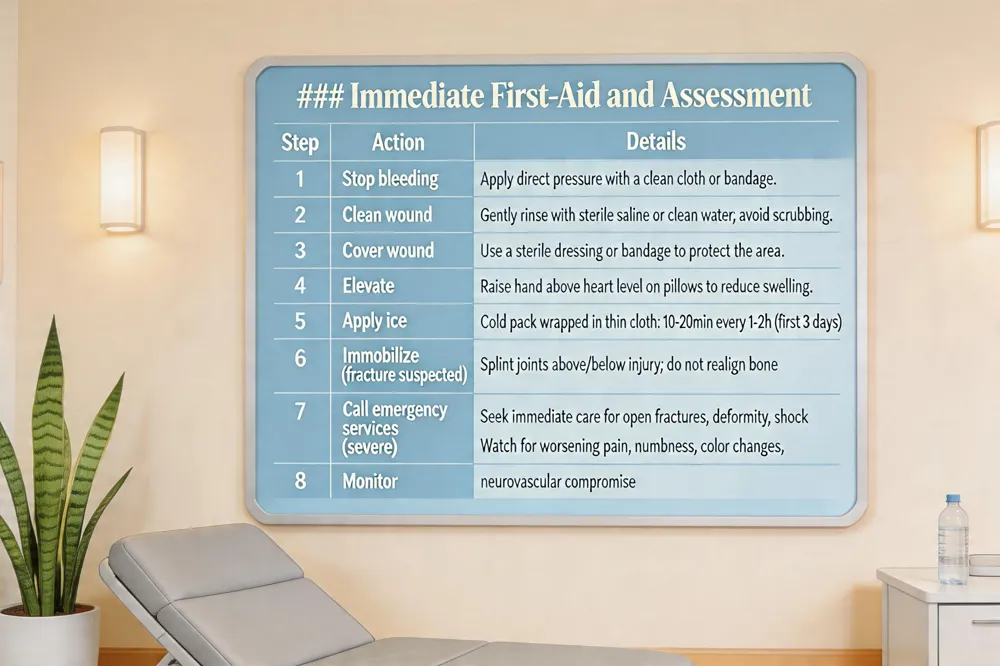 What is the first aid for hand injuries? First stop bleeding, clean the wound, cover it, elevate the hand, and apply ice. If a fracture or deep cut is suspected, immobilize the hand with a splint and seek prompt evaluation from a pediatric orthopedic specialist such as Dr. Rebecca S. Yu.
Fracture first aid steps – Call emergency services if the fracture is severe or the child shows signs of shock. Control bleeding with direct pressure. avoid realigning the bone. splint the joints above and below the injury. apply a cold pack (wrapped) for 15‑20 minutes. monitor for worsening pain, numbness, or color changes while awaiting professional care.
Understanding Hand Fracture Types
Understanding Hand Fracture Types
| Fracture Type | Common Bones Involved | Radiographic Appearance | Typical Management |
|---|---|---|---|
| Phalangeal | Proximal, middle, distal finger bones | Cortical discontinuity; possible displacement or overlapping of adjacent fingers. | Nondisplaced: splint/buddy‑tape; displaced: closed reduction ± surgical fixation. |
| Metacarpal | Metacarpals (especially 5th “boxer’s”) | Transverse break with dorsal angulation; knuckle appears sunken on PA/lateral views. | Nondisplaced: cast/splint; displaced/unstable: reduction and possible pinning or plating. |
| Carpal (e.g., scaphoid, lunate) | Carpal bones | Small, subtle fracture lines; may require dedicated wrist views. | Often immobilization in a cast; scaphoid may need surgery if displaced. |
| Avulsion | Tendon/ligament attachment sites (often phalangeal base or metacarpal neck) | Tiny radiopaque fragment adjacent to joint. | Usually splint; surgery only if fragment is large or causes joint incongruity. |
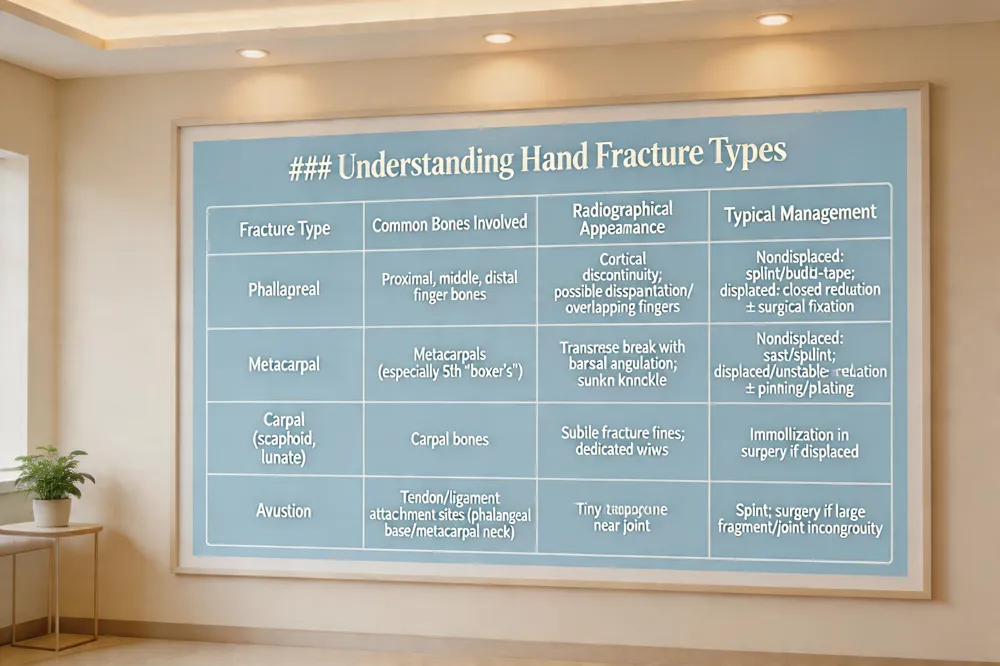 Hand fractures in children are usually classified by the bone involved and the pattern of breakage. Phalangeal fractures affect the finger bones (proximal, middle, or distal) and appear on X‑ray as cortical discontinuities, sometimes with displacement or overlapping of adjacent fingers. Metacarpal fractures, especially the classic "boxer’s" fracture of the fifth metacarpal neck, show a transverse break with dorsal angulation, making the knuckle appear sunken on PA and lateral views. Carpal bone fractures (e.g., scaphoid or lunate) are smaller and often need dedicated wrist views to reveal subtle fracture lines. Avulsion fractures are tiny bone fragments pulled off by a tendon or ligament and appear as a small radiopaque piece adjacent to a joint.
These radiographic patterns guide treatment: nondisplaced or minimally displaced fractures are usually managed non‑surgically with a splint, cast, or buddy‑taping; displaced, unstable, or intra‑articular fractures often require closed reduction and surgical fixation (pins, screws, or plates). Visual aids—clinical photos showing swelling, bruising, or deformity alongside corresponding X‑rays—help families understand the specific injury and why a particular immobilization or surgical plan is chosen.
Managing Pain and Swelling
Managing Pain and Swelling
| Intervention | How to Apply | Frequency / Duration |
|---|---|---|
| Ice | Cold pack wrapped in thin cloth, placed on injured hand. | 10‑20 min every 1‑2 h while awake (first 3 days). |
| Elevation | Hand rested on pillows above heart level. | Continuous when seated or lying down. |
| Gentle Compression | Soft splint, brace, or compression sleeve (light pressure). | Wear as tolerated; ensure no circulatory compromise. |
| Medication (OTC) | Acetaminophen or ibuprofen dosed per weight. | Every 6‑8 h; do not exceed max daily dose. |
| Prescription Analgesics | As directed by physician. | Follow exact schedule; monitor side effects. |
| Immobilization (Hairline fracture) | Well‑fitted splint or lightweight cast. | 6‑8 weeks, then gradual ROM exercises. |
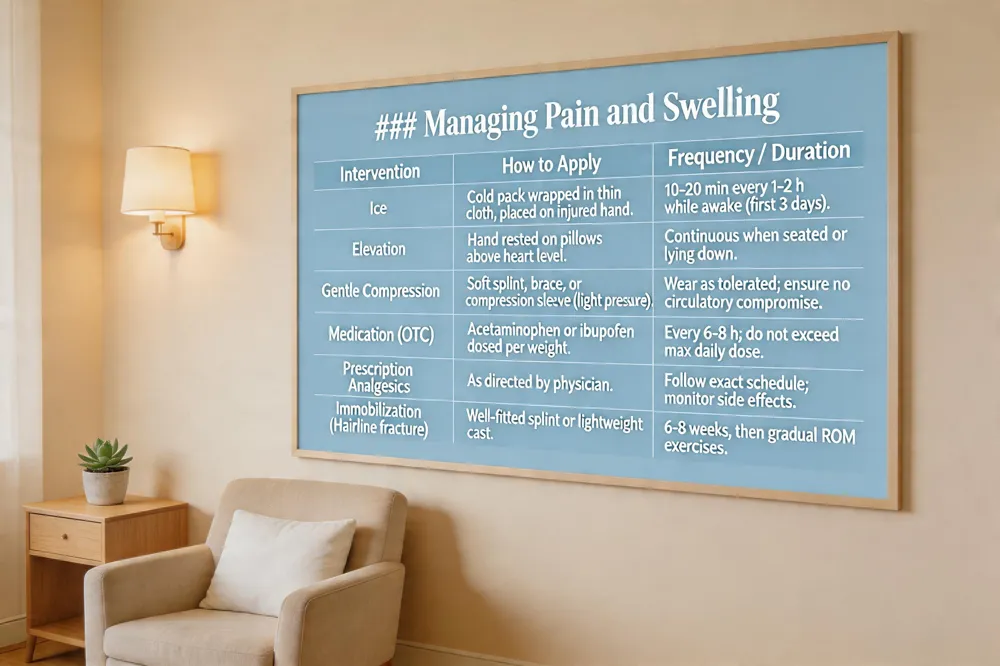 Ice, elevation, and gentle compression are the cornerstone of early swelling control. Apply a cold pack wrapped in a thin cloth for 10‑20 minutes every 1‑2 hours while the child is awake during the first three days; keep the hand elevated on pillows above heart level whenever seated or lying down. A soft splint or brace provides light compression and stabilizes the fracture without restricting circulation.
Medication dosing must follow the physician’s orders. Age‑appropriate acetaminophen or ibuprofen can be given every 6‑8 hours, respecting weight‑based limits; avoid aspirin and never exceed prescribed amounts. For prescription pain meds, administer exactly as directed and monitor for side effects.
Hairline (stress) fractures are treated with immobilization—usually a well‑fitted splint or lightweight cast—for 6‑8 weeks, protecting the bone while it heals. After removal, gentle range‑of‑motion exercises and hand‑therapy prevent stiffness.
Hairline fracture in hand treatment: Immobilize the affected digit, keep the hand dry, and follow up with X‑rays to confirm healing.
Broken hand symptoms child: Intense pain, swelling, bruising, deformity, and reluctance to move the hand; watch for numbness or color changes.
Swollen hand injury treatment: Splint, ice, elevation, optional compression sleeve, and OTC ibuprofen if approved.
Sudden hand pain in child: Rest, ice, elevation, and OTC analgesics; seek urgent care if movement is limited, swelling worsens, or neurovascular signs appear.
Recovery Timeline and Rehabilitation
Recovery Timeline and Rehabilitation
| Phase | Time Frame | Key Activities | Goals |
|---|---|---|---|
| Hematoma & Soft Callus | Days 0‑5 | Ice, elevation, pain control; splint if needed. | Reduce swelling, protect fracture. |
| Callus Mineralization | Weeks 1‑6 | Continue splint/cast; gentle finger wiggle of uninjured digits. | Stabilize bone, begin light motion. |
| Early Rehab | Weeks 4‑8 (after splint removal) | Supervised ROM, fine‑motor drills, light strengthening. | Prevent stiffness, restore mobility. |
| Strengthening & Functional | Weeks 8‑12 | Progressive resistance, grip exercises, activity‑specific tasks. | Build strength, prepare for daily activities. |
| Full Return | 3‑6 months | Sport‑specific conditioning, full ROM and strength testing. | Resume heavy‑impact sports, achieve near‑normal function. |
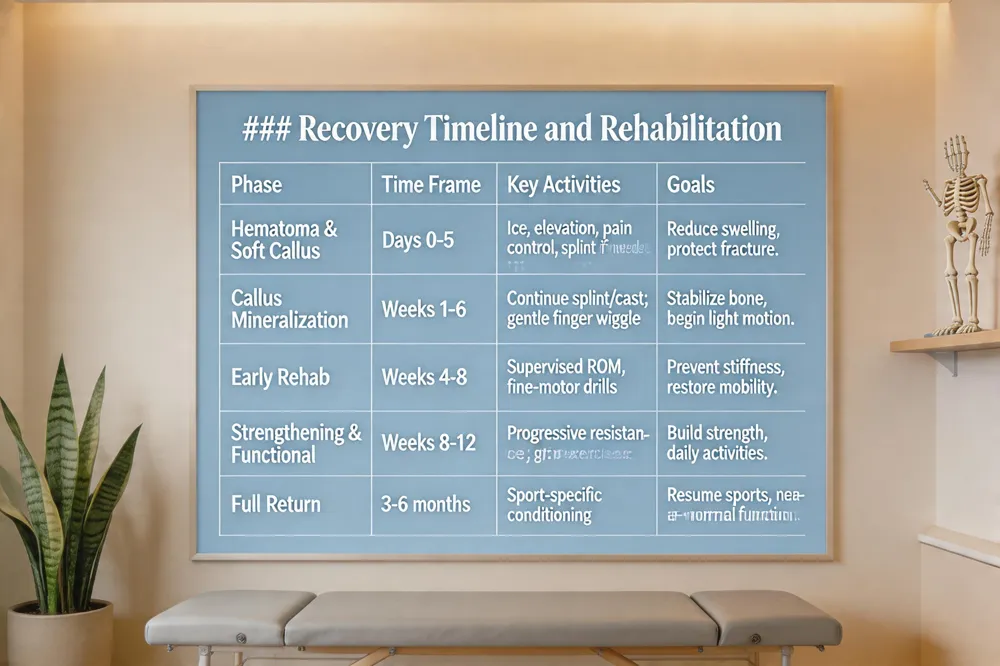 Pediatric hand fractures heal in three overlapping phases. First, a hematoma forms and a soft cartilage callus bridges the gap within days. Second, over 1‑6 weeks the callus mineralizes into hard bone, a process that is faster in children because of their thick, vascular periosteum and active growth plates. Finally, remodeling reshapes the bone over weeks to months, restoring strength and normal anatomy.
Typical timelines: Light daily activities can begin after 3‑4 weeks when the cast or splint is removed and the callus is stable. Moderate tasks and gentle strengthening start around 8 weeks, and most children regain full grip strength by 12 weeks. Return to heavy‑impact sports or full functional recovery may require 3‑6 months; occasional stiffness can linger up to a year.
Therapy and monitoring are essential. After immobilization, supervised hand‑therapy (range‑of‑motion, strengthening, and fine‑motor exercises) prevents stiffness and promotes optimal remodeling. Regular follow‑up X‑rays ensure the bone remains aligned; any pain, numbness, or casts that feel too tight demand immediate medical review.
Home care: Keep the hand elevated, apply ice 10‑20 min every 1‑2 hours for the first three days, and wiggle uninjured fingers. Follow the physician’s pain medication plan and avoid gripping until cleared. Early, guided rehabilitation combined with proper nutrition (calcium, vitamin D) supports the fastest, most complete recovery.
Red‑Flag Signs and When to Seek Care
Red‑Flag Signs and When to Seek Care
| Sign | Description | Action Needed |
|---|---|---|
| Persistent pain & swelling | Not improving after a few days despite care. | Contact pediatric orthopedic specialist promptly. |
| Numbness / Tingling / Cool pale fingers | Possible neurovascular compromise. | Seek urgent medical evaluation. |
| Visible deformity | Obvious angulation, shortening, or abnormal contour. | Immediate emergency care; may need reduction. |
| Worsening pain despite rest/meds | Indicates possible displacement or infection. | Prompt evaluation; consider imaging. |
| Signs of infection | Redness, warmth, fever, pus, or drainage. | Urgent care for antibiotics and possible surgical drainage. |
| Loss of function | Inability to move fingers or grip. | Seek orthopedic assessment ASAP. |
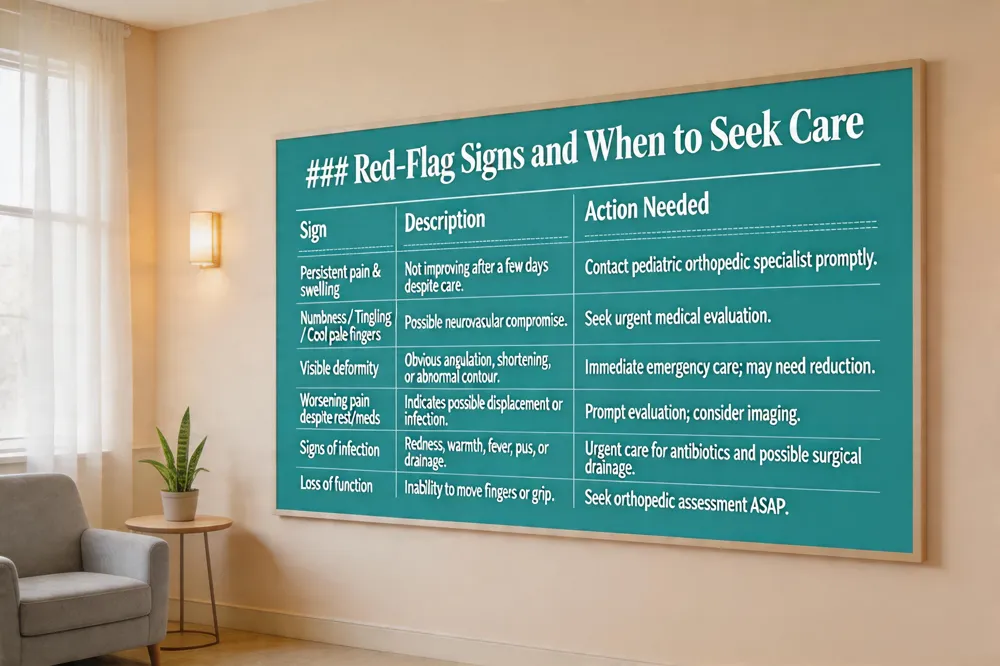 When a child’s hand is injured, watch for warning symptoms that suggest a serious problem: persistent pain, swelling or bruising that does not improve within a few days; numbness, tingling, or cool, pale fingers indicating possible neurovascular compromise; a visibly deformed hand or finger; increasing pain that worsens despite rest or medication; and any signs of infection such as redness, fever, or pus.
The 5 R’s of fracture management guide care: Recognition of the injury through exam and imaging; Resuscitation of any life‑threatening issues; Reduction to realign bone fragments; Retention with a splint, cast, or internal fixation (Doctors may stabilize the injury with a brace, splint, or cast); and Rehabilitation (or Reconstruction) to restore motion and strength (Physical therapy may be recommended after cast removal.
Nurse‑maid’s elbow (radial‑head subluxation) typically occurs in children under five after a sudden pull on the hand. The child holds the arm straight at the side, refuses to bend or rotate the elbow, and has little swelling. Prompt reduction—gentle supination followed by flexion—relieves pain within minutes.
Signs of a broken arm in a child include sharp, unrelenting pain; swelling, bruising, or warmth; visible deformity; reluctance to use the limb; and, in severe cases, skin discoloration or open wounds.
The five first‑aid steps for any suspected fracture are: (1) Call emergency services if the injury is severe; (2) Apply direct pressure to stop bleeding; (3) Immobilize the area with a splint above and below the injury; (4) Use a cold pack wrapped in a cloth for 10‑20 minutes every 1‑2 hours; and (5) Monitor for shock while awaiting professional care.
Next Steps for Parents
Schedule follow‑up visits with the pediatric orthopedic team within 1–2 weeks after casting or splinting, and keep a record of X‑ray results, medications, and any changes in symptoms. Support healing with a balanced diet rich in calcium and vitamin D, adequate sleep, and hydration; avoid tobacco smoke and limit sugary drinks. Encourage gentle, physician‑approved activity: keep the hand elevated, avoid weight‑bearing, and resume light play only when pain and swelling have subsided. For specialist care, contact Dr. Rebecca S. Yu’s office (3000 Colby St, Berkeley, CA) by phone (510) 540‑6800 or online booking to arrange appointments, obtain guidance on splint care, and discuss any concerns.