Why Rapid Hand‑Injury Stabilization Matters
Hand injuries account for more than 12 % of all trauma visits in U.S. emergency departments, making them the most frequent ED presentation. Under EMTALA, hospitals must provide stabilizing care within 24 hours before transferring patients, which includes hemorrhage control, neurovascular assessment, tetanus prophylaxis, analgesia, and temporary splinting. A dedicated hand‑referral policy, such as the 24/7 telephone consult line adopted in South West Florida, permits ER physicians to stabilize injuries and only transfer limb‑threatening cases (e.g., replantations, severe infections). Early involvement of a hand surgeon—ideally within 24–48 hours—dramatically improves functional outcomes, reduces the need for unnecessary transfers, and lowers the operative no‑pay rate from ~41 % to ~5 % in one year. Prompt specialist consultation also facilitates timely imaging, appropriate antibiotic use, and coordinated rehabilitation, all of which are critical to preventing stiffness, infection, and permanent loss of hand function.
Basic Trauma Assessment and the ABCDE/ABCDE‑MARM Framework
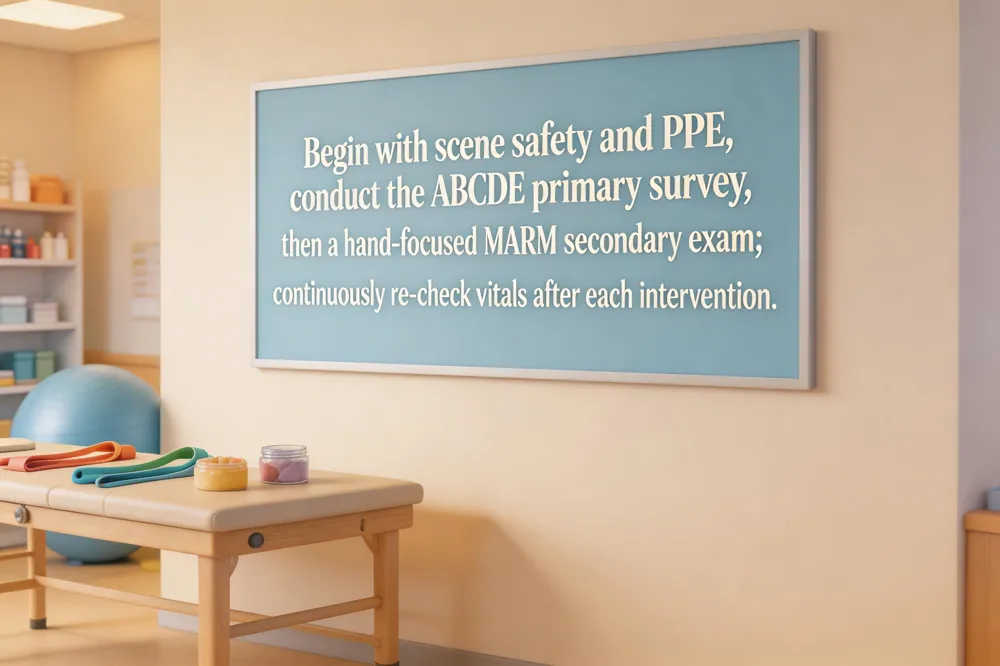 Scene safety and PPE are the first step; responders must secure the environment and wear gloves, eye protection, and a mask before patient contact. The primary survey follows the ABCDE mnemonic: Airway with cervical spine protection, Breathing (visual check, auscultation, pulse‑ox), Circulation (direct pressure, pulse, capillary refill, FAST if indicated), Disability (GCS, pupil response), and Exposure while preventing hypothermia. After life‑threatening issues are addressed, the secondary survey focuses on the hand using the MARM approach—assessing Movement, Angulation, Rotation, and Motion of each digit, tendon, and joint. Vital signs are re‑checked after each intervention and continuously monitored for deterioration.
Basic trauma assessment: begins with scene safety, PPE, then the rapid ABCDE primary survey, followed by a detailed hand‑focused secondary exam before definitive treatment starts.
ATLS assessment steps: primary ABCDE, secondary head‑to‑toe exam, AMPLE history, continuous reassessment, with immediate return to ABCDE if the patient decompensates.
Six emergency procedures for accident victims: 1) identify and mitigate scene danger, 2) assess responsiveness, 3) summon emergency services, 4) secure airway, 5) evaluate breathing, 6) establish circulation (control hemorrhage or begin CPR).
Hand‑Specific Primary Survey: Neurovascular Check and Hemorrhage Control
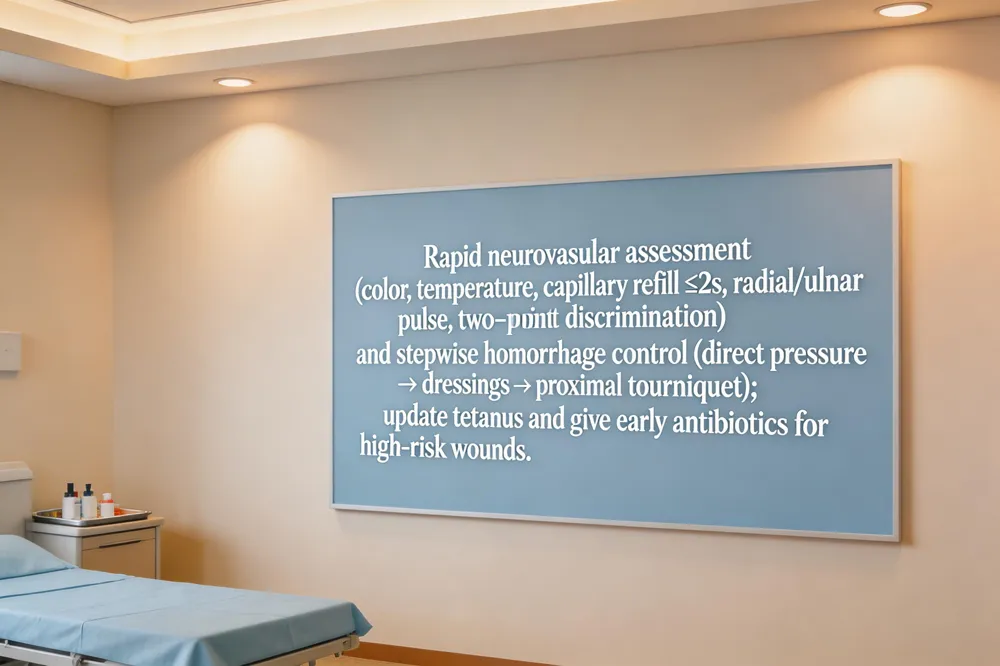 A hand‑specific primary survey starts with a rapid neurovascular check: assess color, temperature, capillary refill (≤2 seconds), distal pulse (radial/ulnar), and two‑point discrimination to verify median, ulnar and radial nerve integrity. Any sign of pallor, coolness, delayed refill, or sensory loss mandates immediate escalation. Hemorrhage control follows the classic sequence—direct pressure, pressure‑dressings, and, only if bleeding persists, a proximal tourniquet (max 2 hours, released intermittently). Tetanus prophylaxis should be updated for contaminated wounds, and broad‑spectrum antibiotics (e.g., a first‑generation cephalosporin) administered within the first 3 hours for high‑risk injuries such as open fractures, tendon lacerations or animal bites.
Hand injury assessment – Begin with a focused history (mechanism, hand dominance, occupation) and a visual exam for swelling, bruising, lacerations, and deformity. Perform neurovascular testing (pulse, capillary refill, color, temperature, two‑point discrimination) before analgesia, palpate bones/joints for tenderness, and note red‑flag signs (pain out of proportion, compartment syndrome, infection).
Basic trauma assessment – Follow the ABCDE primary survey: Airway, Breathing, Circulation (control bleeding, assess pulses), Disability (quick neuro check): Exposure, then a secondary head‑to‑toe exam before definitive care.
Hand injury when to see a doctor – Seek immediate care for severe pain, obvious deformity, inability to move fingers, uncontrolled bleeding, deep lacerations, or signs of infection. Persistent pain, swelling, numbness, or stiffness after a few days also warrants prompt specialist evaluation.
Imaging, Splinting, and Early Surgical Decision‑Making
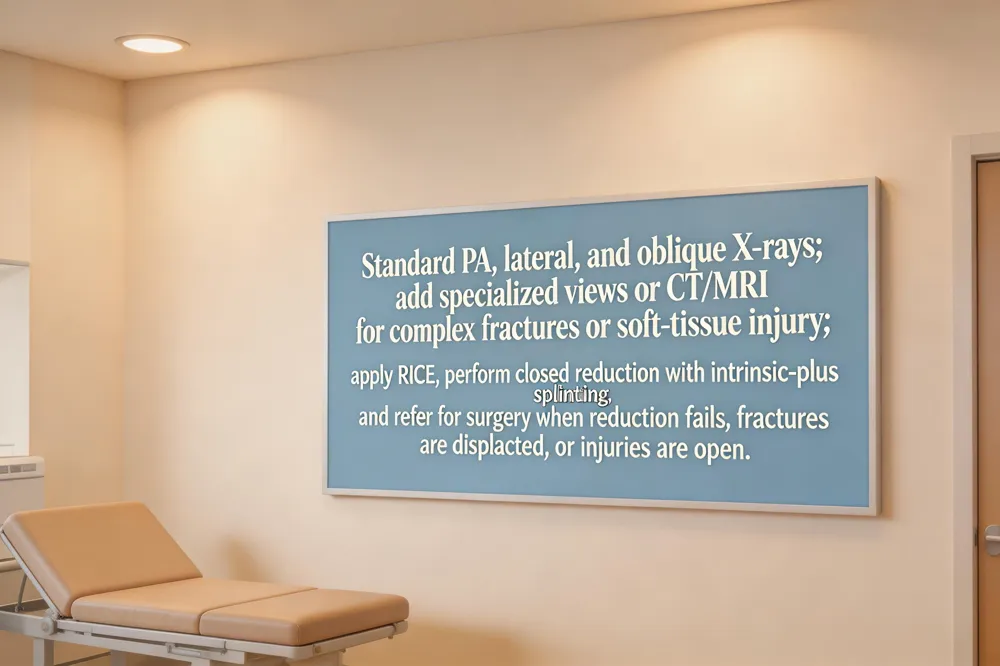 Standard hand imaging begins with a PA, true lateral, and external oblique X‑ray series; the PA view shows metacarpals and phalanges, the lateral view assesses displacement, and the oblique view highlights joint surfaces. Additional projections (e.g., fan view, ball‑catcher view) are added for specific concerns such as isolated distal phalanx fractures or MCP joint evaluation. CT or MRI is reserved for complex intra‑articular fractures, occult bone injury, or suspected soft‑tissue (tendon, ligament, nerve) damage, while Doppler or angiography is indicated when vascular compromise is suspected. Initial orthopedic management follows the RICE protocol, then proceeds to closed reduction of dislocated joints and intrinsic‑plus splinting to preserve perfusion and prevent stiffness. Operative referral is warranted for failed closed reduction, displaced or intra‑articular fractures, open injuries requiring debridement, tendon or nerve lacerations, and limb‑threatening conditions such as severe vascular injury or high‑pressure injection. Prompt hand‑surgeon consultation within 24‑48 hours ensures timely decision‑making and optimal functional outcomes.
Hand‑Specific Transfer Protocols and Medicaid Implications
 Hand injury when to see a doctor
Severe pain, obvious deformity, inability to move fingers or thumb, persistent swelling, numbness, tingling, discoloration, uncontrolled bleeding, deep lacerations, or animal bites merit immediate evaluation. Even a “stubbed” finger that remains painful or stiff after a few days should be seen promptly to prevent stiffness, loss of function, or complex surgery.
Approach to a trauma patient
EMS relays mechanism, vitals, and obvious injuries before arrival. The trauma team conducts an ABCDE primary survey (airway with cervical spine protection, breathing, circulation with hemorrhage control, disability, exposure). Life‑threatening issues are stabilized first; thereafter a secondary head‑to‑toe exam, focused imaging (X‑ray, CT), and specialist consultation guide definitive care.
EMTALA 24‑hour stabilization and referral policy
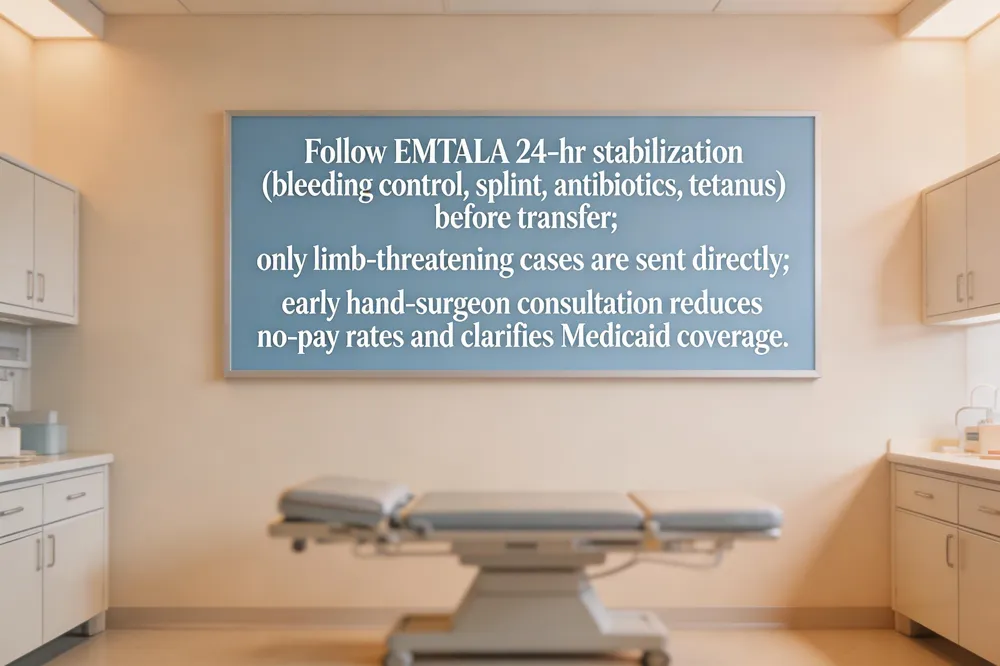
Under EMTALA requires ERs to stabilize hand injuries within 24 hours before transfer or referral. A 2006 hand referral call policy lets ER physicians stabilize injuries and consult a hand surgeon 24/7/365, stabilize (control bleeding, assess vascularity, splint, give antibiotics/tetanus), and document the decision not to replant, reducing medico‑legal risk.
Criteria for limb‑threatening transfers
Hand referral policy directs direct transfer only for limb‑threatening cases (e.g., replantations, severe paint/grease injections, severe infections); other injuries are stabilized and referred for outpatient follow‑up.
Financial impact
The protocol reduced the no‑pay rate for operative hand cases from ~41 % (community ER average) to ~5 % in the first 12 months, as stabilization removed EMTALA constraints and allowed discussion of payment plans and assistance before definitive surgery.
Rehabilitation: Home Exercises, Therapy, and Recovery Timelines
 Physical therapy exercises for hand injury – Begin with gentle stretches (make‑a‑fist, finger stretch) 30‑60 s, progressing to isolated DIP/PIP motions, wrist flexion/extension, and grip/pinch strengthening with a soft ball. Perform 8‑12 reps, 1‑3 times daily.
Hand exercises for nerve damage – Wrist‑extension stretch (15 s, 5×), median‑nerve flossing (8‑10 slow reps), ulnar‑ and radial‑nerve flossing, followed by thumb‑stretch and finger‑bend. Stop if pain exceeds mild stretch.
Claw hand exercises – Finger spread‑to‑together stretch (5‑10 s, 8‑10×), claw stretch (30‑60 s, 4×), grip/pinch with foam ball (10‑15 reps, 3×/week), MP‑joint traction and active ROM while hand rests on a table.
Hand exercises at home – Daily routine: make‑a‑fist, finger‑stretch, grip ball, thumb‑extension with rubber band, claw stretch; 8‑12 reps each, rest 48 h between strengthening sessions.
Hand injury when to see a doctor – Seek care for severe pain, deformity, loss of motion, persistent swelling, numbness, uncontrolled bleeding, or infection signs.
Broken hand treatment at home – Elevate, ice 10‑20 min q1‑2 h (first 3 days), keep splint dry, gentle motion of uninjured fingers, follow therapist’s exercise plan, and contact surgeon if pain, color change, or tightness occurs.
Common Hand Conditions, Their Prevalence, and Targeted Management
 What are the top 3 hand injuries?
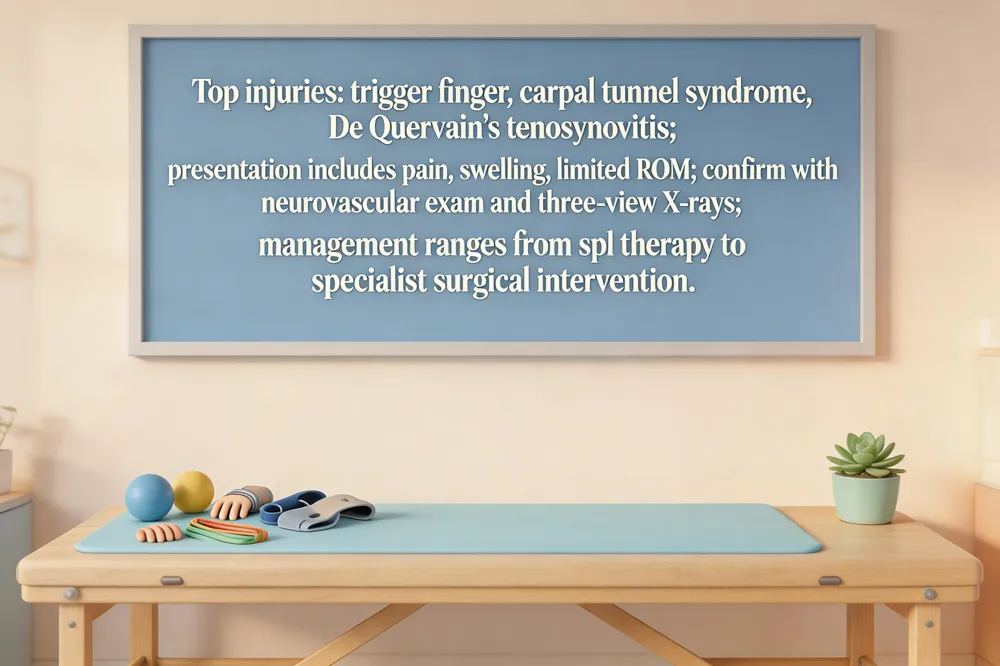
The three most common hand injuries seen in clinical practice are trigger finger, carpal tunnel syndrome, and De Quervain’s tenosynovitis. Trigger finger occurs when a flexor tendon sheath inflames, causing catching or popping on motion. Carpal tunnel syndrome results from median‑nerve compression in the wrist, producing numbness, tingling, and weakness. De Quervain’s tenosynovitis inflames the wrist‑side thumb tendons, causing pain with gripping. Hand injuries are hand by hand‑specialized orthopedic surgeons such as Dr. Rebecca S. Yu, who offer both non‑surgical and surgical options.
What are the top 3 hand injuries?
The three most common hand injuries seen in clinical practice are trigger finger, carpal tunnel syndrome, and De Quervain’s tenosynovitis. Trigger finger occurs when a flexor tendon sheath inflames, causing catching or popping on motion. Carpal tunnel syndrome results from median‑nerve compression in the wrist, producing numbness, tingling, and weakness. De Quervain’s tenosynovitis inflames the wrist‑side thumb tendons, causing pain with gripping. Hand injuries are hand by hand‑specialized orthopedic surgeons such as Dr. Rebecca S. Yu, who offer both non‑surgical and surgical options.
Hand injury presentation Patients typically present with pain, swelling, bruising, and limited range of motion. Visible cuts, deformities, numbness, or tingling suggest lacerations, fractures, or nerve involvement. Neurovascular assessment (capillary refill, skin color, pulse) and three‑view X‑rays are essential for diagnosis.
Types of hand injury Injuries involve bones, joints, tendons, nerves, vessels, and skin. Common categories include fractures, tendon tears, dislocations, ligament sprains (e.g., skier’s thumb), and nerve injuries. Prompt specialist evaluation prevents long‑term loss of function.
Workplace Risk Factors, Occupational Injuries, and Prevention
 Causes of hand injuries in the workplace
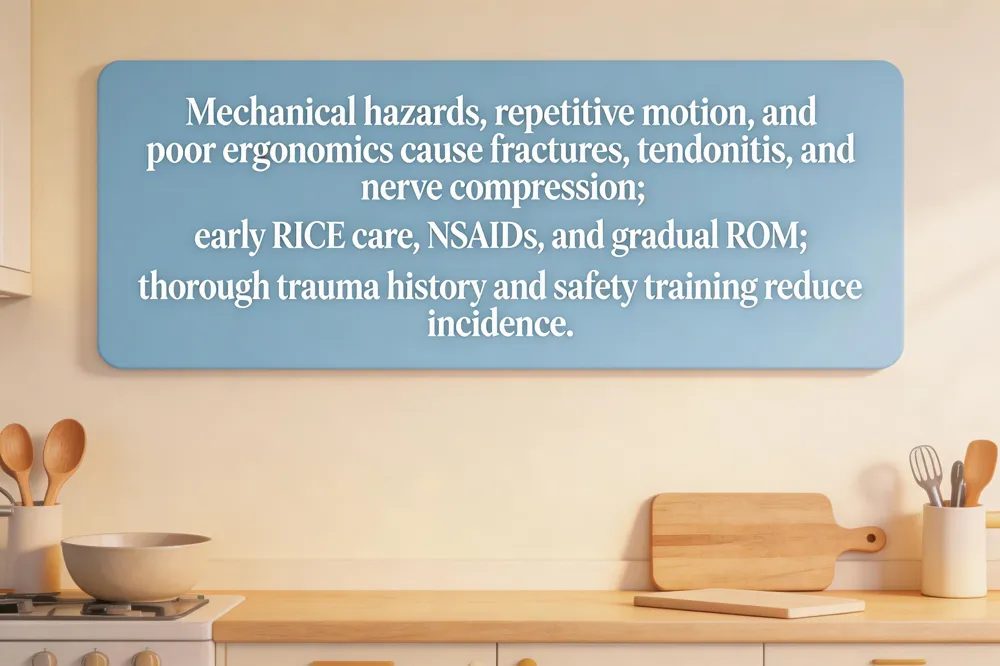
Hand injuries at work most often stem from mechanical hazards such as rotating machinery, heavy tools, and crushing equipment. Repetitive motions and poor ergonomics—common on assembly lines, typing stations, and tool‑use tasks—lead to tendonitis, carpal tunnel syndrome, and other overuse disorders. Slips, trips, and falls from ladders or elevated surfaces cause wrist fractures and elbow injuries. Human error, distraction, and failure to follow safety protocols increase the risk of pinching or laceration. Sharp objects, chemicals, electrical currents, and extreme temperatures add further risk for puncture wounds, burns, and cold‑related injuries.
Causes of hand injuries in the workplace
Hand injuries at work most often stem from mechanical hazards such as rotating machinery, heavy tools, and crushing equipment. Repetitive motions and poor ergonomics—common on assembly lines, typing stations, and tool‑use tasks—lead to tendonitis, carpal tunnel syndrome, and other overuse disorders. Slips, trips, and falls from ladders or elevated surfaces cause wrist fractures and elbow injuries. Human error, distraction, and failure to follow safety protocols increase the risk of pinching or laceration. Sharp objects, chemicals, electrical currents, and extreme temperatures add further risk for puncture wounds, burns, and cold‑related injuries.
Hand sprain home remedies Apply the R.I.C.E. protocol: Rest the hand, Ice 10‑20 minutes every 1‑2 hours for the first 48‑72 hours, Compress with an elastic bandage, and Elevate above heart level. After swelling subsides (2‑3 days), gentle heat can improve flexibility. OTC NSAIDs (ibuprofen) or acetaminophen control pain and inflammation. Follow any splint or brace instructions and begin doctor‑approved range‑of‑motion exercises gradually. Seek medical care if pain, swelling, numbness, or stiffness persists beyond a few days.
Taking a trauma history Begin by asking the patient to describe the event in their own words, focusing on the mechanism, timing, and immediate symptoms. Probe for pain location, swelling, numbness, and functional loss. Inquire about prior injuries, surgeries, or comorbidities that may affect healing. Assess psychosocial factors such as anxiety or fear that could influence recovery. Summarize the information back to the patient, confirm accuracy, and outline the next steps in evaluation and treatment.
Telemedicine, Transfer Guidelines, and Patient Follow‑Up
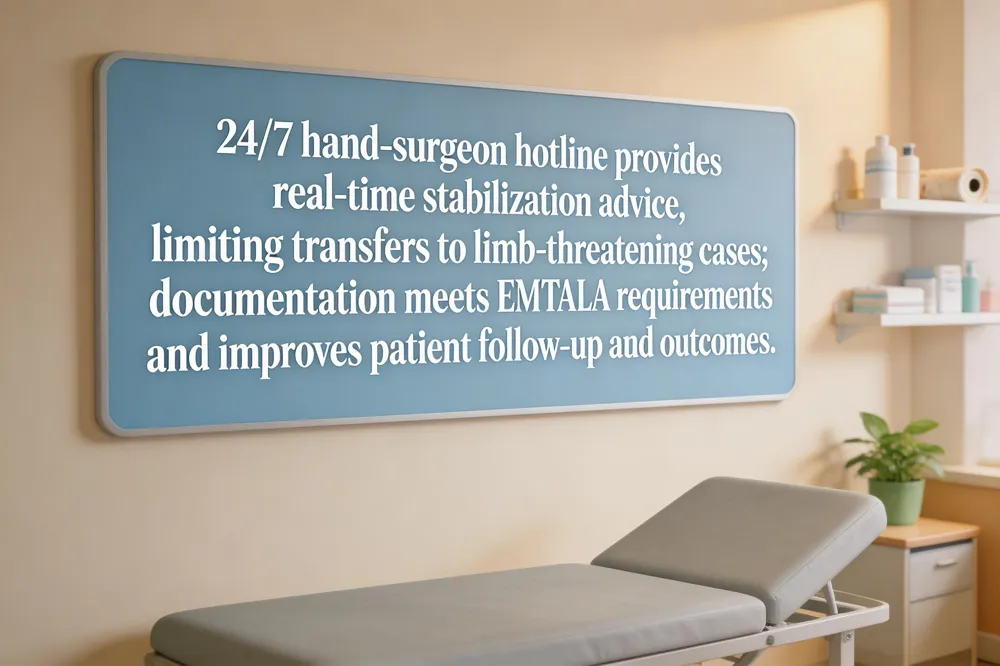 A dedicated 24/7 hand‑surgeon referral line, as used in Southwest Florida since 2006, lets emergency physicians stabilize injuries (bleeding control, splinting, antibiotics, tetanus prophylaxis) and obtain real‑time advice via telephone. This tele‑consultation reduces unnecessary transfers—only limb‑threatening cases (replantations, severe paint/grease injections, deep infections) are moved directly—cutting the community ER no‑pay rate from ~41 % to ~5 % in the first year. Documentation of the ER decision not to replant, after hand‑surgeon consultation, is essential to meet EMTALA requirements and protect against medico‑legal claims.
When to see a doctor: Seek immediate care for severe pain, obvious deformity, loss of motion, uncontrolled bleeding, swelling, tingling, or color change. Even persistent “stubbed” fingers that remain stiff or painful after a few days warrant a hand‑specialist visit to prevent long‑term stiffness, loss of function, or complex surgery. Early evaluation and referral improve outcomes and streamline follow‑up care.
Putting It All Together: From EMT to Recovery
Emergency clinicians should first follow the ABCDE primary survey, then perform a focused hand assessment that includes bleeding control, neurovascular exam (capillary refill, pulse, sensation, motor function), and early imaging. Stabilization steps—irrigation, tetanus prophylaxis, IV antibiotics for contaminated wounds, and splinting in the intrinsic‑plus position—allow safe transport and meet EMTALA requirements. Documentation of the decision not to replant after consulting a hand surgeon protects against medicolegal issues. Early involvement of a board‑certified hand surgeon, ideally within 24–48 hours, is critical for limb‑threatening injuries such as vascular compromise, severe crush or high‑pressure injections, and amputations, because timely repair improves functional outcomes and reduces complications. After stabilization, patients should be referred to a certified hand therapist for a structured rehabilitation program that begins with gentle passive motion, progresses to active range‑of‑motion and strengthening, and incorporates modalities such as heat, compression, and hand‑specific exercises. Telemedicine consult lines, regional hand‑trauma centers, and clinic networks (e.g., Central Orthopedic Group or MedStar Health) provide accessible follow‑up, while insurance‑aware payment plans and social‑service assistance help address financial barriers. Patients are encouraged to schedule follow‑up visits within week to monitor healing.