Why Understanding Trauma Care Matters
Traumatic injuries are a leading health burden in the United States, with nearly 2.8 million emergency‑department visits each year for hand and wrist trauma alone and an even larger number of multi‑system injuries that strain hospitals and families. The Advanced Trauma Life Support (ATLS) framework—primary survey (A‑B‑C‑D‑E) followed by a thorough secondary survey—provides a rapid, repeatable method for identifying life‑threatening problems and preventing missed injuries. Early assessment and immobilization of hand fractures within the first 24–48 hours, as well as timely surgical evaluation of tendon or nerve damage, dramatically lower the risk of chronic pain, stiffness, and permanent functional loss. Multidisciplinary coordination among trauma surgeons, orthopedic hand specialists, therapists, pain‑management teams, and social workers ensures that patients receive seamless care from the emergency department through rehabilitation and discharge. This guide reflects the same evidence‑based principles championed by Dr. Rebecca S. Yu—a board‑certified orthopedic hand surgeon in Berkeley, CA—who emphasizes rapid referral to a hand specialist, early hand‑therapy initiation, and patient‑centered education to optimize recovery and return to daily activities. Understanding these steps empowers patients and families to navigate the trauma system efficiently, advocate for timely interventions, and ultimately achieve better functional outcomes.
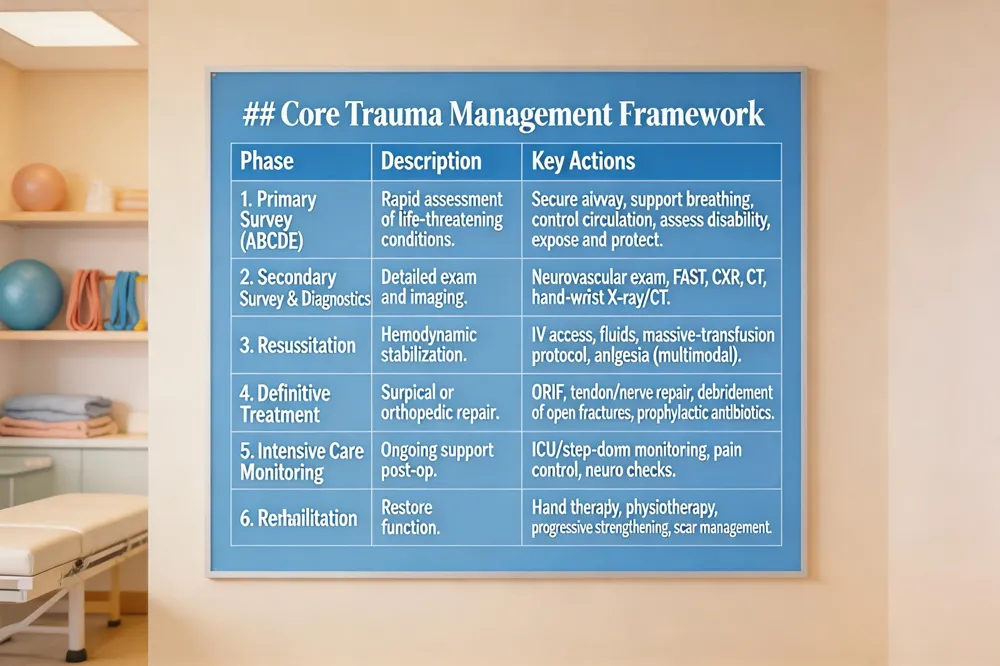
Core Trauma Management Framework
Core Trauma Management Framework
| Phase | Description | Key Actions |
|---|---|---|
| 1. Primary Survey (ABCD E) | Rapid assessment of life‑threatening conditions. | Secure airway, support breathing, control circulation, assess disability, expose and protect. |
| 2. Secondary Survey & Diagnostics | Detailed exam and imaging. | Neurovascular exam, FAST, CXR, CT, hand‑wrist X‑ray/CT. |
| 3. Resuscitation | Hemodynamic stabilization. | IV access, fluids, massive‑transfusion protocol, analgesia (multimodal). |
| 4. Definitive Treatment | Surgical or orthopedic repair. | ORIF, tendon/nerve repair, debridement of open fractures, prophylactic antibiotics. |
| 5. Intensive Care Monitoring | Ongoing support post‑op. | ICU/step‑down monitoring, pain control, neuro checks. |
| 6. Rehabilitation | Restore function. | Hand therapy, physiotherapy, progressive strengthening, scar management. |
 Trauma management ppt
Begin with the ATLS primary survey (ABCD E) to secure airway, breathing, circulation, disability and exposure within minutes. Follow with rapid evaluation55 R protocol: Rapid triage, Resuscitation, Radiology, Re‑evaluation, Repair/rehabilitation. Highlight injury mechanisms (blunt vs penetrating) and triage zones (Red, Yellow, Green, Black). Emphasize special hand‑upper‑extremity considerations—c‑‑spine protection, compartment‑syndrome prevention, early orthopedic consult for fractures, tendon or nerve injury.
Trauma management ppt
Begin with the ATLS primary survey (ABCD E) to secure airway, breathing, circulation, disability and exposure within minutes. Follow with rapid evaluation55 R protocol: Rapid triage, Resuscitation, Radiology, Re‑evaluation, Repair/rehabilitation. Highlight injury mechanisms (blunt vs penetrating) and triage zones (Red, Yellow, Green, Black). Emphasize special hand‑upper‑extremity considerations—c‑‑spine protection, compartment‑syndrome prevention, early orthopedic consult for fractures, tendon or nerve injury.
Trauma management guidelines After the ABCDE survey, initiate massive‑transfusion protocols if needed and obtain early imaging—FAST, chest X‑ray, CT—to locate internal injuries. For extremity trauma, timely reduction, fixation and prophylactic antibiotics (open fractures) lower infection and improve function. Use multimodal analgesia (NSAIDs, short‑term opioids) while avoiding oversedation that masks neuro status. Coordinate multidisciplinary hand‑offs and follow evidence‑based protocols from ED through definitive surgery.
Trauma management in emergency department ED staff perform the ATLS primary survey with C‑spine precautions, then address life‑threatening conditions (tension pneumothorax, massive hemorrhage) with needle decompression or emergent thoracotomy. A focused secondary survey of hand and wrist includes neurovascular exam and imaging (X‑ray, CT). Apply trauma‑informed care principles to ensure safety and trust. Refer to a board‑certified hand surgeon (e.g., Dr. Rebecca S. Yu) for definitive repair or transfer if needed.
Six phases of trauma care management
- Primary survey (ABCs) – rapid threat identification. 2. Secondary survey & diagnostics – detailed exam and imaging. 3. Resuscitation – fluids, blood products, hemodynamic stabilization. 4. Definitive treatment – surgical or orthopedic repair. 5. Intensive care monitoring – ongoing support. 6. Rehabilitation – physiotherapy, hand therapy, functional training to restore range and prevent long‑term disability.
Emergency and trauma care PDF The PDF outlines a continuum from pre‑hospital triage to ED and definitive care, stressing timeliness and coordinated teams. It stresses rapid recognition and resuscitation of severe hand and wrist injuries, integrates community education, and supports evidence‑based protocols that enable clinicians like Dr. Yu to deliver high‑quality, patient‑centered trauma care.
Hand and Upper‑Extremity Injuries: What to Expect
Hand & Upper‑Extremity Injuries – Expected Course
| Injury Type | Approx. US ED Visits (annual) | Typical Management | Recovery Timeline |
|---|---|---|---|
| Severed fingertip | 2.8 million total hand/wrist visits (incl.) | Microsurgical re‑approximation or graft | 6 weeks–3 months (sensory return) |
| Finger/hand fracture (e.g., boxer's) | ~600 k | Splint/cast ± ORIF if displaced | 4‑8 weeks (bone healing) |
| Distal‑radius or scaphoid wrist fracture | ~300 k | Closed reduction & cast; ORIF for instability | 8‑12 weeks (bone) + 3‑6 months (function) |
| Pediatric physeal fracture | ~15 % of hand fractures | Closed reduction & cast; surgery for Salter‑Harris III‑IV | 6‑12 weeks (growth‑plate healing) |
| Soft‑tissue sprain/bruise | Majority of visits | RICE, NSAIDs, early motion | 2‑4 weeks |
| Tendon/nerve injury | Subset of fractures | Surgical repair within 48 h | 3‑6 months (rehab) |
| Trigger‑finger | Common in adults | 15‑30 min release surgery | Return to light work 1‑2 days; full motion ≤6 weeks |
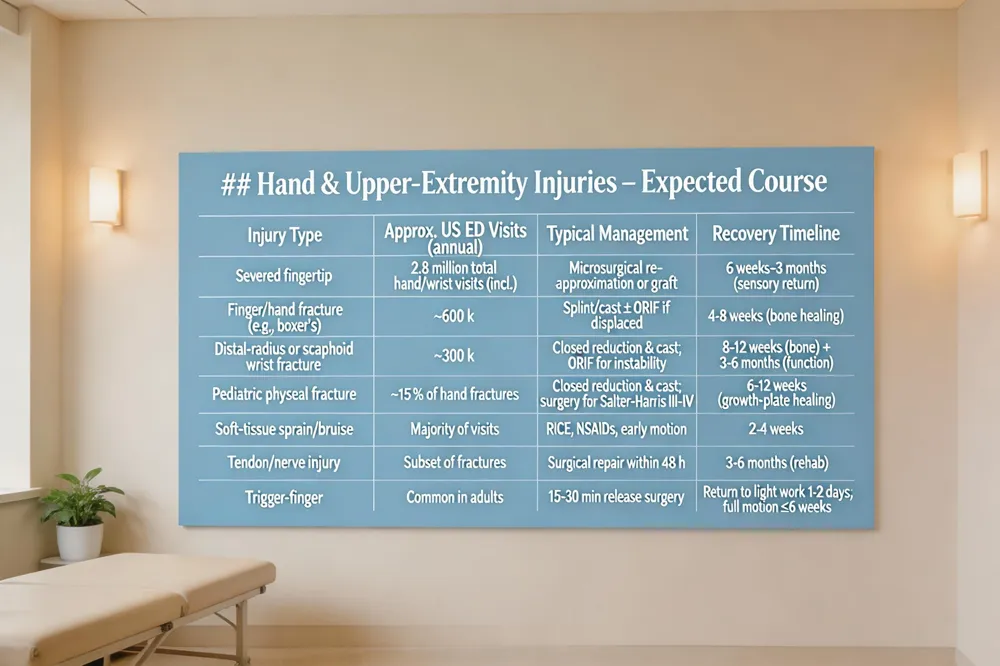 In the United States, hand and wrist injuries account for about 2.8 million US emergency visits annually for hand and wrist injuries, making them one of the most common musculoskeletal traumas. The top three injuries are severed fingertips, finger and hand fractures (including the classic “boxer’s fracture”), and wrist fractures such as distal‑radius or scaphoid breaks. Early assessment and immobilization within the first 24–48 hours reduces long‑term functional impairment. For fractures, splinting or casting is initiated promptly; displaced or unstable fractures often require surgical fixation, ideally within 48 hours for tendon or nerve involvement, as AAOS recommends surgical evaluation within 48 hours for tendon or nerve involvement.
Pediatric hand injuries contain a distinct subset: Pediatric physeal fractures account for about 15 % of hand fractures and require precise alignment. Precise alignment is critical to avoid growth disturbances, and many are treated with closed reduction and casting, while more complex Salter‑Harris fractures may need surgical fixation.
Healing timelines vary. Minor soft‑tissue trauma (sprains, bruises) resolves in 2‑4 weeks; ligament or tendon strains need 6‑12 weeks; surgical repairs of tendons or nerves often require 3‑6 months, with remodeling continuing up to a year. Trigger‑finger release is a brief outpatient procedure (15‑30 minutes) with most patients returning to light desk work within 1‑2 days and achieving pain‑free motion by six weeks. Success rates for trigger‑finger surgery are 90‑95 %, and postoperative pain is usually mild, controlled with prescribed analgesics. Adhering to surgeon‑guided rehabilitation and early protected motion is essential for optimal functional recovery.
Surgical Intervention and Timing for Hand Trauma
Surgical Intervention & Timing Guidelines
| Injury | Recommended Time to Surgery | Standard Procedure | Key Points |
|---|---|---|---|
| Tendon or nerve damage | ≤48 h | Primary repair (microsurgical) | Preserve function; early referral critical |
| Displaced/unstable fracture | ≤48 h (ideally <24 h) | ORIF or external fixation | Early fixation reduces stiffness |
| Open fracture | ≤6 h for debridement | Irrigation, debridement, antibiotics, definitive fixation | Infection prophylaxis; follow ACS guidelines |
| Complex Salter‑Harris fracture | ≤48 h | Closed reduction ± percutaneous pinning or ORIF | Align growth plate to prevent disturbance |
| Scaphoid fracture (non‑displaced) | ≤48 h for imaging; surgery if displaced | Percutaneous screw fixation | Early fixation improves union rates |
| Multi‑ligamentous wrist injury | ≤48 h | Arthroscopy‑guided repair or open reconstruction | Early motion after protected immobilization |
| Severe compartment syndrome | Immediate | Fasciotomy (emergent) | Prevent irreversible muscle/nerve loss |
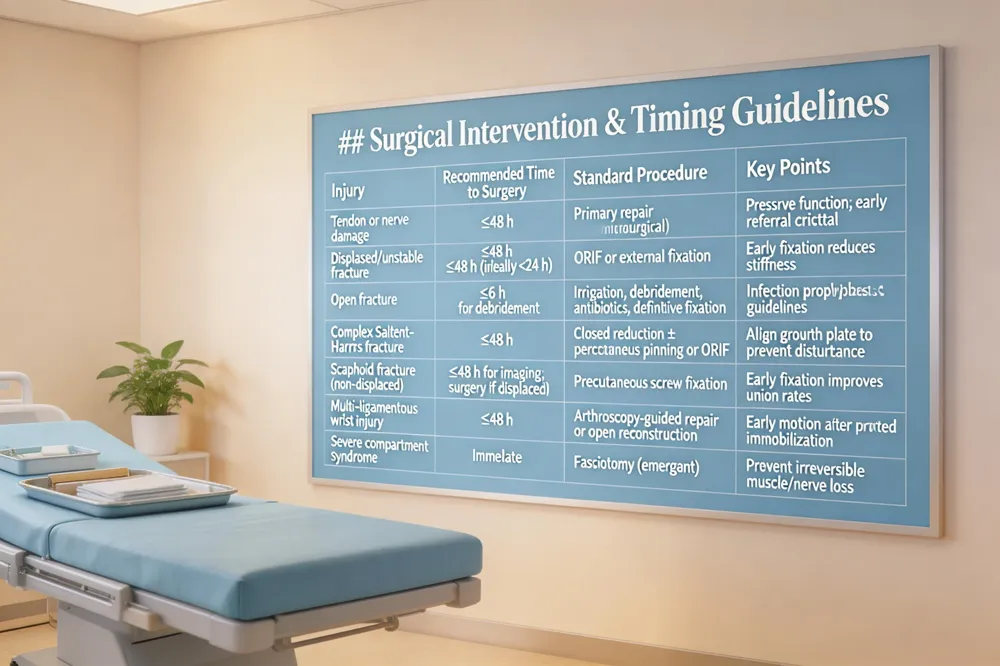 Early surgical evaluation is critical for hand injuries. The American Academy of Orthopaedic Surgeons advises that patients with suspected tendon or nerve damage receive a surgical consult within 48 hours to preserve function. Hand and wrist fractures should be assessed and immobilized in the first 24–48 hours to lower the risk of long‑term stiffness. For displaced or unstable fractures, open reduction internal fixation (ORIF) is the standard, while minimally invasive approaches such as limited‑incision or arthroscopic techniques reduce tissue trauma and promote faster recovery. Open fractures require urgent debridement and prophylactic antibiotics within six hours to prevent infection, as recommended by ACS and orthopaedic guidelines.
Post‑operative rehabilitation should begin promptly. Hand surgery rehabilitation is a structured program that starts soon after the operation to control pain and swelling while protecting the repair. Therapeutic exercises, gentle range‑of‑motion drills, and progressive strengthening restore flexibility, tendon gliding, and grip strength. Manual therapy, custom splinting, and scar‑management prevent adhesions and maintain alignment. The first two weeks focus on pain control and gentle motion; weeks 2‑6 emphasize active strengthening and functional training, with a gradual return to daily activities.
Hand surgery rehabilitation Hand surgery rehabilitation is a structured program that begins soon after the operation to control pain and swelling while protecting the surgical repair. Therapeutic exercises, gentle range‑of‑motion drills, and progressive strengthening help restore flexibility, tendon gliding, and functional grip strength. Manual therapy, customized splinting, and scar‑management techniques prevent adhesions and maintain joint alignment as the tissues heal. Typically, the first two weeks focus on pain control and gentle motion, followed by a 2‑ to 6‑week phase of active strengthening and functional training, with gradual return to daily activities. Working closely with a certified hand therapist ensures a safe, efficient recovery and maximizes the long‑term outcome of the surgery.
Trauma management guidelines Trauma management begins with a rapid primary survey (airway, breathing, circulation, disability, exposure) to identify life‑threatening injuries and initiate resuscitation, including massive‑transfusion protocols when indicated. Early imaging—such as focused assessment with sonography for trauma (FAST), chest X‑ray, and CT scans—helps delineate internal injuries and guide definitive care. For extremity and orthopedic injuries, timely reduction, fixation, and prophylactic antibiotics (especially for open fractures) reduce infection risk and improve functional outcomes. Analgesia should be optimized with multimodal strategies, using NSAIDs when appropriate, while avoiding excessive sedation that could mask neurologic changes. Finally, coordinated multidisciplinary hand‑offs and adherence to evidence‑based practice guidelines ensure consistent, high‑quality care from the emergency department through definitive surgical management.
Multidisciplinary Team, Telemedicine and Patient Support
Multidisciplinary Team & Telemedicine Integration
| Role | Core Responsibilities | Telemedicine / Support Tools |
|---|---|---|
| Emergency Nurse | Primary survey, IV access, pain control, monitoring | Remote vitals dashboards, video guidance for wound care |
| Hand Surgeon (e.g., Dr. Rebecca S. Yu) | Definitive surgical planning, operative care | Virtual consults, e‑referral platform |
| Certified Hand Therapist | Splint fabrication, scar massage, ROM exercises | Tele‑rehab sessions, instructional videos |
| Physical/Occupational Therapist | Early edema control, functional training | Mobile app (MyMountSinai®) for home exercises |
| Social Worker / Case Manager | Insurance navigation, discharge planning | Secure messaging, tele‑case conferences |
| Telemedicine Platform | Triage, follow‑up, education | 30 % growth since 2020; video assessments, digital guides |
| Patient & Family | Wound monitoring, adherence to splint care | Peer‑support network (Trauma Survivors Network), digital guides |
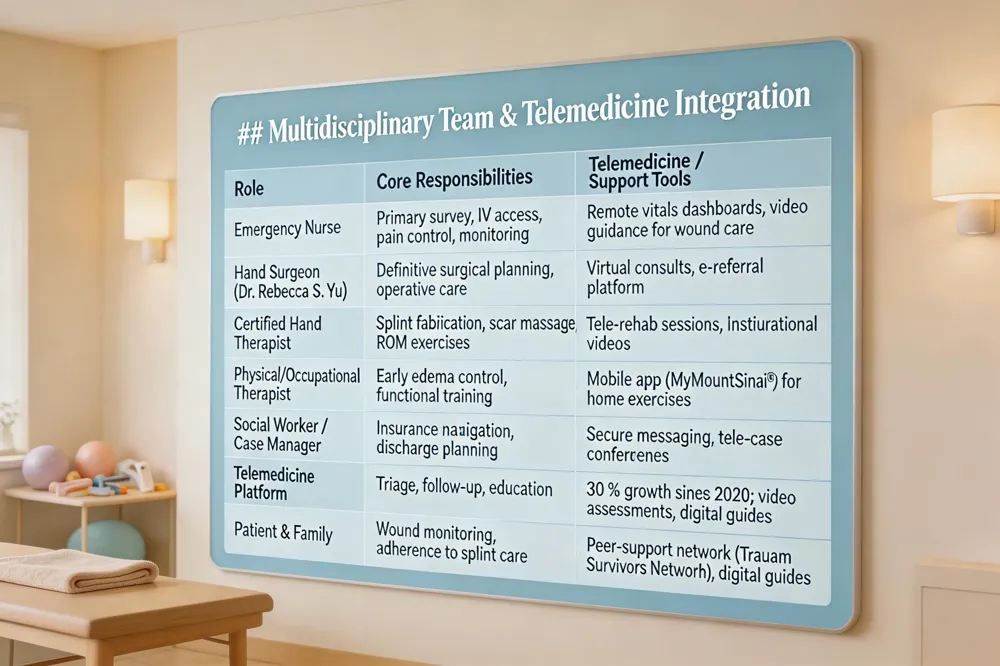 Effective hand‑trauma care in the United States relies on a coordinated multidisciplinary team. Nurses lead the rapid primary survey—protecting the airway, supporting breathing, establishing large‑bore IVs, controlling hemorrhage, monitoring vitals, and managing pain and anxiety throughout the secondary survey. Physical and occupational therapists begin early range‑of‑motion and edema‑control exercises within the first week, while certified hand therapists provide scar massage, custom splinting, and functional training to prevent stiffness and chronic pain. Social workers and case managers navigate insurance benefits—mandated under the Affordable Care Act—and arrange discharge resources such as home‑health therapy, durable medical equipment, and rehabilitation facility placement. Telemedicine triage has grown 30 % since 2020, allowing rapid virtual assessment of hand injuries, timely surgical referrals, and follow‑up visits that reduce unnecessary emergency department trips, especially in underserved areas. Patient education resources, including digital guides, instructional videos, and the MyMountSinai® app, empower patients and families to monitor wound healing, recognize infection signs, and adhere to splint‑care protocols. Family involvement is encouraged through designated spokespersons, education sessions on wound care, and access to peer‑support networks like the Trauma Survivors Network, ensuring emotional support and shared decision‑making throughout recovery.
Trauma‑Informed Care and Psychological Support
Trauma‑Informed Care Principles
| Principle | Description | Practical Implementation |
|---|---|---|
| Safety | Create a calm, private environment. | Private exam rooms, clear signage, infection control. |
| Trustworthiness & Transparency | Explain each step of care. | Offer written treatment plans, consent discussions. |
| Peer Support | Connect patients with others who have similar experiences. | Referral to Trauma Survivors Network, support groups. |
| Collaboration & Mutuality | Shared decision‑making with patient and family. | Family spokesperson, joint goal setting. |
| Empowerment / Voice / Choice | Allow patients to express preferences. | Offer splint options, pain‑management choices. |
| Cultural, Historical, & Gender Awareness | Respect diverse backgrounds and past trauma. | Use interpreters, ask about cultural beliefs, tailor explanations. |
| Secondary Trauma Prevention for Staff | Support caregivers’ mental health. | Regular de‑briefings, mental‑health resources, workload rotation. |
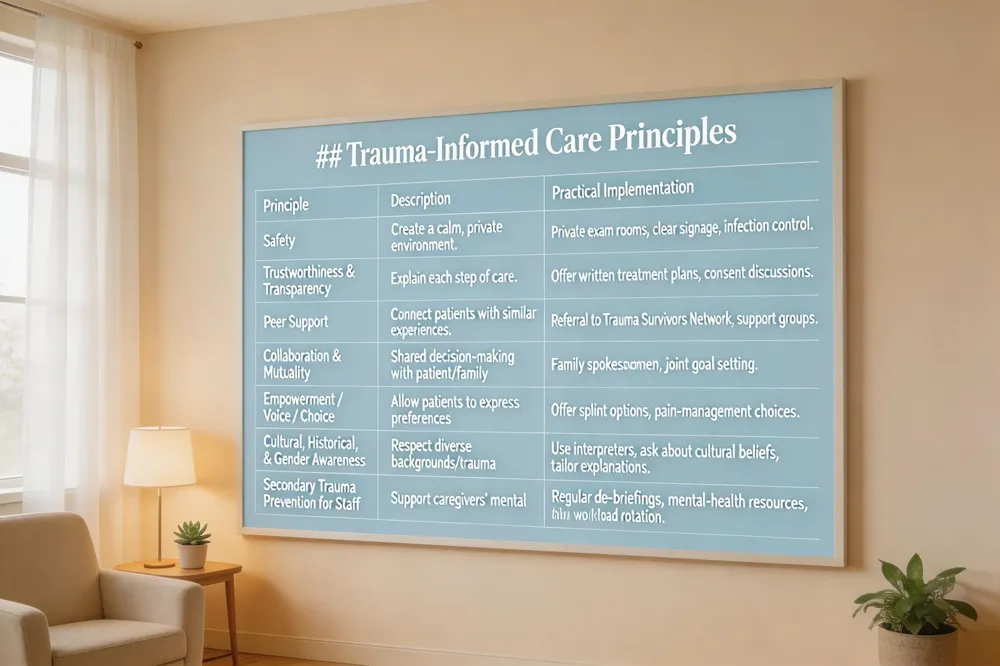 Trauma‑informed care in orthopedic hand trauma follows SAMHSA’s six guiding principles: safety, trustworthiness and transparency, peer support, collaboration and mutuality, empowerment/voice/choice, and cultural, historical, and gender awareness. Safety means creating a calm, private exam space; trustworthiness is built by explaining each step of splinting or surgery. Family involvement and peer support are essential—designating a family spokesperson, offering the Trauma Survivors Network, and encouraging patients to share experiences reduce isolation and promote healing. Cultural humility requires clinicians to ask about language, beliefs, and past experiences, adapting explanations and treatment plans accordingly. Caregivers also face secondary trauma; regular de‑briefings, access to mental‑health resources, and workload rotation help prevent burnout.
What are the 5 core principles of trauma? The five core principles are safety, trustworthiness, choice, collaboration, and empowerment. Safety creates protected environments; trustworthiness demands transparency; choice gives patients control; collaboration involves shared decision‑making; empowerment builds confidence in self‑management.
What are the top 3 hand injuries? The most common are severed fingertips, finger and hand fractures (e.g., boxer’s fracture), and wrist fractures (distal‑radius or scaphoid). Prompt splinting or surgical repair is often required.
Trauma care bundle A coordinated package that includes rapid assessment, advanced imaging, surgical intervention when needed, and a structured rehabilitation plan, supplemented with patient education, digital guides, and multidisciplinary support to streamline recovery for hand and upper‑extremity injuries.
Key Takeaways and Next Steps
Recap of the Trauma Care Pathway In the United States, hand and wrist trauma follows the ATLS primary survey (A‑B‑C‑D‑E) to secure airway, breathing, circulation, neurologic status, and exposure, followed by a secondary survey (SAMPLE) to identify musculoskeletal injuries. Prompt imaging (X‑ray, CT, MRI) confirms fractures, tendon, nerve, or the damage. Orthopedic hand surgeons evaluate the injury, often within 48 hours for tendon or nerve involvement, and decide on non‑surgical (casting, splinting) versus surgical (ORIF, microsurgical repair) treatment. Post‑operative care includes protected splinting, early range‑of‑motion therapy, and multidisciplinary pain management. Rehabilitation—hand therapy, edema control, scar mobilization—begins within the first week and continues for months to restore grip strength and dexterity.
Importance of Early, Coordinated, and Trauma‑Informed Care Early assessment and immobilization (within 24‑48 hours) dramatically lower long‑term functional loss. Coordinated teamwork—surgeons, nurses, therapists, pain specialists, social workers—ensures seamless transition from the emergency department to the operating room, intensive care, and outpatient rehab. Trauma‑informed principles (safety, trust, empowerment) reduce anxiety, improve adherence to therapy, and mitigate chronic pain, which affects up to 1 in 5 severe hand trauma patients. Telemedicine triage and insurance coverage under the Affordable Care Act further expand timely access to care.
How to Contact Dr. Rebecca S. Yu for Personalized Evaluation Patients seeking expert hand and upper‑extremity trauma care can schedule a consultation with Dr. Rebecca S. Yu, MD, a board‑certified orthopedic hand surgeon in Berkeley, California. Appointments are available through the online booking portal on her practice website or by calling the office at (510) 555‑1234. For urgent concerns, the after‑hours line (510) 555‑5678 connects directly to the trauma team. Dr. Yu’s clinic also offers virtual visits for initial triage, and the MyMountSinai® app (or similar patient portal) can be used to share imaging and receive follow‑up instructions securely.