The Nerve Behind the Funny Bone
The ulnar nerve travels from the neck into the hand, passing close beneath the skin behind the inner elbow. A bump there can trigger the familiar “funny bone” jolt, while ongoing pressure or stretching may irritate the nerve. It carries sensation from the little finger and part of the ring finger, and helps control muscles used for grip and precise hand movements. The American Academy of Orthopaedic Surgeons explains the nerve’s path and function.
This guide covers common symptoms, clinical evaluation, nonsurgical care, and what to expect if surgery is considered. At her Berkeley practice, board-certified orthopedic surgeon Rebecca S. Yu, MD, provides information on cubital tunnel syndrome and treatment options. Symptoms can have more than one cause, so an individual assessment helps guide appropriate care.
How Compression Starts and Feels
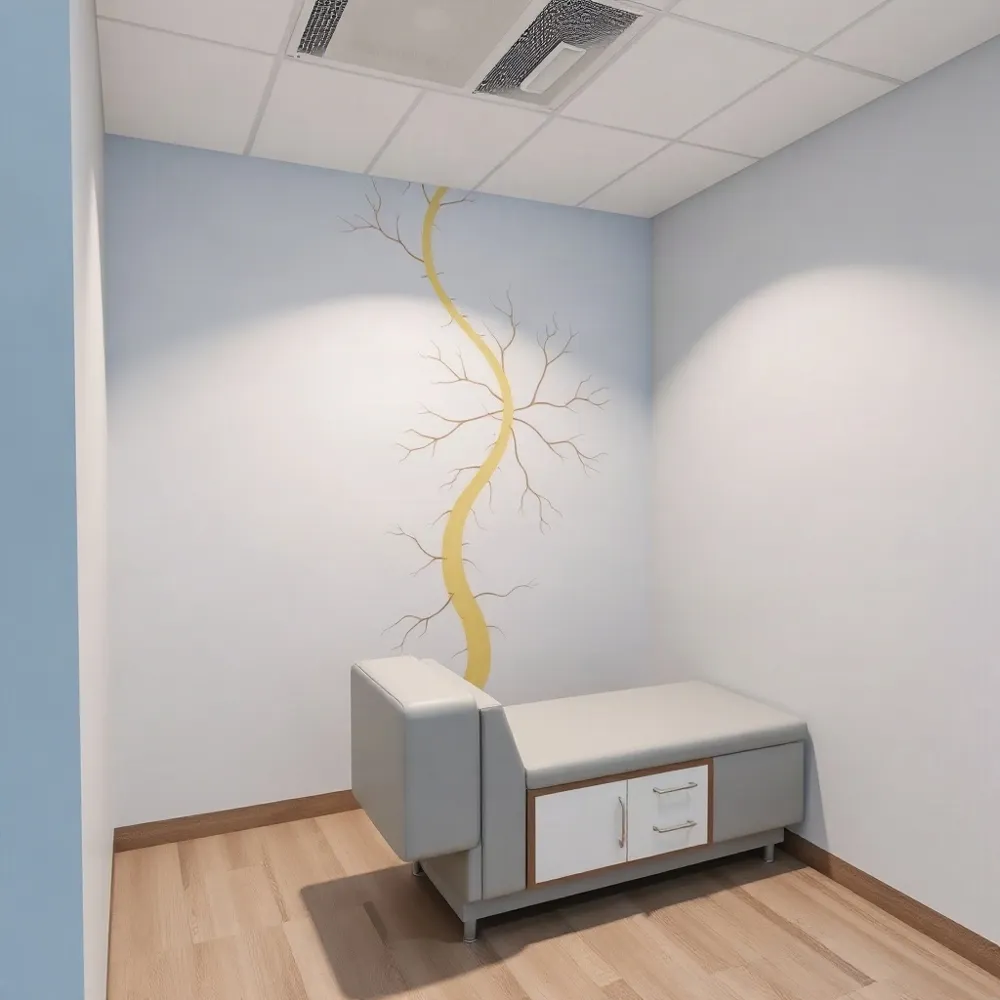 Cubital tunnel syndrome develops when the ulnar nerve is compressed or irritated as it passes behind the inner elbow through a narrow passage called the cubital tunnel. Rebecca S. Yu, MD, is a board-certified orthopedic surgeon specializing in hand and upper-extremity care in Berkeley, where patients can find information about cubital tunnel syndrome and its treatment.
The nerve supplies feeling to the little finger and part of the ring finger, and helps control muscles involved in grip and fine hand movements. Bending the elbow stretches the nerve and can increase pressure within the tunnel, while leaning on the inner elbow may add direct irritation. The American Academy of Orthopaedic Surgeons’ overview also describes nerve movement over the bony prominence, swelling, arthritis, bone spurs, cysts, and past elbow injuries as possible contributors. Sometimes no specific cause is found.
Symptoms often begin as intermittent numbness or tingling in the little and ring fingers. They may worsen when the elbow stays bent, such as during sleep, or feel like an ache at the inner elbow or an electric sensation traveling toward the hand. If compression progresses, weakness, reduced grip, clumsiness, or difficulty with precise tasks may develop. Long-standing nerve damage can cause hand-muscle wasting.
Similar symptoms can arise from other conditions, including a pinched nerve in the neck or golfer’s elbow. A clinical assessment can help distinguish these causes, so persistent or worsening symptoms should not be self-diagnosed.
How Clinicians Evaluate the Nerve
 Diagnosis usually starts with questions about symptoms, medical history, work, and daily activities. A clinician then examines sensation and strength in the hand, including how well the fingers coordinate during small movements. Dr. Rebecca S. Yu, MD, is a board-certified orthopedic surgeon specializing in hand and upper-extremity care in Berkeley, and her site provides information on conditions such as cubital tunnel syndrome.
During the examination, the clinician may tap over the ulnar nerve at the inner elbow to check for tingling in the ring and little fingers. They may bend the elbow to see whether the nerve shifts over the bone, and move the neck, shoulder, elbow, and wrist to find positions that reproduce symptoms. A neck examination can help distinguish cubital tunnel syndrome from a pinched nerve farther up the arm. Tapping alone cannot confirm the diagnosis, so clinicians interpret it with other findings (AAOS examination guidance).
X-rays can show bone spurs or arthritis that may contribute to pressure, but they do not reveal most nerve problems. Nerve-conduction studies measure how electrical signals travel, while electromyography assesses the response of muscles supplied by the nerve. These tests can help locate and assess nerve dysfunction, though results may be normal in early cases. Clinicians weigh test results alongside symptoms and the physical examination, rather than relying on a single result (review of cubital tunnel diagnosis).
Reducing Irritation in Daily Life
 Mild symptoms may ease when a trigger, such as prolonged elbow bending or pressure, is reduced. Activity changes and nighttime positioning can help, but improvement is not guaranteed, and there is no fixed recovery timeline. Persistent compression can continue to irritate the nerve, so watch for changes rather than assuming symptoms will resolve.
During the day, avoid leaning on the inner elbow and limit activities that hold it tightly bent. Adjust computer seating so the elbow does not rest on a hard armrest, and take breaks to straighten the arm during repetitive tasks. Dr. Rebecca S. Yu, MD, provides information on cubital tunnel syndrome and its treatment options for patients considering care.
Sleep position can also matter. Try not to tuck the arm under your head or body, and keep the elbow relatively straight, perhaps with the arm by your side or supported on a pillow. A loosely wrapped towel or a comfortable brace worn backward over the elbow may discourage deep bending. These measures reduce prolonged flexion, but they are not a guaranteed cure; the AAOS home-care guidance also describes ways to limit bending and pressure.
A clinician or hand therapist may recommend gentle ulnar nerve-gliding exercises. Follow their demonstration, move slowly, and do not force a stretch. Stop if a movement causes pain, numbness, or tingling that persists or worsens afterward. Avoid aggressive stretching and repeated movements that press on the inner elbow or reproduce symptoms.
Exercise may still be possible, but modify activities that bring on symptoms. For weight lifting, avoid resting on the elbows, use comfortable form, consider lighter loads, and take breaks. Stop rather than pushing through worsening numbness, pain, or weakness. Arrange medical assessment if symptoms persist or worsen, or if weakness, clumsiness, or visible muscle loss develops, since prolonged compression can cause lasting damage.
When Surgery Becomes an Option
When symptoms continue despite steps such as limiting elbow bending and pressure or wearing a nighttime splint, a clinician may discuss surgery. It may also be considered when compression is severe or when weakness, muscle wasting, or difficulty with hand coordination suggests nerve damage. For patients without disability or muscle wasting, nonsurgical care is generally tried first, as described in the AAOS guidance on ulnar nerve entrapment.
Dr. Rebecca S. Yu, MD, is a board-certified orthopedic surgeon specializing in hand and upper-extremity surgery in Berkeley, California. Her cubital tunnel syndrome information explains the condition and its treatment options. A specialist can consider symptoms alongside examination findings and, when appropriate, nerve testing before recommending an operation.
What happens during cubital tunnel surgery?
In cubital tunnel release, the surgeon divides constricting tissue that forms the roof of the tunnel, giving the nerve more room. This is often considered when the nerve stays in place as the elbow bends. In ulnar nerve transposition, the surgeon moves the nerve to the front of the medial epicondyle, the bony prominence on the inner elbow. This may be considered when the nerve slips over the bone or remains vulnerable to irritation.
Other procedures, such as removing part of the medial epicondyle, may suit particular circumstances. No single operation is right for everyone. The choice depends on the person’s symptoms, examination, nerve stability, and test findings, as well as the cause and severity of compression. A surgeon can explain the expected benefits, risks, and recovery plan. Tingling or numbness may ease gradually, while recovery from longstanding weakness can be less predictable.
Healing After Ulnar Nerve Surgery
Recovery after ulnar nerve surgery varies with the procedure, the degree of nerve irritation, and individual healing. Follow your surgeon’s instructions for dressing and incision care, splinting, movement, and rehabilitation. Dr. Rebecca S. Yu, MD, is a board-certified orthopedic surgeon specializing in hand and upper-extremity surgery in Berkeley, with care focused on these conditions and treatment choices.
Some soreness and swelling around the elbow are expected early on. Keep the incision protected as directed, and elevate the arm if your surgeon recommends it. Avoid heavy lifting, pushing, pulling, and strenuous or repetitive use until you are cleared. A splint may be needed for days or weeks, with longer immobilization sometimes required after certain transposition procedures. Some patients begin gentle elbow movement soon after surgery to limit scar tissue around the nerve, but timing depends on the operation and the surgeon’s plan. AAOS guidance on ulnar nerve surgery describes these differences in postoperative care.
Light daily activities may be possible within a few weeks, while strength and hand function can continue to improve over the following months. Numbness or weakness may take longer to ease, and severe or longstanding compression can leave lasting symptoms. Recovery timelines are not guarantees, so keep follow-up appointments and ask the treating team when to progress activity. Alberta Health Services’ recovery guidance emphasizes that instructions vary by person and procedure.
Do not drive while the arm is numb or weak, while taking opioid pain medicine or other sedating medication, or if you cannot grip and control the steering wheel safely. Resume driving only when you can use the arm comfortably and react safely, and confirm the timing with your surgeon. Return to demanding work, exercise, and activities that put pressure on or repeatedly bend the elbow only after clearance.
Pain, Complications, and Follow Up
Some tenderness, soreness, swelling, or bruising near the incision is common soon after cubital tunnel surgery. These symptoms should gradually ease. Follow your surgeon’s directions for wound care, activity, medication, and arm elevation. Rebecca S. Yu, MD, is a board-certified hand and upper extremity surgeon in Berkeley, and her cubital tunnel syndrome information outlines treatment options for the condition.
Contact the surgical team promptly if pain is severe, worsening, or not controlled by recommended medication, or if the incision becomes increasingly red, warm, swollen, or starts draining. Fever, new or worsening numbness or weakness, and a cool, pale, or discolored hand also need prompt medical advice. If you are unsure whether a symptom is expected, call rather than wait.
Tingling, numbness, pain, or weakness that persists or returns does not always mean the procedure failed. Nerve recovery can be slow, while ongoing compression, scar tissue, nerve instability, or another source of symptoms may also be involved. A clinician may examine the arm and consider repeat nerve testing or compression elsewhere, such as the wrist or neck. The American Academy of Orthopaedic Surgeons’ guidance notes that severe or long-standing nerve damage can leave lasting symptoms.
Surgical results are generally good, but symptoms can persist or recur, especially when nerve damage was advanced before surgery. Keep follow-up appointments and contact your clinician if healing is not progressing as expected. Your care team can assess changes and advise whether further evaluation is needed.
Timely Assessment Protects Hand Function
Ulnar nerve symptoms can be occasional tingling in the ring and little fingers, or progress to weakness, reduced coordination, and difficulty with everyday tasks. If symptoms persist, worsen, or interfere with hand use, arrange an assessment rather than waiting for them to resolve on their own. Ongoing or severe compression can affect hand muscles, and the cause of similar symptoms may vary.
Diagnosis and treatment depend on an individual’s symptoms, examination, and any tests a clinician considers appropriate. This article offers general educational information, not a diagnosis or personal medical advice. A healthcare professional can assess your situation and discuss suitable next steps.