
A Fracture Is Not a Forecast
A complex wrist fracture can raise immediate fears: Will pain last? Will the hand regain its strength and movement? The injury is serious, but its name alone cannot predict how recovery will go. Fractures differ in alignment, stability, fragmentation, and whether they extend into the joint, so treatment and outcomes vary.
Many injuries called broken wrists are breaks in the radius or ulna near the wrist, rather than in the small wrist bones themselves. Distal radius fractures can range from stable patterns that may be treated with a cast to more complex injuries that need surgical stabilization.
Careful assessment helps a clinician understand the fracture and choose treatment suited to the injury and the person’s health, daily demands, and goals. Dr. Rebecca S. Yu, MD, is a board-certified orthopedic surgeon specializing in hand and upper-extremity surgery in Berkeley, where evaluation and treatment planning focus on these injuries. Rehabilitation then supports a gradual return of motion and function. No treatment plan can guarantee a particular result, but understanding the fracture is a practical first step.
Recognizing Fracture Patterns and Warning Signs
 The distal radius, the end of the larger forearm bone near the wrist, is the wrist bone most often fractured. A Colles’ fracture tilts toward the back of the hand, while a Smith’s fracture tilts toward the palm. Other patterns include Barton’s fractures, which involve the wrist joint, radial styloid breaks, scaphoid fractures near the base of the thumb, and ulnar styloid fractures at the tip of the smaller forearm bone. Children may sustain buckle or greenstick fractures because their bones are more flexible. The fracture patterns and anatomy vary, so names alone do not determine treatment.
Fractures can differ in how far the bone has shifted, how many pieces it has broken into, and whether the break reaches the joint surface. Joint involvement can damage cartilage and raise the risk of arthritis later, which is one reason detailed assessment matters. Dr. Rebecca S. Yu, MD, is a board-certified orthopedic surgeon specializing in hand and upper-extremity surgery in Berkeley, where evaluation can account for the injury pattern and the patient’s needs.
Symptoms range from moderate soreness to severe pain, often with swelling, bruising, tenderness, stiffness, or trouble moving the wrist, fingers, or gripping objects. Numbness or tingling and visible deformity can also occur. Pain alone cannot reliably distinguish a fracture from a sprain, and some fractures may not look dramatically displaced.
Arrange prompt medical assessment after a suspected fracture, especially with severe pain, marked swelling, numbness, difficulty moving the fingers, or a visibly misshapen wrist. An open fracture, where bone breaks through the skin or a wound lies over the break, needs immediate attention because of infection risk. An examination and imaging help clarify the injury and guide care; wrist fracture diagnosis and treatment may involve additional imaging when X-rays do not show enough detail.
How Clinicians Choose a Treatment
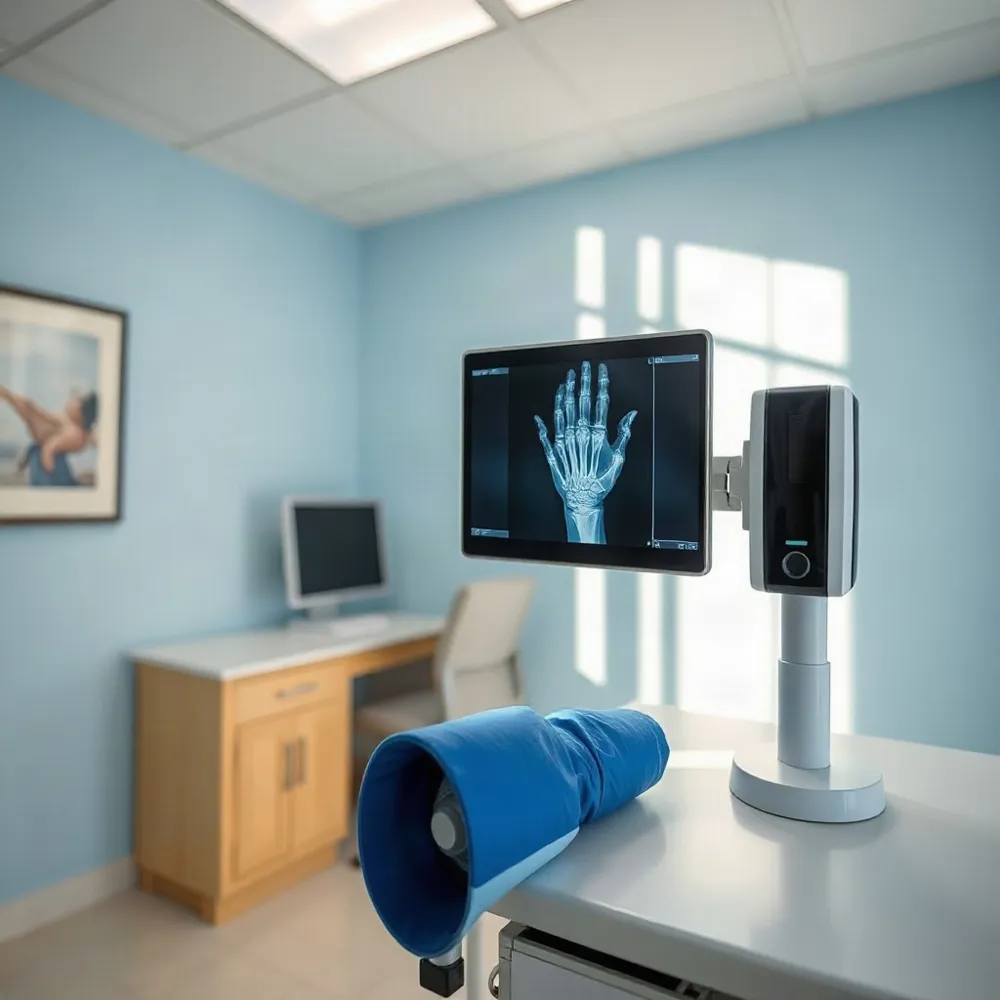 Treatment starts with understanding both the injury and the person. A clinician asks how the fracture happened and about relevant medical history, examines the wrist and hand, and usually orders X-rays. CT can show joint alignment and bone fragments in greater detail, while MRI may help assess suspected ligament or other soft-tissue injuries. Mayo Clinic’s guide to broken-wrist diagnosis and treatment describes these imaging options.
The plan depends on the fracture’s pattern, alignment and stability, whether it reaches the joint, and any related injuries. Health, bone quality, activity, work, and personal needs also matter. Dr. Rebecca S. Yu is a board-certified orthopedic surgeon specializing in hand and upper-extremity surgery in Berkeley, California, a specialty that includes evaluating these injuries and treatment options.
Stable fractures that are acceptably aligned can often heal without surgery. A splint, brace, or cast holds the wrist still while the bone heals. Small cracks with little or no displacement may be treated this way, but the bone involved and fracture stability help determine the type and duration of support.
If fragments have shifted, a clinician may perform a closed reduction, moving them toward better alignment without opening the skin, then apply a splint or cast. A splint may be useful at first while swelling changes. Follow-up X-rays help show whether the bones remain aligned. Distal radius fracture guidance from Hospital for Special Surgery explains how stability and alignment inform treatment.
Surgery is not automatic. It may be considered if acceptable alignment cannot be achieved or maintained, the fracture is substantially displaced or unstable, the joint surface is affected, or nearby structures are injured. Open fractures need prompt medical care. When surgery is appropriate, open reduction can stabilize the bone with plates and screws, pins, or an external frame. An orthopedic specialist weighs the examination and imaging findings against the person’s circumstances.
Understanding Surgical Risks
For selected fractures, surgery aims to restore bone alignment and keep the fragments stable as they heal. A plate and screws are commonly used, while pins or an external frame may suit other injury patterns. These methods have different risks, and distal radius fracture treatment options depend on the fracture and the patient.
Possible complications include infection, wound-healing problems, bleeding, or injury or irritation to nearby nerves, blood vessels, or tendons. A tendon may also become irritated by hardware and, in some cases, rupture. These problems are possible, not inevitable.
Healing may be delayed or occur in a poor position. Hardware can become prominent or loose and may need removal. Stiffness, reduced strength or motion, persistent pain, and complex regional pain syndrome can also occur after surgery.
The risks vary with the fracture pattern and procedure. Dr. Rebecca S. Yu, MD, specializes in hand and upper-extremity surgery, where assessment of the specific injury informs discussion of treatment and its risks. Ask your surgeon which concerns apply to your case and what signs should prompt follow-up.
Surgical stabilization is one part of care for fractures that need it; casting may be appropriate when alignment can be maintained without an operation. Neither approach guarantees a particular outcome, so the choice should reflect the injury and individual circumstances.
Healing Takes More Than a Few Weeks
A wrist may feel better before the fracture is ready for normal demands. Many distal radius fractures need about six to eight weeks for the bone to heal, but comfort, strength, and motion can take several months to return, according to Hospital for Special Surgery’s recovery guidance.
Could a distal radius fracture heal in four weeks? A stable break may show early signs of healing by then, but that does not mean the bone is fully healed or ready for unrestricted use. The treating clinician uses examinations and follow-up X-rays to assess progress and guide when to start wrist exercises, increase lifting, or change a cast or splint.
There is no single timetable for every wrist. The fracture’s severity, displacement, joint involvement, and treatment all affect recovery, as do age, bone quality, and other health conditions. At Rebecca S. Yu, MD’s Berkeley practice, care focuses on hand and upper-extremity conditions, with treatment options considered in light of the individual injury and patient.
Older adults may need more time when osteoporosis, other health conditions, or reduced strength affect bone healing and rehabilitation. A fracture after a fall can also be a reason to discuss bone health and steps to reduce future falls with a clinician. Once the bone is stable, guided exercises or hand therapy can help restore motion, strength, and everyday function; stiffness and weakness may remain for a time.
Keep follow-up appointments, and do not remove a cast or splint or return to strenuous activity ahead of your clinician’s advice. Rebecca S. Yu, MD’s patient resources also discuss recovery after wrist fracture surgery, including the gradual return of motion and function.
Recovery After Plate And Screw Fixation
After plate-and-screw fixation, the wrist is usually protected in a splint at first. Once the surgeon checks the wound and the fracture’s stability, a removable brace and gentle wrist motion may follow. The timing depends on the injury and follow-up X-rays, not just the operation date. Dr. Rebecca S. Yu is a board-certified orthopedic surgeon specializing in hand and upper-extremity surgery in Berkeley, where care can be considered in the context of the patient’s specific fracture and needs.
How long does recovery take after wrist fracture surgery with a plate and screws?
Many fractures are healed enough for light hand use at about six weeks, but that does not mean the wrist is ready for heavy lifting or full activity. Strengthening and heavier loads should wait until the treating clinician confirms that healing is progressing. Recovery may take about three months or longer, and motion and strength can continue to improve over six to twelve months. Hospital for Special Surgery’s recovery guidance describes this range, while emphasizing that recovery varies. Healing also moves through overlapping stages, as discussed in Rebecca S. Yu, MD’s recovery guide.
How long might someone need to take off work after breaking a wrist?
Time away depends on the fracture, comfort, and job duties. Desk or light work may be possible sooner if it can be done safely, sometimes with a splint or brace. Work requiring repeated gripping, lifting, or manual labor may call for modified duties or more time off while bone and strength recover. Return dates and restrictions are individual decisions to make with the treating clinician, not fixed deadlines.
Rehabilitation Restores Motion Gradually
 After fixation, movement should begin only when the treating surgeon or therapist says it is safe. Gentle finger, thumb, elbow, and shoulder motion may be encouraged earlier, while wrist movement can wait until the repair is ready. In some cases, wrist exercises begin about one to two weeks after surgery, but timing depends on the fracture, fixation, and healing. Do not start wrist exercises independently.
Once cleared, exercises may include bending the wrist up and down, turning the palm up and down, moving the wrist from side to side, and bending and straightening the fingers and thumb. A therapist can tailor the movements and repetitions to the injury and recovery stage. Rehabilitation guidance for distal radius fractures emphasizes that exercise plans should account for the individual’s needs.
A therapist may also guide gentle stretching and swelling management, then add putty or light resistance work when healing allows. These exercises can help rebuild grip, pinch, and forearm strength. Start gradually and follow the prescribed repetitions. Ease off if pain increases, and contact the care team about sharp or worsening pain, marked swelling, or new numbness.
After a cast is removed, a removable brace may protect the wrist while motion and therapy resume. Some people wear one for about two to three weeks, but the duration depends on healing, comfort, and clinician advice. The brace may be used during activities and reduced gradually when the care team recommends it. Rebecca S. Yu, MD, specializes in hand and upper-extremity surgery, where rehabilitation guidance can be matched to the injury and the patient’s needs.
Protecting The Wrist During Recovery
What should you avoid doing while recovering from a wrist fracture? Avoid smoking, which can delay or prevent bone healing, and ask your healthcare provider whether bone-health measures are appropriate for you. Mayo Clinic guidance on broken-wrist treatment also advises discussing medication choices with a clinician, since some pain relievers may affect healing.
Wait for your care team to clear heavy lifting, strenuous activity, and contact sports. Increase activity gradually as healing allows, rather than testing the wrist before it is ready. At appointments, Dr. Rebecca S. Yu can assess the injury and tailor care to the patient’s needs as a board-certified hand and upper-extremity surgeon.
Keep a cast or splint dry, and do not remove or adjust it unless instructed. Protection does not mean keeping the whole arm still: move the fingers, elbow, and shoulder as recommended, while avoiding exercises that worsen symptoms or cause new pain. Cleveland Clinic’s wrist-fracture guidance describes elevation and appropriate movement during recovery.
Contact the care team if a cast or splint feels too tight or loose, swelling increases, you notice numbness or tingling, or moving your fingers becomes difficult. Check with a clinician before changing medication or exercise instructions, since the right plan depends on the fracture and its treatment.
Good Healing Can Still Include Lingering Symptoms
A wrist fracture can heal without every symptom disappearing at the same time. Many adults report good wrist function years after a distal radius fracture, but recovery differs from person to person. In one follow-up study, patients reported generally good wrist function nearly four years after injury, though the findings do not predict an individual outcome or guarantee complete recovery (study of patient-reported outcomes).
Bone healing may come before the return of comfort, strength, and flexibility. Aching with activity, stiffness, weakness, or reduced motion can continue as the wrist and surrounding tissues recover. So, is it normal for a broken wrist to still hurt after four weeks in a cast? Some discomfort can persist, but follow your clinician’s directions and check in if pain is getting worse, the cast feels too tight, or numbness, tingling, or difficulty moving the fingers develops.
Fractures that extend into the joint or heal out of alignment may leave lasting pain or increase the chance of arthritis. Arthritis is not inevitable, and lingering symptoms alone do not show that a fracture has healed poorly. A distal radius fracture needs follow-up based on its pattern and progress, with rehabilitation started and advanced when the treating clinician says it is safe.
Dr. Rebecca S. Yu, MD, is a board-certified orthopedic surgeon specializing in hand and upper-extremity surgery in Berkeley, California. Her practice provides assessment and treatment options for hand and wrist conditions, including recovery planning tailored to the injury. Contact the treating clinician if pain or function is not steadily improving, or if new symptoms arise.
Careful evaluation, an individualized treatment plan, and appropriately timed rehabilitation can help a complex fracture move toward useful function, while leaving room to address symptoms that persist.
A Plan Built Around The Person
A complex wrist fracture is not one uniform injury. The break’s alignment and stability, whether it reaches the joint, a person’s health, and the demands of daily life all help shape treatment. As Hospital for Special Surgery’s overview of distal radius fractures explains, care is matched to both the fracture and the patient.
Assessment by a hand and upper-extremity specialist can clarify the options and the follow-up needed. Dr. Rebecca S. Yu is a board-certified orthopedic surgeon specializing in hand and upper-extremity surgery in Berkeley, where care includes evaluation of wrist injuries and their treatment options.
Follow your care team’s instructions and let healing and rehabilitation advance at a pace suited to your injury. Many people regain useful wrist function, but recovery is not identical for everyone. If pain, stiffness, weakness, or other symptoms persist, contact your clinician rather than assuming they are an inevitable part of healing.